



Brown Baluch Rug
A brown baluch rug brings the rich, earthy hues and nomadic artistry of borderland weavers directly into a modern interior.
Brown Baluch Rug
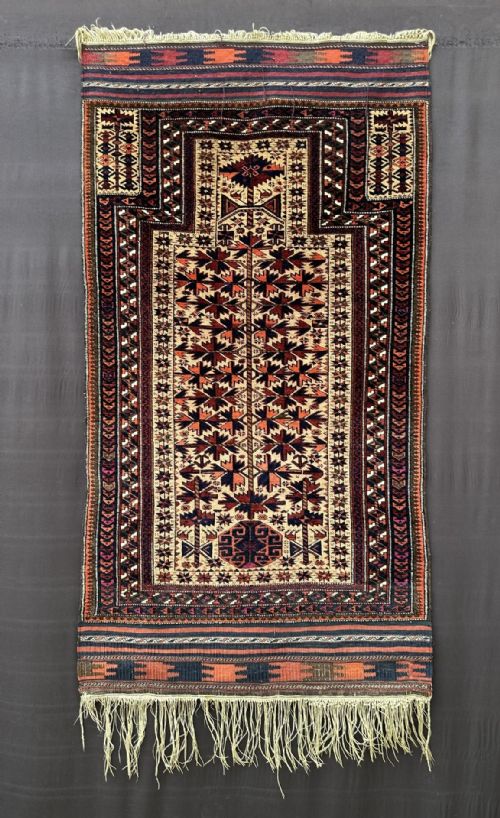
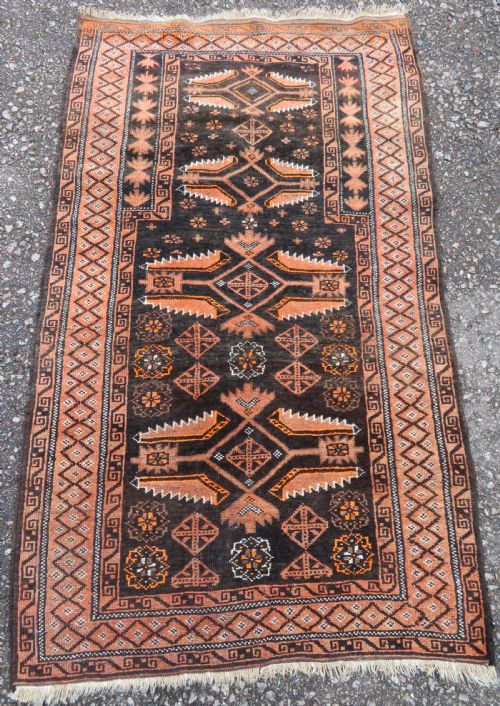
A brown baluch rug represents the traditional tribal weaving of nomadic and semi-nomadic groups inhabiting the borderlands between Persia and Afghanistan. These textiles span from the late nineteenth century into the early decades of the twentieth century, reflecting a deep heritage of indigenous craft.
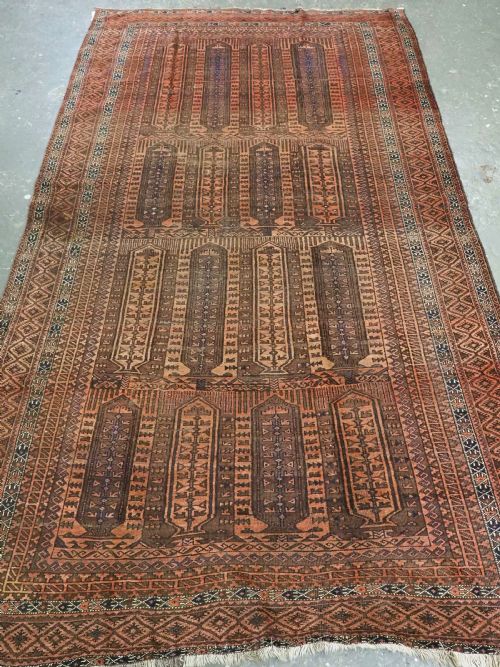
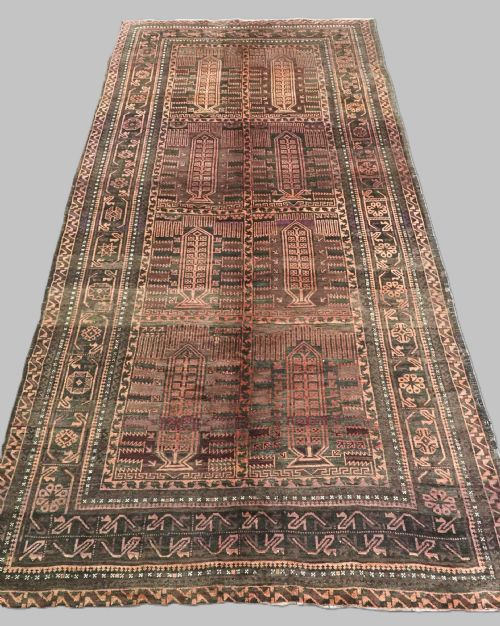
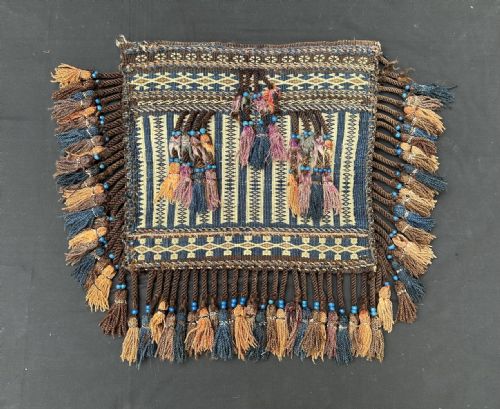
Buyers will encounter diverse formats on this page, ranging from floor rugs and small format pushtis to prayer rugs featuring distinctive mihrab designs. Utility pieces such as storage bags and flatwoven kilims also appear alongside larger carpets and runner rugs.
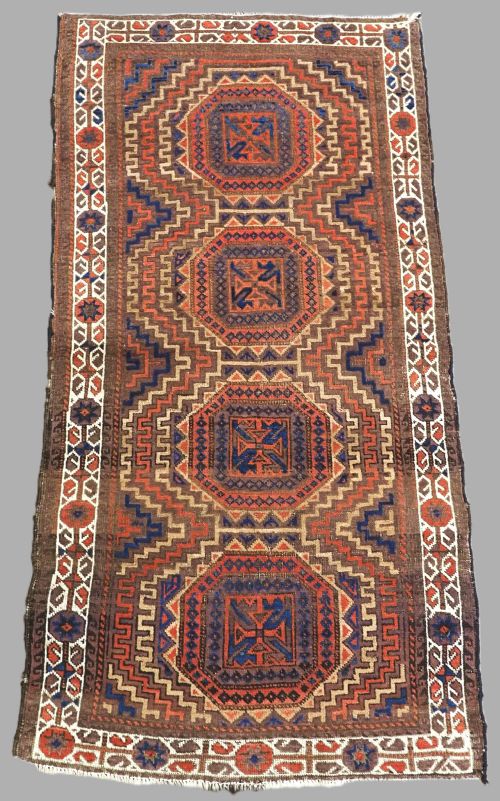
The dominant palette centres on deep brown tones, often derived from camel wool, goat hair, and natural dyes that give each textile its characteristic sombre warmth. Geometric motifs, prayer arches, and traditional guls structure the field of these nomadic works.
How they were made
The construction relies heavily on hand-spun wool, supplemented by soft camel wool and resilient goat hair utilised for structural integrity and dark outlines. Natural dyes provide the enduring palette, settling deep into the animal fibres over decades of exposure.
Weavers employed traditional upright looms within tribal encampments and villages, integrating mixed techniques such as pile weaving and flatwoven kilim banding. Sturdy cotton foundations occasionally support the denser pile sections on specific regional formats.
Brown Baluch Rug Retail Price Guide 2026
Typical asking prices for brown baluch rug among the pieces listed under this phrase on Sellingantiques today, from the lower quarter to the upper quarter. They describe what is for sale here now, not the wider market.
Listings feature pieces spanning the late nineteenth century through to the 1930s, constructed from hand-spun wool, cotton, and camel hair.
What varies in quality
The distinction between tiers rests upon the handled handle of the wool and the depth achieved by natural dyestuffs. Finer examples display tightly packed knots and precise geometric drawing across the field.
Structural integrity of the edges and the survival of original side finishes or backings dictate the preservation level of each textile. Greater precision in minor border details separates standard village weaving from exceptional tribal artistry.
Timuri Tribes·Yaqoub Khani Tribe·Taimani Sistan Baluch·Salar Khani Baluch·Mahdad Khani Baluch
The Brown Baluch Rug Glossary
- Gul
- A primary octagonal or gabled medallion motif used extensively in tribal carpet design. These repeating elements often identify specific nomadic groups.
- Mihrab
- The arched niche design characteristic of prayer rugs, pointing toward Mecca during daily devotions. Multiple arches appear on specific regional variants.
- Pushti
- A small format mat or rug designed for sitting or placing upon small surfaces. These compact textiles share the intricate patterning of larger carpets.
- Kilim
- A flatwoven textile produced without a pile by tightly interweaving warp and weft strands. These structures serve as utilitarian storage faces or floor coverings.
- Herati
- A recurring floral trellis pattern featuring a central rosette enclosed by curved lancet leaves. This classical design appears frequently across regional tribal formats.
Brown Baluch Rug: Frequently Asked Questions
Where were these rugs made?
These textiles originate from the border regions spanning north-east Persia and western Afghanistan. Nomadic groups historically produced them across the Khorasan and Herat territories.
The makers moved through these borderlands, bringing distinctive regional patterns and material preferences to their tribal weaving traditions.
What is camel wool used for?
Camel wool provides a soft, durable pile and naturally imparts deep brown and golden tones to the textile. Weavers utilised it both undyed and blended with sheep wool.
Its inclusion often lends a distinct rustic texture and warmth to the surface of the rug.
How should I care for an antique rug?
Protect the textile by placing it in low-traffic areas away from direct, harsh sunlight to preserve the natural dyes. Gentle vacuuming without a rotating brush maintains the wool pile.
Professional cleaning tailored for antique tribal textiles ensures the structural integrity remains undisturbed over time.