
Brown Ash Wooden Chair
A brown ash wooden chair brings tactile rural utility and enduring vernacular craftsmanship straight into a modern interior.
Brown Ash Wooden Chair
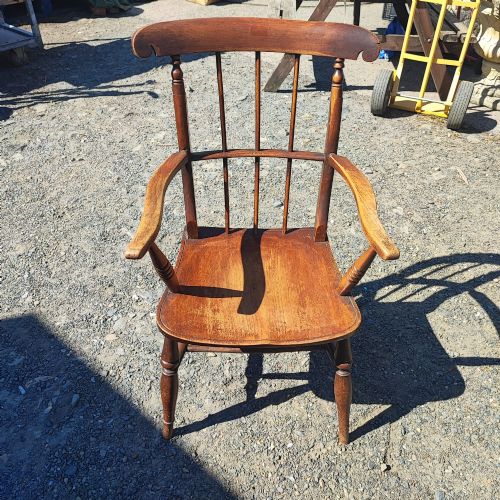
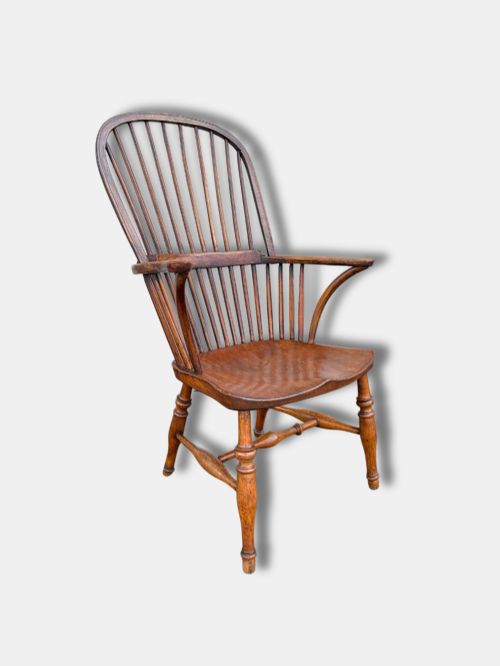
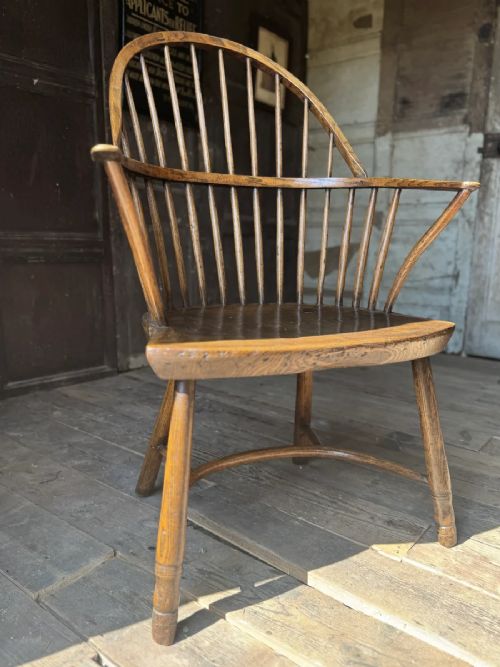
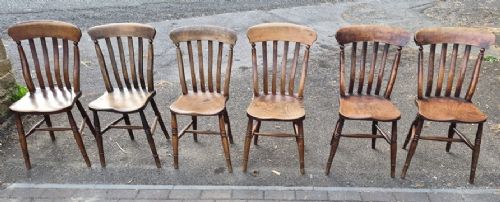
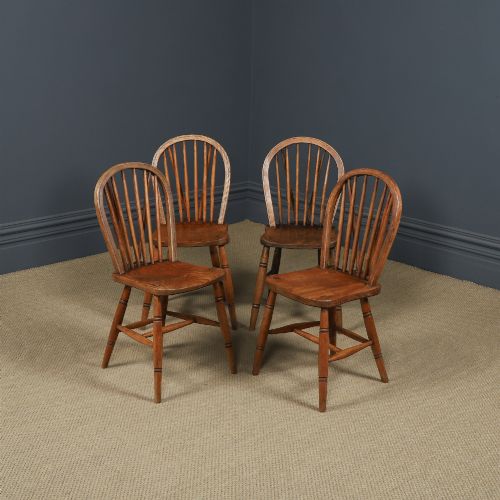
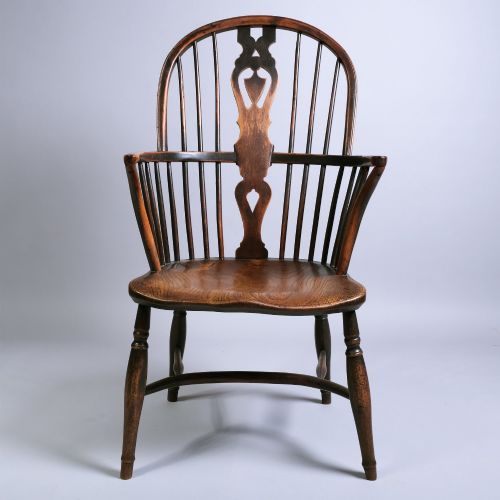
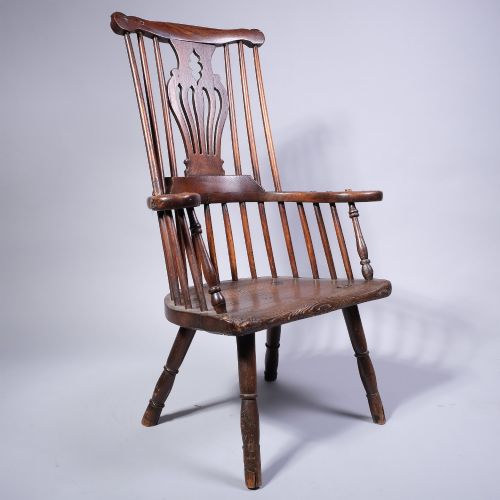
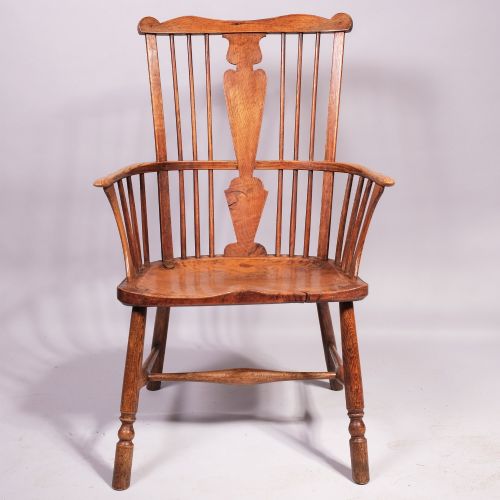
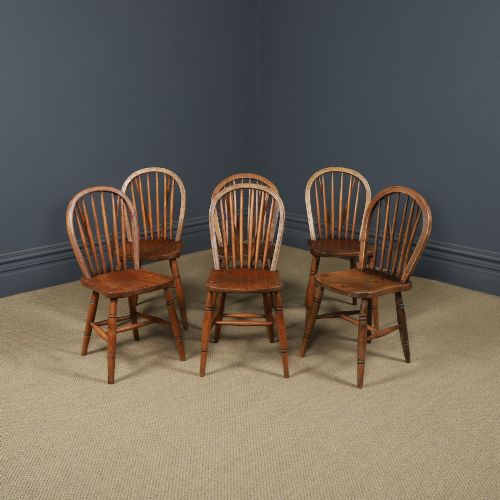
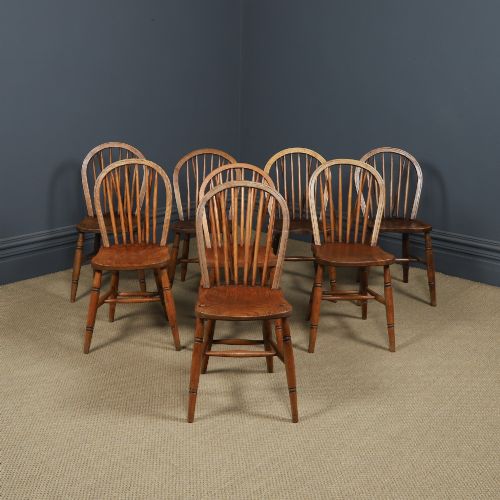
A brown ash wooden chair encompasses sturdy country seating produced across the eighteenth and nineteenth centuries, including robust Windsor armchairs, ladderbacks, and kitchen dining sets. These pieces reflect English vernacular traditions, utilising locally sourced timber for everyday domestic and workshop use.
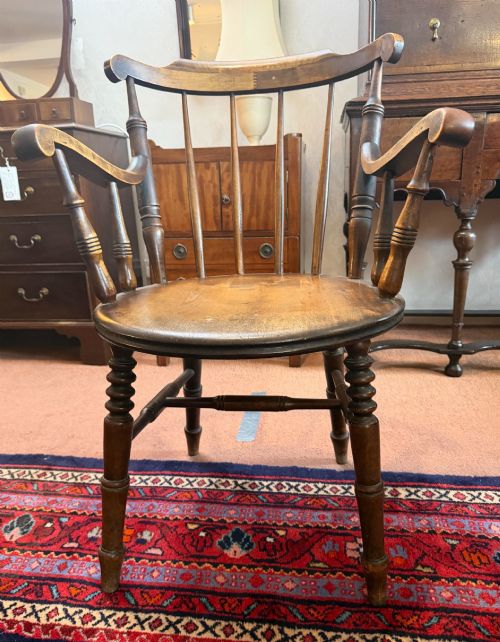
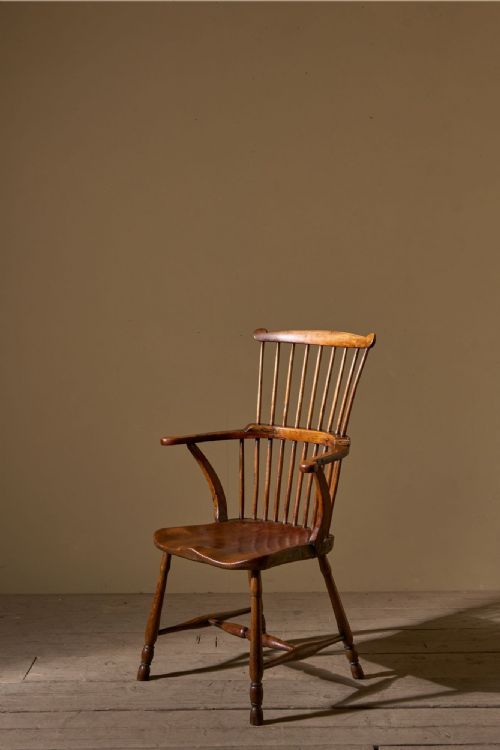
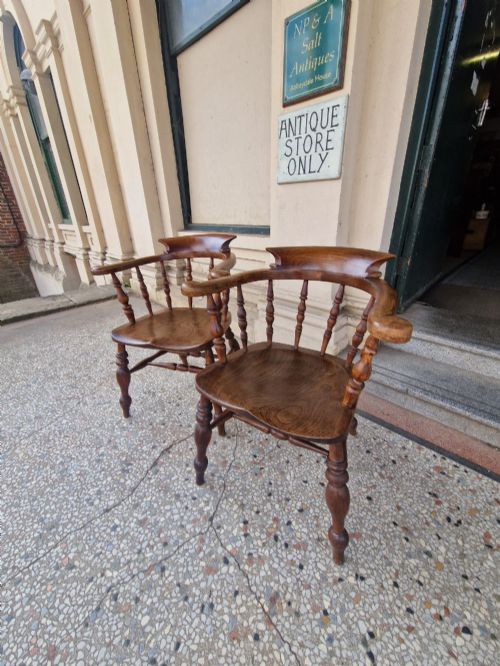
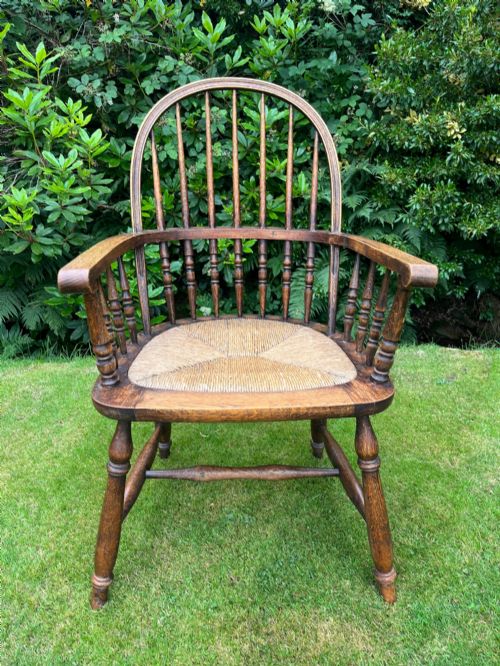
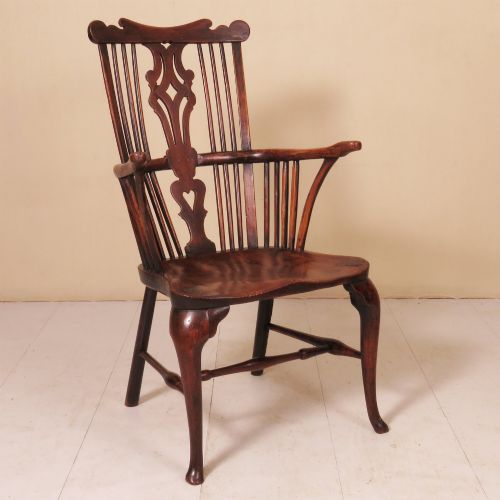
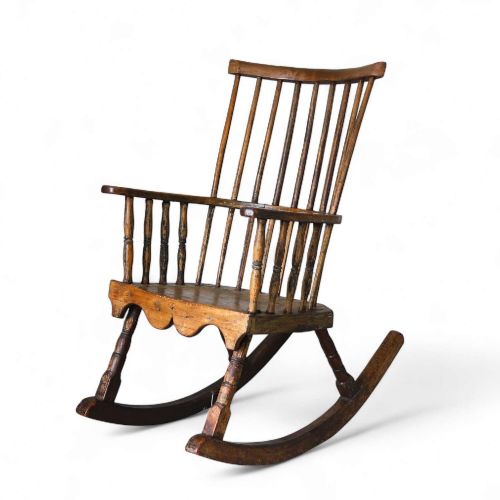
The selections available here range from early Georgian comb-back windsors to Victorian smokers bows and rush-seated carvers. Regional variations such as Thames Valley and West Country designs frequently appear alongside primitive rocking and child variants.
Makers concentrated on functional seating like captains chairs and desk chairs, combining ash framework with elm seats. This specific material pairing defines the practical heritage of the category.
Materials and construction methods
Makers utilised ash for its superior bending strength, turning it on lathes for spindles, legs, and bow backs. Elm provided a stable, tough plank for solid saddles and seats that resisted splitting under daily pressure.
Traditional joinery relied on wedged tenons and drilled mortises to bind the turned uprights directly into the thick wooden seats. Rush seating also occurs on ladderback frames, woven tightly around internal rungs for flexible support.
Secondary timbers such as beech, yew, and sycamore occasionally supplement the primary ash and elm structure, particularly in regional windsor variations.
Several items survive in sets of up to twelve matching kitchen dining chairs, prepared for centuries of family meals.
Assessing construction and retention
Quality rests in the integrity of the original joints and the degree of patination developed across centuries of use. Untouched surfaces retain tactile grain depth and honest wear, whereas heavy restoration alters the historic timber balance.
Proportion and turning crispness distinguish standard workshop output from exceptional vernacular examples. Well-balanced arm curvatures and balanced spindle spacing demonstrate superior joiner execution.
Duncan McKellar of Fenwick·Fred Walker Rockley
The Brown Ash Wooden Chair Glossary
- Windsor chair
- A wooden chair built with a solid timber saddle seat into which all other components - legs, back, and spindles - are independently jointed. This form originated in rural England before evolving into numerous regional styles.
- Comb-back
- A Windsor chair variant featuring a low, horizontal crest rail supported by vertical spindles, resembling the teeth of a dressing comb. It often dates to the mid eighteenth century.
- Smokers bow
- A low-backed armchair with a continuous curved arm rail supported by turned spindles above a solid wood seat. These pieces frequently served in nineteenth-century public houses and parlours.
- Ladderback
- A chair style utilising horizontal slats or bars fitted between two vertical rear posts, frequently accompanied by woven rush seats. They appear in regional English furniture traditions.
- Stretcher
- A horizontal wooden brace connecting the legs of a chair to provide structural rigidity and prevent splaying. Crinoline stretchers offer an arched reinforcement beneath Windsor seats.
Brown Ash Wooden Chair: Frequently Asked Questions
What is a stick back windsor?
A stick back windsor is a traditional country chair where individual turned wooden rods form the back rest, secured directly into a thick elm seat.
These pieces were made across English rural workshops throughout the nineteenth century for everyday household use.
How do I care for antique ash furniture?
Maintain antique ash furniture by keeping it away from direct heat sources and sudden humidity shifts that cause timber shrinkage.
Apply microcrystalline wax occasionally to nourish the surface and preserve the historic wooden patination.
Are these chairs comfortable for daily seating?
Solid wood saddles are carved with ergonomic concavities designed to fit the body naturally during extended sitting.
Adding a simple loose cushion provides extra softness while respecting the historic structure of the seat.
How do I distinguish regional chair styles?
Regional differences appear in the turning patterns of the legs, the shaping of the arm rests, and the choice of secondary woods.
West Country and Thames Valley makers utilised specific local timber combinations and joining techniques that mark their origin.