


Brown Architectural Painting
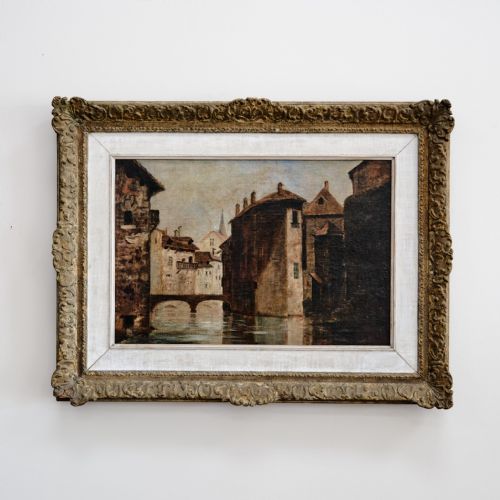
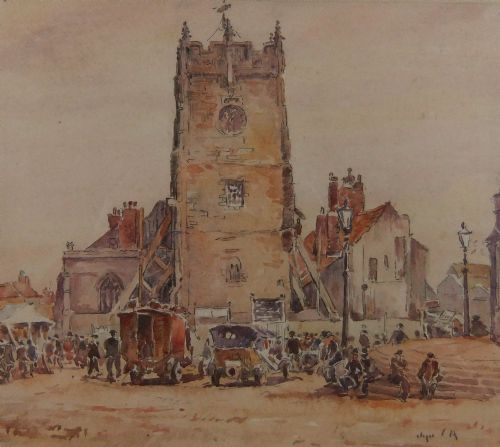
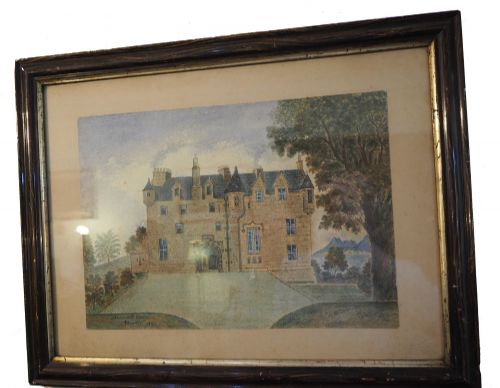
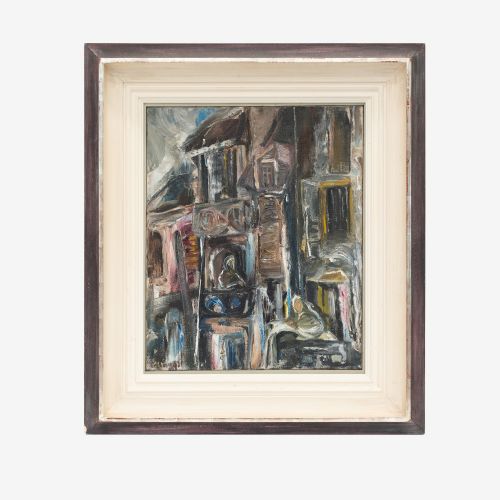
These brown architectural painting works capture facades, cityscapes, and historic structures in oil, watercolour, and mixed media.
Brown Architectural Painting
A brown architectural painting presents buildings, ruins, streetscapes, and urban landmarks rendered primarily in earthy ochres, umbers, and sepia tones. Buyers searching this phrase encounter works ranging from 18th-century prospects and Grand Tour watercolours to 20th-century impressionist cityscapes and industrial constructivist factory scenes.
The selections span Georgian, Victorian, and Edwardian eras through to mid-century modern interpretations. Works include detailed topographical watercolours of cathedrals and castles alongside oil paintings on canvas, board, and oak panel depicting continental canals and Parisian bridges.
Materials and technique
Artists utilise oil paint and watercolour as primary mediums, applying pigment to paper, prepared canvas, wood panels, or board. Some mid-century compositions incorporate impasto techniques to build texture on the surface of the work.
Support materials vary from traditional stretched canvas and heavyweight paper to sturdy oak panels and board. Pigments lean heavily towards natural earth tones, creating muted monochromatic or warm tonal palettes.
The listings combine 19th-century watercolours with mid-century oil paintings on canvas and board.
Judging quality
Quality rests upon the precision of perspective, the handling of light and shadow across stone facades, and the confidence of the brushwork. Skilled execution brings depth and structural integrity to buildings and urban spaces.
Compositional balance and the preservation of the original medium distinguish accomplished works from routine topographical sketches. Strong examples demonstrate a coherent sense of atmosphere and spatial proportion.
John Smith Atherton·Lilian Colbourn·Fred Lawson·Sir Thomas Newenham Dean·Ron Folland·Tom Dudley·George Lambert·Frank Moss Bennett·Peter Greenham
The Brown Architectural Painting Glossary
- Topographical
- A genre of art focused on the accurate depiction of specific places, buildings, or landscapes. These works often serve as historical records of towns and architecture.
- Impasto
- A technique where paint is laid onto a surface in thick layers, standing out from the canvas. This method introduces physical texture and three-dimensional qualities.
- Grand Tour
- A traditional trip of Europe undertaken by upper-class European young men of sufficient means. Paintings from this context typically record classical ruins and foreign monuments.
- Oil on panel
- A painting executed on a flat wooden support rather than canvas. Oak panels were frequently utilised in earlier centuries for stability.
- Watercolour
- A paint where the colour pigments are suspended in a water-based solution. Artists apply translucent washes onto paper to build luminosity.
Brown Architectural Painting: Frequently Asked Questions
What periods do these paintings date from?
The works span multiple centuries, beginning with 18th-century pieces and extending through 19th-century Victorian and Edwardian examples. Mid-century modern and 1950s expressions also appear.
Each period brings distinct stylistic conventions, ranging from strict topographical documentation to looser impressionist and expressionist interpretations.
How should I care for watercolour paintings?
Watercolour works on paper require careful framing behind protective glass to prevent dust and moisture damage. Keeping them away from direct sunlight preserves the pigments.
Stable indoor humidity levels prevent the paper support from warping or developing foxing over time.
What subjects appear in these architectural works?
Common subjects include European cityscapes, bridges, cathedrals, castles, and industrial factories. Scenes often feature Parisian streets, English market towns, and classical ruins.
Artists record both grand civic monuments and ordinary street corners with equal attention to structural detail.
Are these works signed by the artists?
Many listings feature signed works by named artists, while others represent historical English or continental school pieces. Signatures provide direct attribution to specific painters of the period.
Unsigned works are typically attributed through stylistic analysis and recorded provenance.