


Bronze Urn Ornaments
These bronze urn ornaments are sculptural metal vessels and classical souvenirs designed for nineteenth-century interiors.
Bronze Urn Ornaments
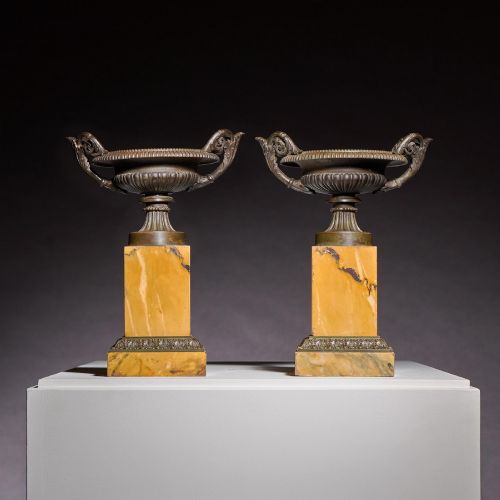
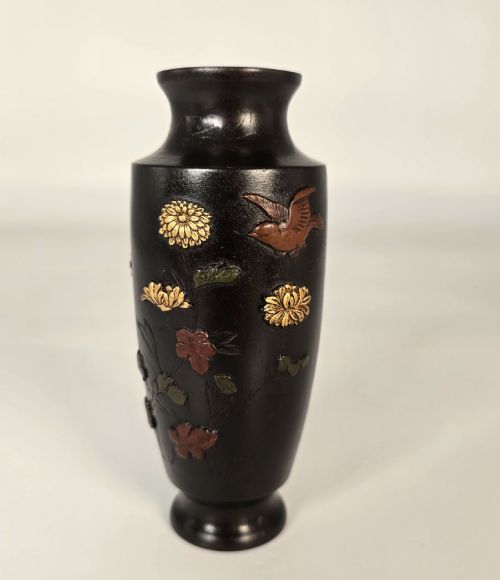
Bronze urn ornaments encompass decorative vessels, campana shapes, tazzas and cassolettes created primarily during the nineteenth century. Buyers seeking these items encounter French Empire, Regency and Victorian pieces alongside Japanese Meiji period metalwork.
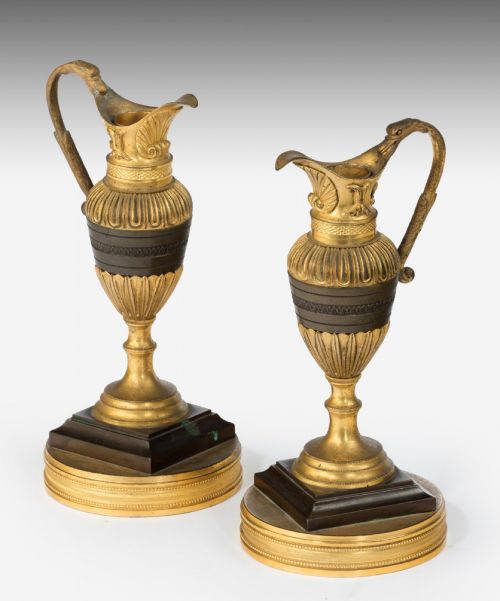
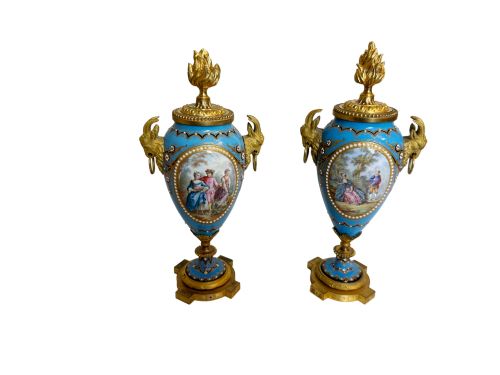
The selection ranges from Grand Tour souvenirs mounted on marble bases to gilt bronze garnitures and mixed metal vases. Architectural forms like ewers and lidded cups dominate the offerings.
Most examples function purely as decorative objects or mantel garnitures rather than utilitarian vessels. Pairs frequently survive together, especially within French marble and Japanese bronze categories.
How they were made
Foundries utilised cast bronze, ormolu and gilt bronze combined with contrasting materials such as Siena marble, white marble and rouge griotte. Enamel, copper and mixed metals appear frequently in Japanese Meiji period examples.
Techniques combine lost-wax casting or sand casting for the metal elements with precision turning and polishing for the stone bases. Surface finishing involves fire gilding, patination and hand-chasing of fine details.
Listings feature nineteenth-century materials including gilt bronze, ormolu, Siena marble, copper and enamel across French and Japanese aesthetics.
What varies in quality
The standard of chasing and relief work dictates the crispness of foliage, figures and classical motifs across the bronze surface. Superior items retain deep patination and precise assembly between the metal body and marble plinth.
Material selection separates standard production from exceptional pieces, particularly in the density of the marble and the weight of the cast bronze. Ormolu highlights demonstrate varying degrees of fire-gilding durability and brightness.
Jean Dunand·Clodion·Charles Korschann
The Bronze Urn Ornaments Glossary
- Cassolette
- A dual-purpose decorative vessel featuring a reversible lid that transforms a covered urn into a vase or candle holder. These objects often combine marble bodies with gilt bronze mounts.
- Tazza
- A shallow saucer or cup elevated on a stem and foot, modelled after ancient drinking vessels. Makers frequently mounted these in bronze upon marble bases for display.
- Ormolu
- Finely chopped gold applied to a bronze base through a mercury amalgamation process, creating a durable golden surface. This technique prevails in French decorative arts.
- Campana
- A bell-shaped vessel profile derived from ancient Roman pottery. This silhouette defines many classical urns and garniture vases.
- Grand Tour
- A cultural journey undertaken by wealthy Europeans to view classical antiquities, inspiring souvenir bronzes and marble models. These items were brought home to decorate libraries and drawing rooms.
Bronze Urn Ornaments: Frequently Asked Questions
What is a cassolette used for?
A cassolette serves as a decorative urn with a reversible lid that conceals or reveals an opening. In nineteenth-century interiors, they sat on mantelpieces as part of garniture sets.
Collectors prize them for their versatility and the skilled combination of marble and gilt bronze.
How do I date a bronze urn?
Dating relies on the style of the casting, the type of marble base and the patination of the metal. Nineteenth-century pieces often reflect Regency, Victorian or French Empire revival aesthetics.
Maker signatures or foundry marks, when present, provide more precise chronological markers.
What is a Grand Tour souvenir?
Grand Tour souvenirs are small-scale bronze copies of classical statues and architectural urns purchased by travellers in Italy. They allowed collectors to display classical taste at home.
These pieces typically feature detailed bronze patination mounted upon coloured marble plinths.
How should I clean bronze ornaments?
Dusting with a soft, dry cloth preserves the historic patina and delicate gilding on antique bronze surfaces. Avoid using commercial metal polishes that strip original finishes.
Marble bases require gentle wiping with a damp cloth without harsh chemical cleaners.