


Bronze Torchere Pair
A bronze torchere pair brings classical architectural height and sculptural presence to an interior, designed originally to carry light on tall shafts or pedestals.
Bronze Torchere Pair
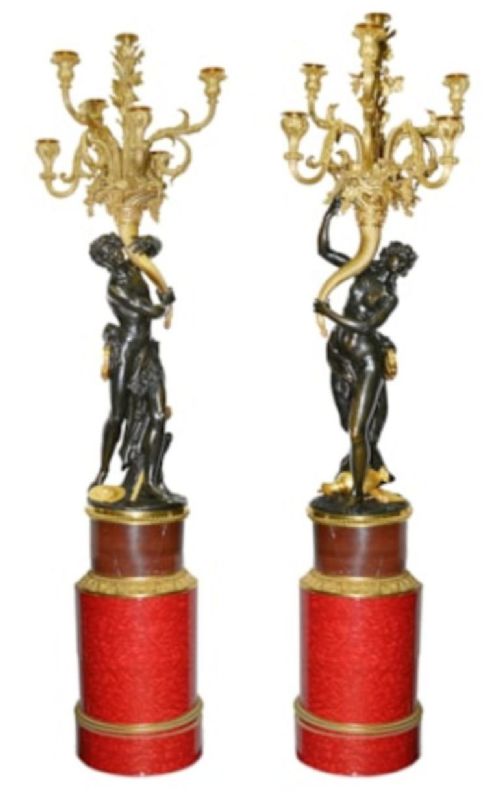
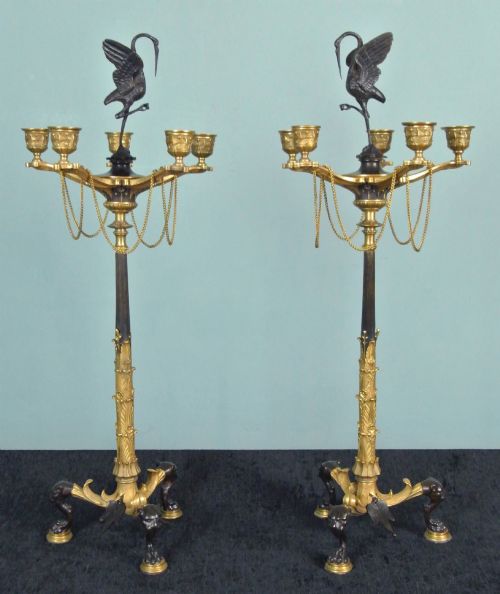
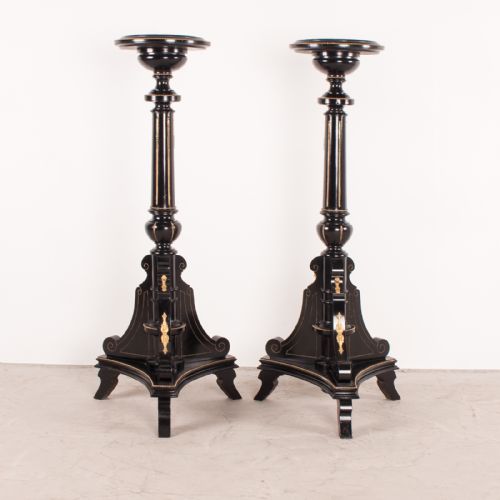
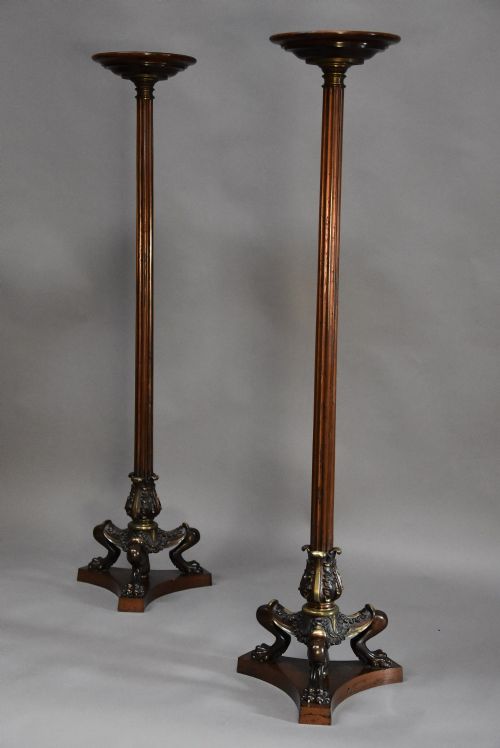
A bronze torchere pair represents tall, vertical lighting supports and ornamental stands rooted in classical forms. When searching for a bronze torchere pair, collectors encounter items ranging from monumental figural standards to slender columns.
The selections span the nineteenth century through the early twentieth century, taking shape as floor-standing lamps, architectural columns, and candelabra. French ateliers and Revival movements dominate the physical evidence.
Victorian, Louis XVI style, and Art Deco iterations appear across the inventory, demonstrating how makers adapted classical torchere designs for changing domestic spaces.
How they were made
Foundry work relies on cast bronze, often combined with gilt bronze or ormolu to highlight surface detail. Makers integrated contrasting elements such as marble, onyx, ebonised wood, and glass into the metal frameworks.
Figural elements and classical motifs were cast in sections before being chased and assembled by hand. Patination treatments created deep dark tones, while mercury gilding or electroplating added metallic brilliance to decorative mounts.
Design styles span Louis XVI style, Napoleon III, Regency Revival, Neo-Grec, Rococo Revival, and Art Deco.
What varies in quality
Quality rests in the crispness of the bronze casting and the precision of the hand-chasing that followed. Sharper relief work on acanthus leaves, figures, and fluting indicates superior workshop execution.
The choice of secondary materials marks another distinction, where solid onyx shafts or heavy marble bases elevate a piece above standard brass-accented models. Heavier gauge metal and integrated weight distribution signal higher manufacturing standards.
Barbedienne·F. De Luca·François-Christophe-Armand Toussaint
The Bronze Torchere Pair Glossary
- Torchere
- A tall stand or ornamental candelabrum designed to hold a light source high above the floor. The form originates from seventeenth-century torch-holders.
- Ormolu
- Finely ground high-carat gold applied to a bronze base using a mercury amalgamation technique. It produces a rich golden lustre that resists tarnishing.
- Patination
- The natural or artificial ageing of the bronze surface through oxidation and handling. It creates subtle colour shifts across the metal.
- Neo-Grec
- A nineteenth-century revival style drawing directly on ancient Greek architectural and sculptural motifs. It favours crisp geometric lines and austere classical ornament.
- Candelabra
- A branched candlestick holder designed to support multiple candles simultaneously. They often share sculptural themes with matching torcheres.
Bronze Torchere Pair: Frequently Asked Questions
What is a bronze torchere pair used for?
These tall stands served primarily to illuminate large halls, drawing rooms, and grand staircases by elevating candles or oil lamps. In modern settings, they function as striking architectural floor lamps or sculptural focal points.
Their substantial height allows them to anchor large wall spaces or flank doorways with vertical emphasis.
How do I tell nineteenth century pieces from later ones?
Nineteenth-century examples often display heavier cast bronze work with hand-chased details and traditional patination. Stylistic clues like Louis XVI revival motifs or heavy ormolu mounts point toward this earlier era.
Later pieces from the early twentieth century introduce simpler geometric lines, such as Art Deco styling, or different material combinations like onyx columns.
Are these pairs wired for electricity?
Many surviving examples have been adapted over time to take electrical wiring for modern lamp fittings. The original function was purely for candles or oil, but conversion was common during the twentieth century.
Buyers should examine the wiring path through the central shaft to understand how the conversion was executed.
How do I care for bronze and ormolu?
Dust the surfaces gently with a soft, dry cloth to prevent accumulation in the recessed details of the casting. Avoid harsh chemical cleaners or metal polishes that strip the historic patination or damage the gilding.
Keeping them away from direct moisture preserves the stability of combined materials like marble, onyx, and ebonised wood.