



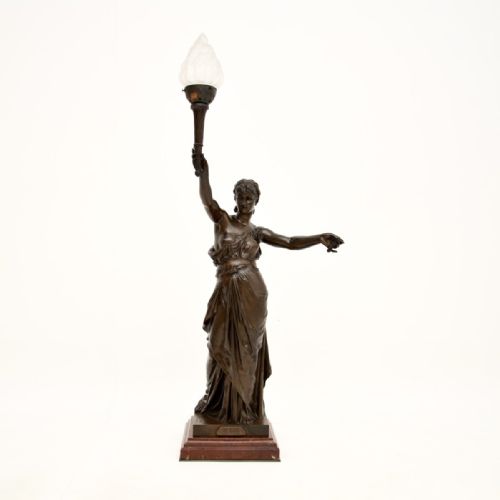

Bronze Statue Lamps
Bronze statue lamps combine sculptural figures with functional illumination, offering a focal point for interiors through classical, Victorian, and Art Deco designs.
Bronze Statue Lamps
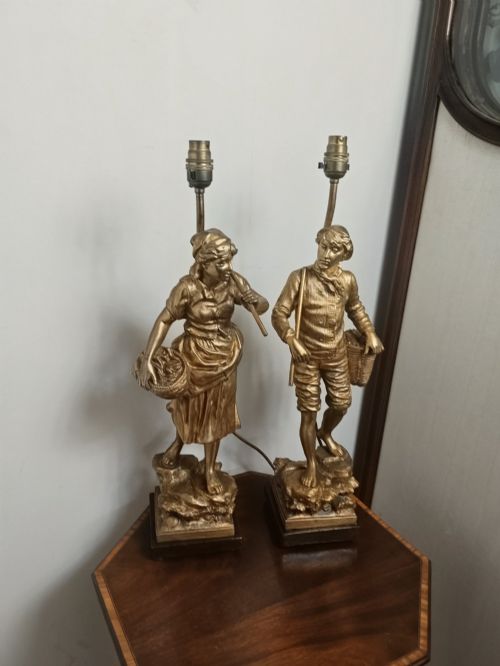
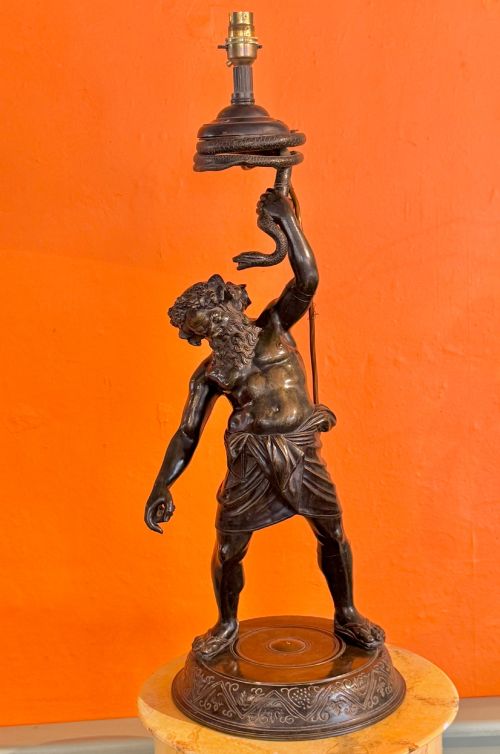
Bronze statue lamps integrate cast metal figures with lighting apparatus, taking the form of table lamps, floor lamps, and tall torcheres. When you search for bronze statue lamps, you encounter pieces that range from modest nineteenth-century night lights to large seven-foot torcheres.
The selections span distinct historical styles, including French nineteenth-century works, Regency classical subjects, and Art Deco depictions of female figures. Makers such as Emile Picault, Franz Bergman, and Henri Honore Ple produced figural casts that were subsequently adapted for illumination.
Nineteenth-century examples frequently feature mythological or allegorical subjects mounted on marble plinths, whilst later twentieth-century iterations embrace streamlined Art Deco aesthetics. Many pieces began as decorative statuettes before receiving electrical wiring or burner conversions.
How they were made
Foundries utilised the lost-wax casting method or sand casting to shape bronze, brass, and spelter into intricate human and allegorical forms. Cold-painting and gilding were frequently applied to the metal surfaces to enhance detail and create contrasting patinas.
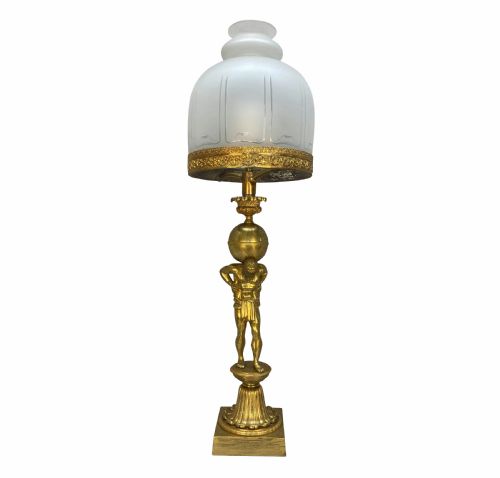
Marble bases and plinths provided structural stability for heavier metal figures, whilst glass, frosted glass, and fabric components were incorporated into shades and chimneys. Ormolu finishes were applied to highlight specific architectural and sculptural elements on Regency and French pieces.
The inventory includes diverse forms ranging from compact night lights to seven-foot Neoclassical torcheres signed by prominent European foundries.
What varies in quality
The crispness of the metal chasing and the depth of the foundry cast distinguish superior sculptures from simpler commercial wares. Finer examples retain subtle facial expressions, sharp drapery folds, and careful hand-finishing on the metal surface.
The choice of base materials, such as heavy veined marble versus lighter substitutes, affects the overall weight and balance of the standing lamp. Furthermore, the integrity of original patination and the presence of artist signatures indicate higher workshop standards.
E Rousseau·G Amodio Naples·Franz Bergman·F De Luca·Emile Picault·Humphrey Hopper·Jean-Jules Cambos·H Moreau·Coutan·P Sega·Henri Honore Ple·Adrien Gaudez
The Bronze Statue Lamps Glossary
- Torchere
- A tall ornamental stand or floor lamp designed to hold a light source aloft. These substantial pieces often feature classical figures supporting torch-like illumination fixtures.
- Spelter
- A zinc alloy commonly utilised as a less expensive alternative to bronze during the nineteenth and early twentieth centuries. It accepts patination and metallic paint finishes to simulate heavier bronze.
- Ormolu
- Gilt bronze produced by applying a finely ground high-carat gold-mercury amalgam to a bronze object. This technique imparts a durable golden lustre characteristic of French decorative arts.
- Grand Tour
- A cultural journey undertaken by nineteenth-century travellers who collected small classical bronzes and antiquities as souvenirs. These pieces often depict mythological figures and ancient artefacts.
- Cold-painted
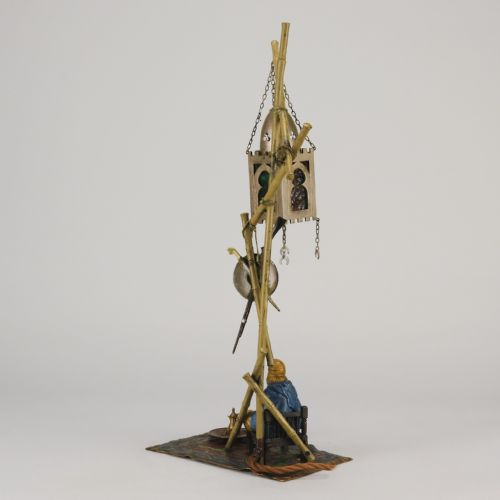
- A method where paint is applied to bronze without heat fixation, typically associated with Austrian metalwork from the late nineteenth and early twentieth centuries.
Bronze Statue Lamps: Frequently Asked Questions
What is a bronze statue lamp?
A bronze statue lamp is a lighting fixture built around a cast metal sculptural figure, combining fine art casting with functional illumination.
These pieces typically feature human, mythological, or allegorical figures that either hold the light source or serve as the main column of the lamp.
How do I identify a spelter lamp from bronze?
Spelter is lighter in weight and softer than bronze, often revealing a greyish or silvery metal underneath worn painted surfaces.
Bronze exhibits greater density, a resonant metallic ring when struck gently, and patinas that develop naturally across the copper alloy over time.
Were these lamps originally electrified?
Many older figural lamps began as decorative cabinet bronzes, oil lamps, or gas fixtures before being converted to electricity during later decades.
Original nineteenth-century examples frequently show evidence of burner mechanisms or fluid reservoirs that were later adapted for modern wiring.
Where should I place a torchere lamp?
Torchere lamps work best in corners or alongside large pieces of furniture where their height and vertical presence can balance the room.
Because many examples rise several feet high, they provide ambient upward illumination rather than direct task lighting.