


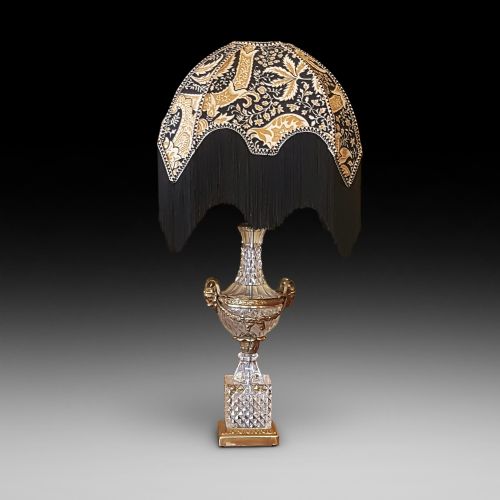


Bronze Shade Accent Lamps
These bronze shade accent lamps bring warmth and character to a room, combining metal work and ambient light from the nineteenth and early twentieth centuries.
Bronze Shade Accent Lamps
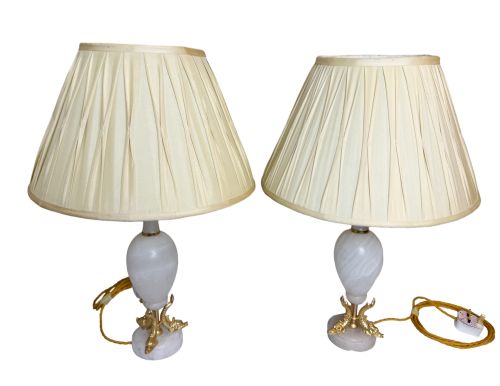
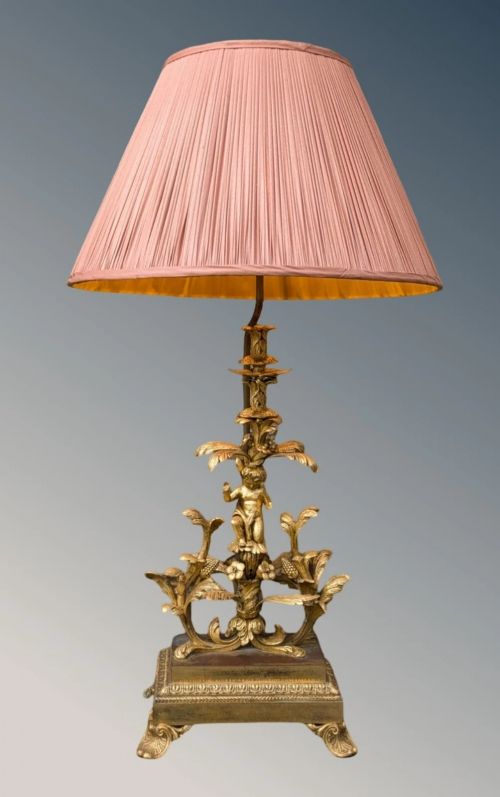
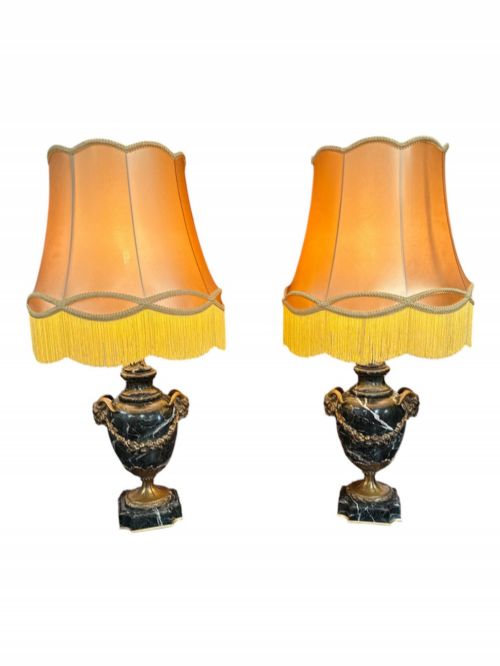
When you search for bronze shade accent lamps, you encounter table lamps built from heavy metals, marble, and glass, originating largely from French workshops across the nineteenth century, the Regency era, and later periods like Art Deco and Art Nouveau. The selection focuses heavily on table lamps, often taking the form of urns, columns, figural subjects, or converted candlesticks and vases.
You are most likely to meet pieces featuring bronze, gilt bronze, or ormolu mounts paired with marble or onyx bases, alongside fabric or frosted glass shades. The designs span French Rococo Revival, French Neoclassical, and clean modernist lines, reflecting the shifting tastes of European makers over a hundred years.
What varies in quality
The standard of a piece rests upon the crispness of the metal chasing and the depth of the original gilding or patination on the bronze. Superior examples display sharp detailing in cast ornamentation and harmonious proportions between the heavy base and the shade.
The quality also depends on the selection of natural materials, such as finely veined marble or unblemished onyx, and the precision with which metal mounts are fitted to stone bodies.
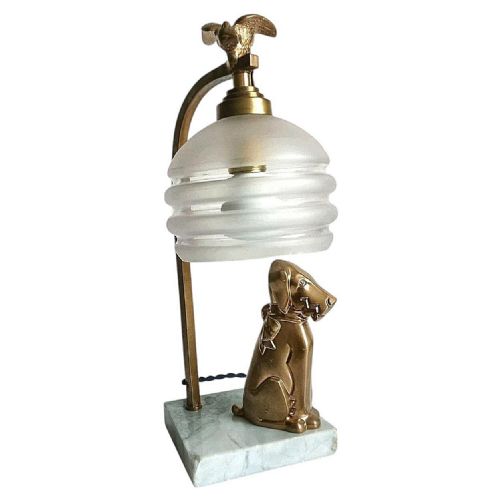
Among the metalwork and marble, a cast bronze dog and parrot keep watch from an Art Deco base.
The Bronze Shade Accent Lamps Glossary
- Ormolu
- Gilded bronze, usually mercury-gilded, applied to decorative mounts and ornaments. This technique creates a rich golden finish that lasts for centuries when undisturbed.
- Spelter
- A zinc alloy used as a cost-effective alternative to bronze in decorative metalwork. It frequently mimics the appearance of bronze through patination.
- Regency
- An English architectural and decorative style spanning the early nineteenth century. It draws heavily on classical Greek and Roman motifs.
- Toile de Jouy
- A traditional cotton or linen fabric featuring printed pastoral scenes. It is often utilised for lampshades and upholstery.
- Rococo Revival
- A nineteenth-century design movement favouring asymmetrical scrollwork, natural motifs, and ornate curves. It reinterprets eighteenth-century French aesthetics.
Bronze Shade Accent Lamps: Frequently Asked Questions
How do I clean a bronze lamp?
Dust the metal gently with a soft dry cloth to protect the patination and any original gilding.
Avoid using abrasive chemical cleaners or polishes that can strip the surface finish from the bronze or gilt components.
Are these lamps converted from antiques?
Many examples began life as oil lamps, vases, or candlesticks before receiving professional conversion for modern electrical use.
This practice preserves historical decorative objects by giving them a practical function in contemporary interiors.
How do I identify Art Deco lighting?
Art Deco pieces typically feature geometric forms, streamlined silhouettes, and motifs inspired by the 1920s and 1930s.
Materials like marble and chrome often replace the ornate scrolls of earlier revival styles.
Where should I place an accent lamp?
These pieces suit side tables, consoles, or desks where they provide localized ambient lighting rather than general illumination.
Their compact scale highlights architectural details and decorative objects nearby.