


Bronze Occasional Tables
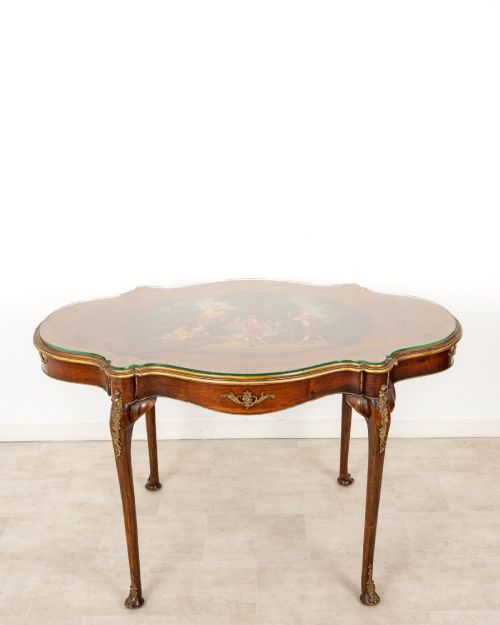
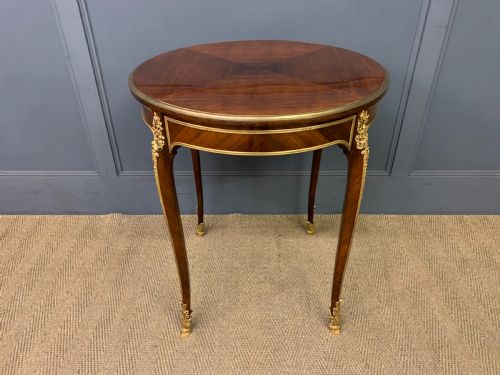
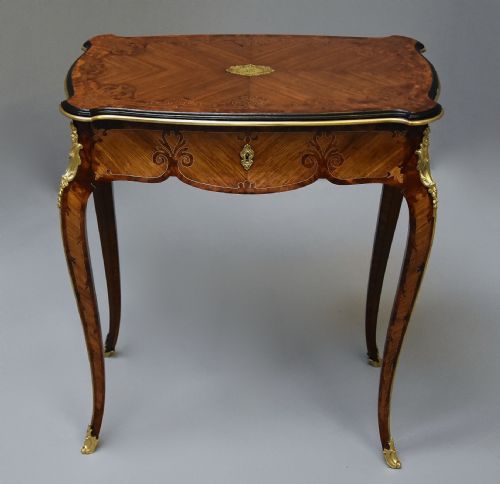
These bronze occasional tables bring French nineteenth-century cabinet-making into a room, offering small surfaces finished with gilt mounts and fine timbers.
Bronze Occasional Tables
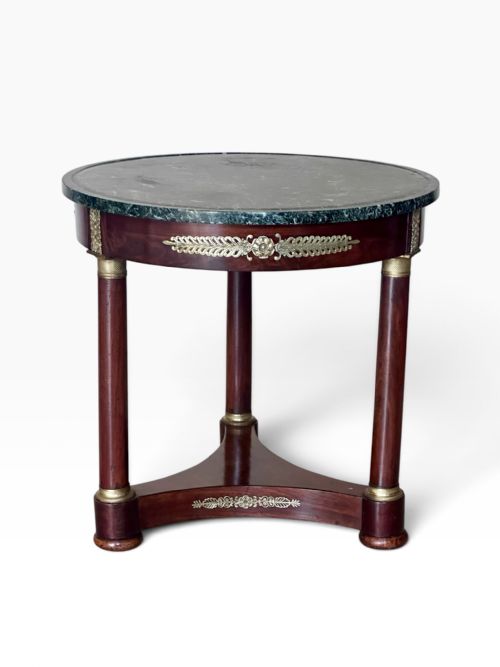
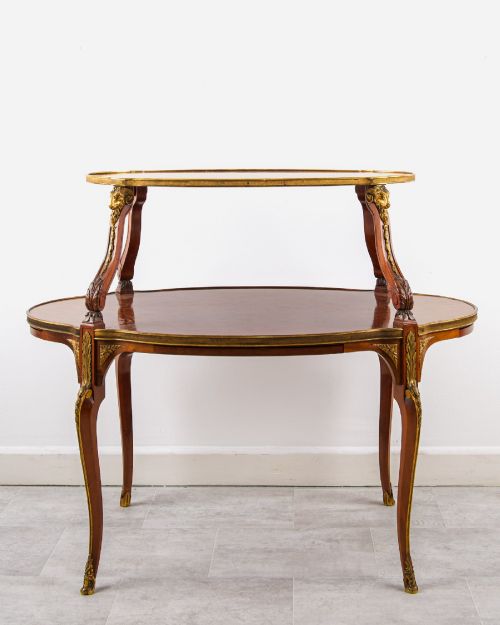
When you search for bronze occasional tables, you find nineteenth-century French designs ranging from small lamp tables to larger centre tables. These pieces include guéridons, side tables, and two-tier étagères produced during the Victorian and Edwardian periods.
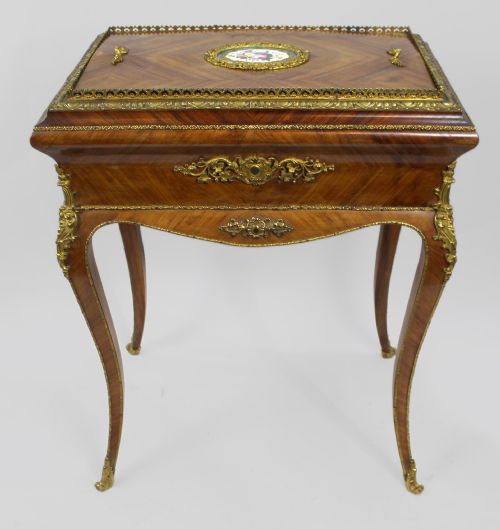
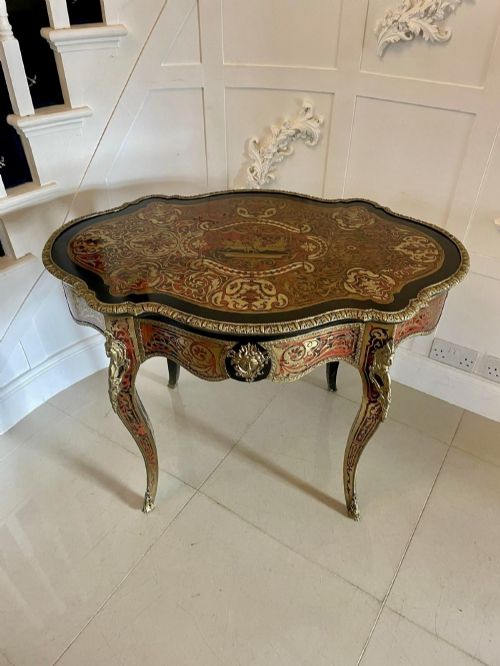
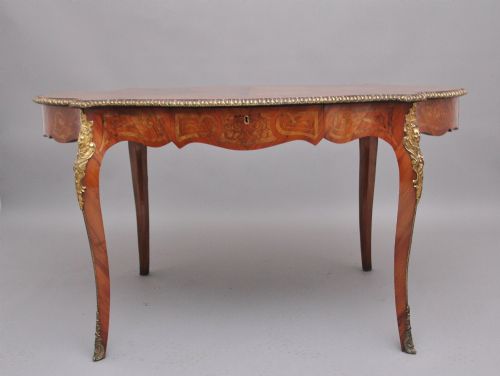
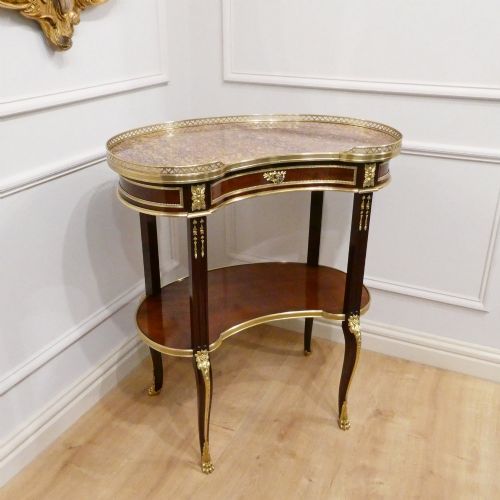
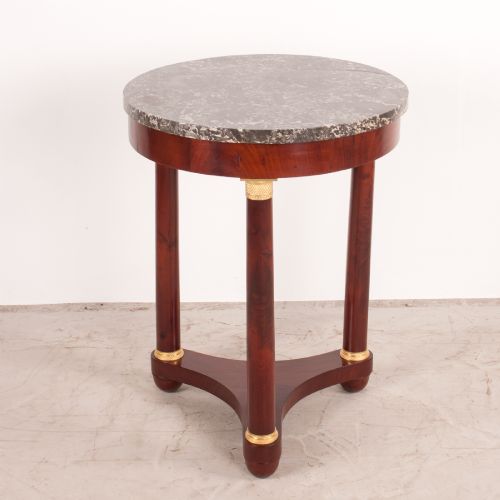
The surviving examples lean heavily on historical revivals, particularly Louis XV and Louis XVI styles, alongside French Empire and Napoleon III interpretations. Walnut, mahogany, and kingwood form the primary timber bodies for these smaller tables.
Makers working in Paris during the nineteenth century supplied these gilt-mounted tables to wealthy interiors. The selection here reflects that French dominance, grouping together marquetry, parquetry, and marble-topped variants.
How they were made
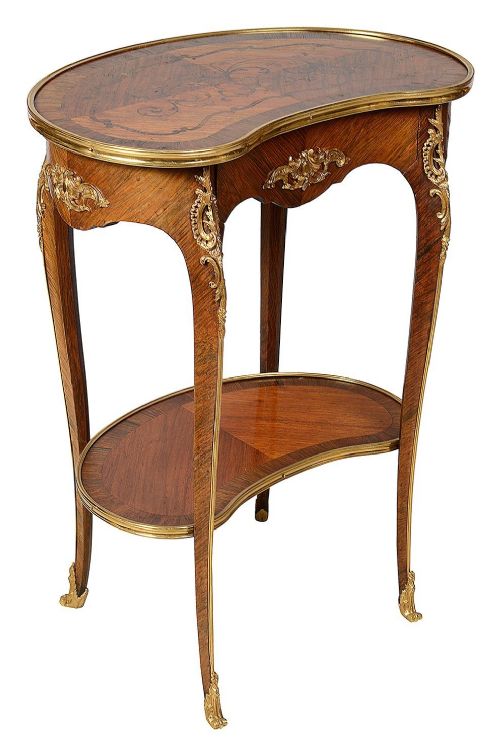
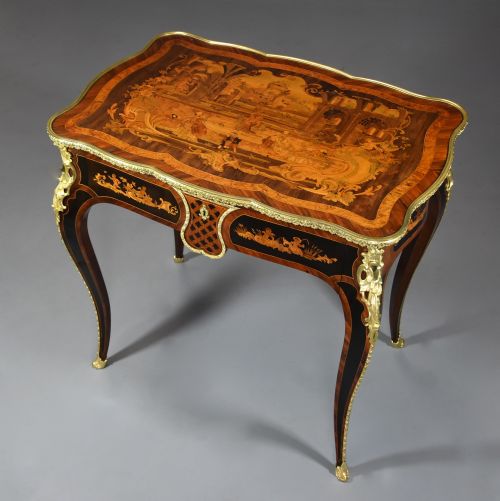
Cabinet-makers built these tables using dense hardwoods like mahogany, walnut, and kingwood as carcases for intricate marquetry and parquetry veneers. Artisans laid down geometric patterns or floral motifs using tulipwood, satinwood, and rosewood.
Foundries cast bronze mounts, known as ormolu, which were then chased by hand and fire-gilt before being fitted to the timber frames. Many tables also incorporated inset marble tops, requiring precise stone-cutting to fit the wooden rebated edges.
Bronze Occasional Tables Retail Price Guide 2026
Typical asking prices for bronze occasional tables among the pieces listed under this phrase on Sellingantiques today, from the lower quarter to the upper quarter. They describe what is for sale here now, not the wider market.
Materials across these listings include mahogany, kingwood, walnut, ormolu, and marble, representing nineteenth-century French cabinet-making traditions.
What varies in quality
The crispness of the cast bronze ormolu mounts separates standard production from exhibition-grade work. Sharply chiselled leaf-scrolls and crisp drapery indicate skilled hands in the foundry, whereas softer details suggest secondary casting runs.
The depth and complexity of the timber marquetry also set pieces apart. Fine examples use varied grain and natural colour contrasts within the veneers rather than relying on painted surface details.
Maison Millet·Joseph-Emmanuel Zwiener·François Linke·Gabriel Viardot
The Bronze Occasional Tables Glossary
- Ormolu
- Gilt bronze mounts applied to furniture, cast from metal alloys and finished with gold leaf or mercury gilding. This technique provided the bright metallic highlights seen on nineteenth-century French tables.
- Guéridon
- A small circular table supported by a central column or multiple legs, originating in seventeenth-century France. These pieces often feature marble tops and ormolu galleries.
- Marquetry
- Inlaid wood veneers forming pictorial or decorative patterns across the surface of a table top. Artisans cut different timber species together to create contrasting designs.
- Kingwood
- A dense, dark Brazilian timber featuring rich violet-brown and golden striping, frequently utilised in high-end French cabinet-making. It takes a high polish and provides a striking ground for bronze mounts.
- Parquetry
- Geometric wood inlay arranged in repetitive patterns such as cubes or chequers. This technique demonstrates precision joinery on flat table surfaces.
Bronze Occasional Tables: Frequently Asked Questions
What is a bouillotte table?
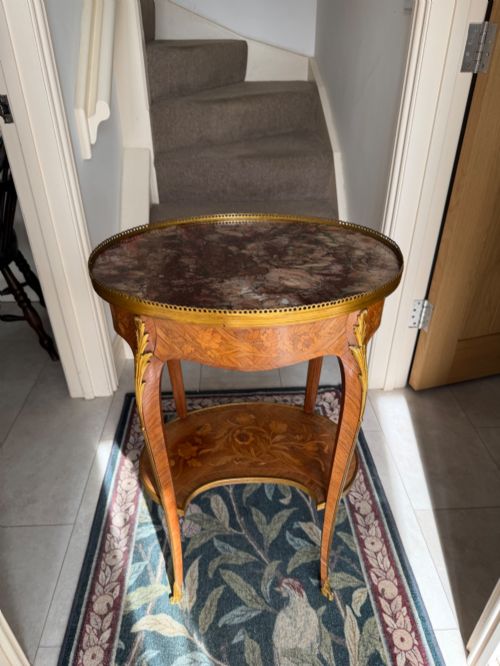
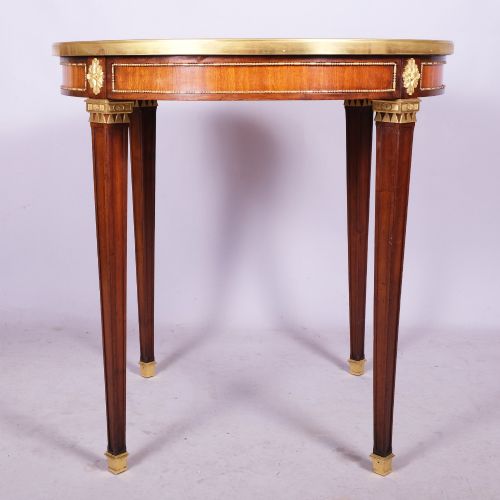
A bouillotte table is a small round card or occasional table featuring a raised gallery edge designed to keep counters from rolling off. They typically stand on slender legs and often incorporate a marble top.
Originating in the eighteenth century for card games, these tables continued as popular side pieces through the nineteenth century with added bronze mounts and candle arms.
Where were these tables used?
Nineteenth-century interiors placed these tables in drawing rooms, boudoirs, and halls to hold lamps, decorative objects, or tea services. Their portable size allowed servants to move them easily around a residence.
Today, they function similarly beside seating or as lamp stands in reception rooms, adding a reflective metallic element to domestic spaces.
How do I identify a Louis XV style table?
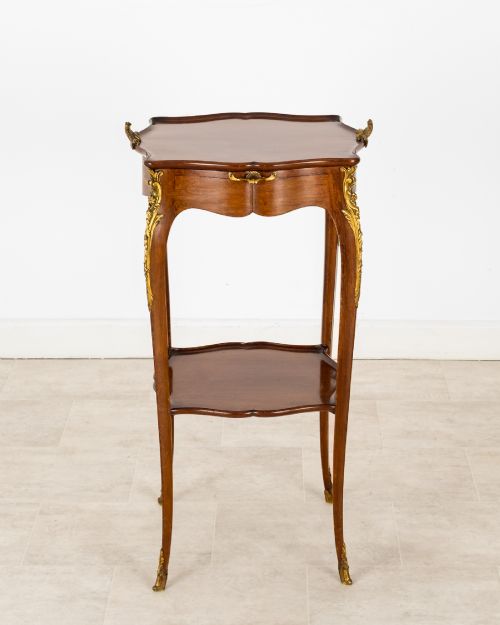
Louis XV style pieces display asymmetrical curves, cabriole legs, and naturalistic scrollwork rather than rigid straight lines. Bronze mounts usually trace the apron and foot contours to accentuate the flowing woodwork.
Makers revived this aesthetic during the nineteenth century, pairing serpentine timber carcases with elaborate ormolu cast mounts and floral marquetry.
What is the difference between a side table and a centre table?
Centre tables are designed to stand free in the middle of a room, finished with decorative timber and mounts on all four sides. They presented an impressive focal point upon entering a saloon.
Side tables, by contrast, usually sit flat against a wall or beside furniture, sometimes featuring simpler finishing on the rear elevation that faced the plaster.