


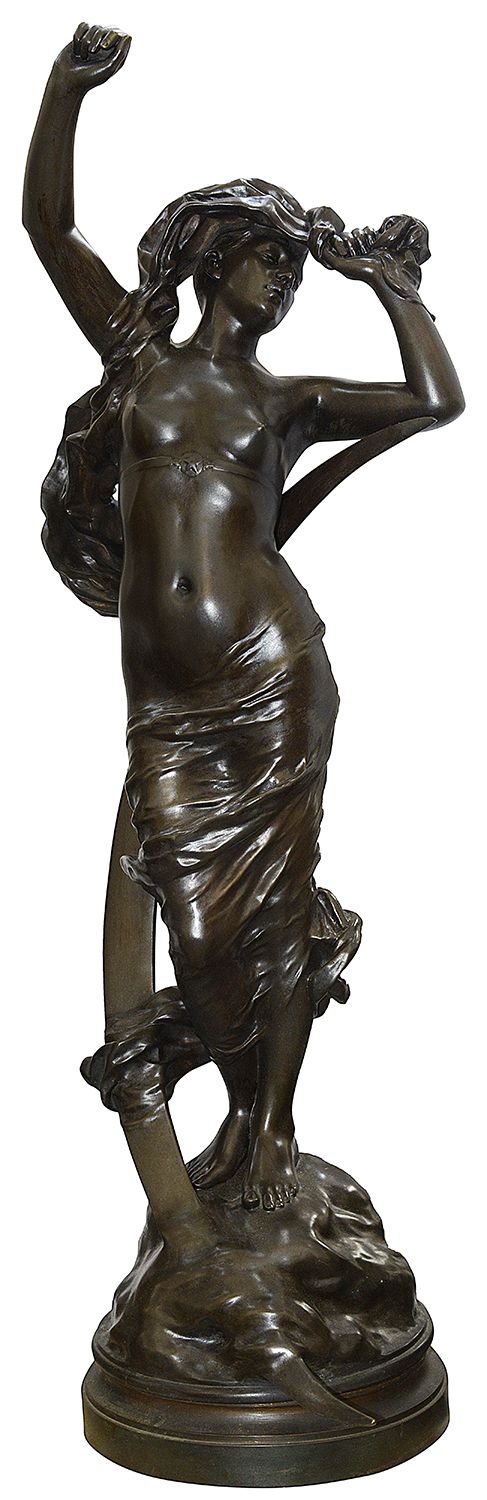


Bronze Nymph Statue
A bronze nymph statue brings mythological grace to a room, cast in classical forms and patinated metals.
Bronze Nymph Statue
When you search for a bronze nymph statue, you are looking at figurative sculptures and decorative table lamps depicting mythological maidens and dancers. These works span the nineteenth century and the art deco period, drawing heavily on French classical, rococo revival, and neoclassical traditions.
The versions you are most likely to meet on this page include nineteenth-century French figures mounted on marble bases, alongside later art deco interpretations. They take the form of dancing maidens, pipe players, and semi-nude maidens cast in the workshops of prominent Parisian founders and sculptors.
How they were made
Foundries cast these figures in bronze using traditional methods, often finishing the metal with patination, silvering, or gilding. Many pieces combine cast bronze with carved marble bases to add weight and contrast.
Makers utilised skilled chasing and finishing techniques to define drapery, hair, and facial expressions after the initial casting process. Certain twentieth-century examples integrate electrical components to function as figural lamps.
Listings feature works spanning the nineteenth century up to nineteen-thirty, predominantly utilising bronze, marble, and patinated metal.
What varies in quality
Quality rests primarily in the crispness of the metal chasing and the sensitivity of the modelling. Superior examples retain fine detail in the fingers, hair, and drapery without softening from repeated casting.
The choice of base materials and the depth of the patination also distinguish finer works from standard commercial foundry output. Signature placement and the reputation of the founder or sculptor elevate the standing of a piece.
Zoldan Kovats·Auguste Moreau·S. Kinsburger·Clodion·Eugène Désiré Piron·Houdebine·Carrier·P.Sega·Antoine Coysevox·Barbedienne
The Bronze Nymph Statue Glossary
- Patinated bronze
- Bronze that has been treated chemically to produce a specific surface colour or tone. This finish protects the metal and accentuates the sculptural contours.
- Silvered bronze
- Bronze coated with a thin layer of silver to create a pale, reflective surface. It appears frequently in nineteenth-century decorative groups.
- Gilt brass
- Brass that has been coated with a layer of gold leaf or gold powder. It provides a bright, yellow-gold appearance on decorative fittings.
- Neoclassical
- A style drawing inspiration from the art and culture of classical antiquity. It prioritises proportion, restraint, and mythological subject matter.
Bronze Nymph Statue: Frequently Asked Questions
How do I clean a bronze statue?
Dust the surface gently with a soft, dry brush to remove settled particles. Avoid harsh chemical cleaners that can strip the historic patination.
Apply a very thin coat of microcrystalline wax if the metal requires protection against moisture. Buff the wax gently with a clean cloth after application.
What is the difference between art nouveau and art deco figures?
Art nouveau pieces feature flowing, organic lines inspired by natural forms and ethereal drapery. They dominate the late nineteenth and early twentieth centuries.
Art deco figures adopt geometric precision, streamlined silhouettes, and sharper angles. These pieces typically date from the nineteen-twenties and nineteen-thirties.
Are these statues solid bronze?
Most figurative sculptures from this period are cast using the lost-wax or sand-casting method, which creates hollow metal forms. Hollow casting reduces weight while maintaining structural integrity.
Solid bronze statues are considerably heavier and less common for larger decorative figures. Bases often incorporate marble or metal mounts for added stability.
How can I identify a foundry mark?
Foundry stamps and signatures generally appear near the base of the bronze figure. They are cast directly into the metal or engraved with a tool after casting.
Consulting maker directories helps match these foundry stamps and artist signatures to specific nineteenth and twentieth-century French workshops.