
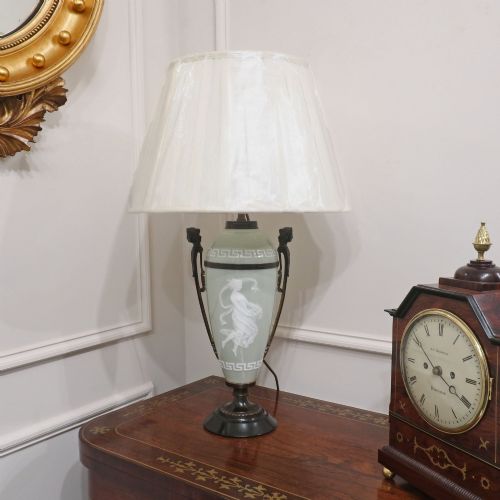
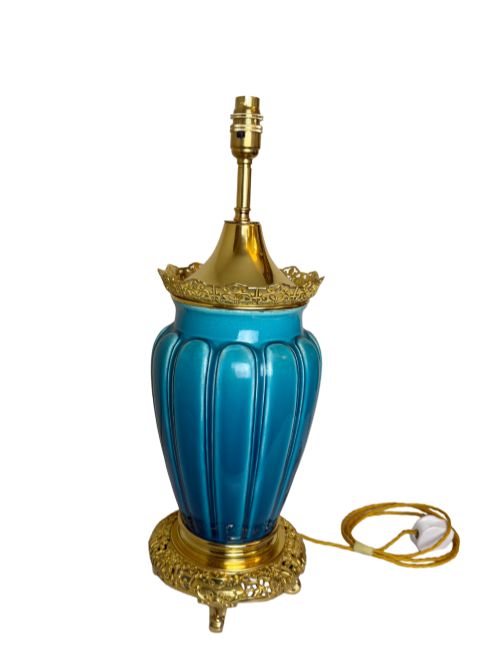
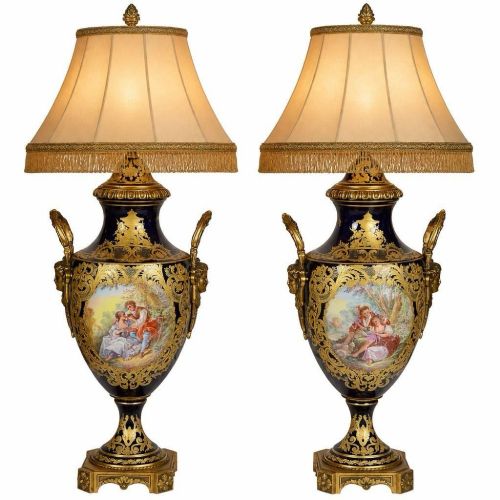
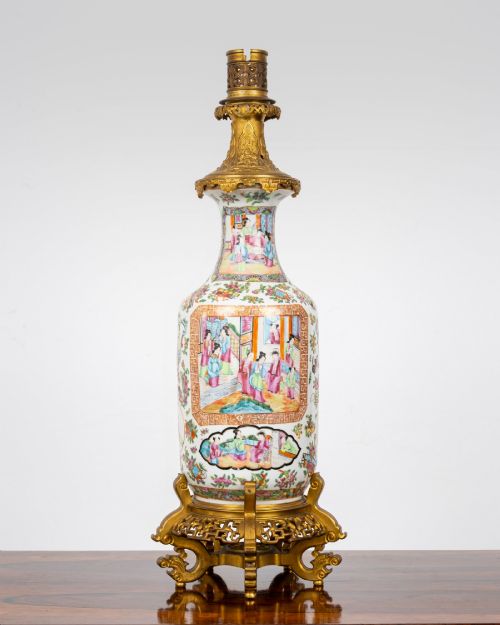
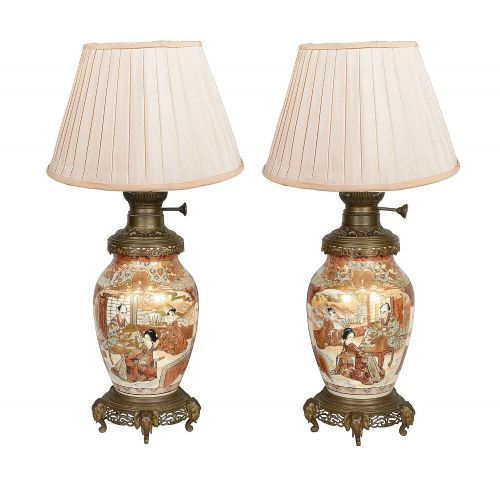
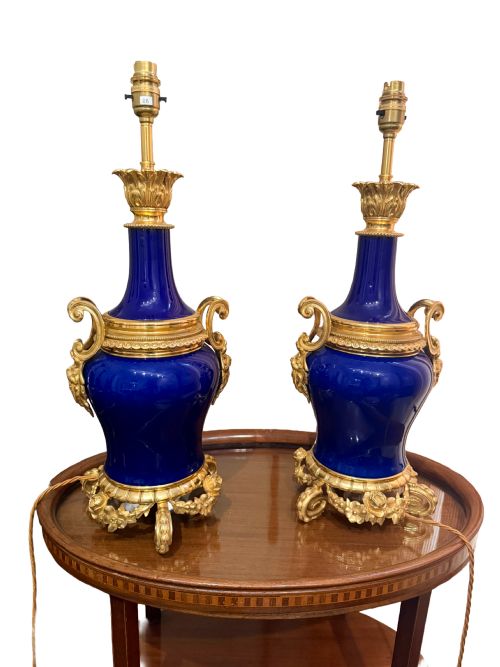
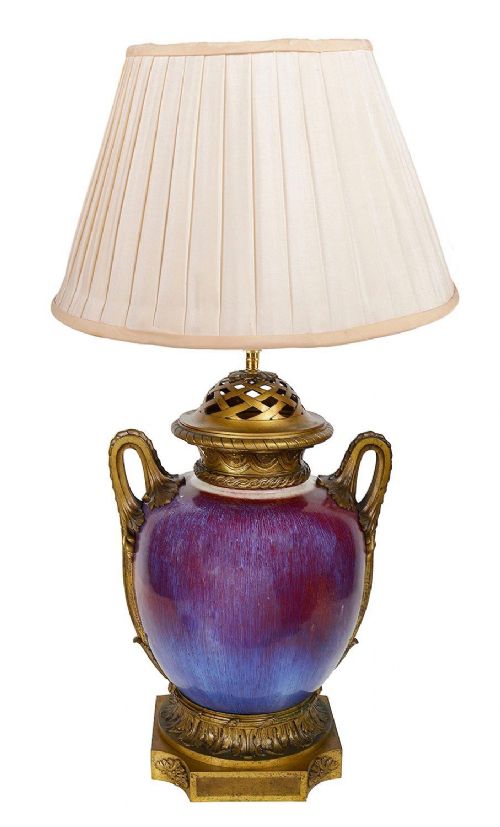


Bronze Mounted Porcelain Lamp
A bronze mounted porcelain lamp combines fine ceramics with chased metal mounts to sit as a striking centrepiece on a table or desk.
Bronze Mounted Porcelain Lamp
When you search for a bronze mounted porcelain lamp, you encounter pieces that merge historic ceramic vessels with metal fittings. These objects originate primarily from nineteenth century French workshops and Chinese export traditions, taking the form of table lamps, converted vases, and oil lamps.
The most common examples on this page pair Chinese porcelain bodies, such as celadon, rose medallion, and blue and white vases, with European metalwork. French pieces often utilise Sevres style porcelain decorated with hand painting and mounted in elaborate gilt bronze or ormolu.
Makers adapted older vessels or created new porcelain bodies specifically to receive metal mounts. The resulting forms span French Neoclassical, Louis XVI, and Rococo Revival styles alongside Chinoiserie and Japanese Meiji periods.
How they were made
Makers combined ceramic bodies of porcelain and earthenware with cast and chased gilt bronze, ormolu, and brass components. Metal mounts were specifically cast to fit the contours of each individual vase or vessel, securing the rim, base, and handles.
Techniques such as pate sur pate and hand painting adorned the porcelain surfaces before metal collars, feet, and pierced bases were fixed. Silk and fabric shades were subsequently added to complete the lighting conversion.
Several vases started life holding oil or flowers before a Victorian electrician gave them a second career as reading lamps.
What varies in quality
The refinement of the bronze chasing and the quality of the gilding set the standard for these pieces. Crisp detail in the metal mounts and rich, consistent glaze on the porcelain separate the finer examples from simpler production.
Integration between the ceramic body and the metal mounts determines success. The best examples show metalwork that conforms precisely to the vase without obscuring the finer details of the porcelain glaze.
Sevres·Samson·Gien
The Bronze Mounted Porcelain Lamp Glossary
- Ormolu
- Gilded bronze used for decorative mounts on furniture and ceramics. It involves applying a mercury and gold amalgam to a bronze base before heating.
- Celadon
- A ceramic glaze denoting a pale green hue. It originates from traditional Chinese kilns and mimics the appearance of jade.
- Pate sur pate
- A porcelain decoration technique where liquid clay is painted in successive layers onto a body. This builds up a low relief cameo effect.
- Sang de bouef
- A rich red copper glaze developed in Chinese kilns. The term translates from French as ox blood.
- Rose medallion
- A distinctive palette of enamel colours used on Chinese export porcelain. It typically incorporates pinks, greens, and gilt panels filled with figures and birds.
Bronze Mounted Porcelain Lamp: Frequently Asked Questions
What is a bronze mounted porcelain lamp?
A bronze mounted porcelain lamp is a decorative lighting fixture created by mounting a ceramic vase or vessel into a cast metal frame. These pieces combine historic pottery with functional electrical wiring.
Most examples adapt nineteenth century French or Chinese porcelain vessels. The metal mounts typically form decorative feet, collars, and handles.
How do I identify French styles?
French styles appear through neoclassical symmetry, gilt bronze mounts, and hand painted panels. Look for design motifs drawn from Louis XVI and Rococo revival periods.
Porcelain bodies often mimic Sevres production with blue glazes and gilt details. Ormolu mounts on these pieces emphasise scrollwork and foliate patterns.
Where were these lamps used?
These lamps functioned as primary lighting sources in formal nineteenth century reception rooms and parlours. They provided ambient illumination on side tables and mantelpieces.
Converted oil lamps and vases brought electric light into domestic spaces while displaying fine artistic ceramics. Their decorative presence suited affluent bourgeois and aristocratic interiors.
How do I clean the metal mounts?
Clean the metal mounts gently with a dry microfibre cloth to remove surface dust. Avoid abrasive metal polishes that can strip the original gilding or ormolu.
Keep moisture away from both the porcelain surface and the electrical components. Professional restoration is recommended for secure handling of antique metalwork.