

Bronze Mounted Centre Table
A bronze mounted centre table brings grand French style to the middle of a room, finished with cast metal mounts.
Bronze Mounted Centre Table
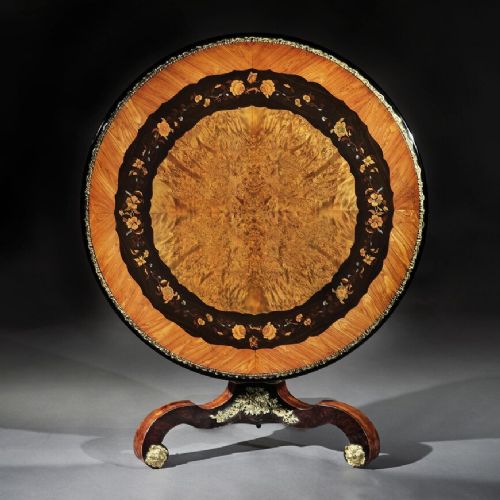
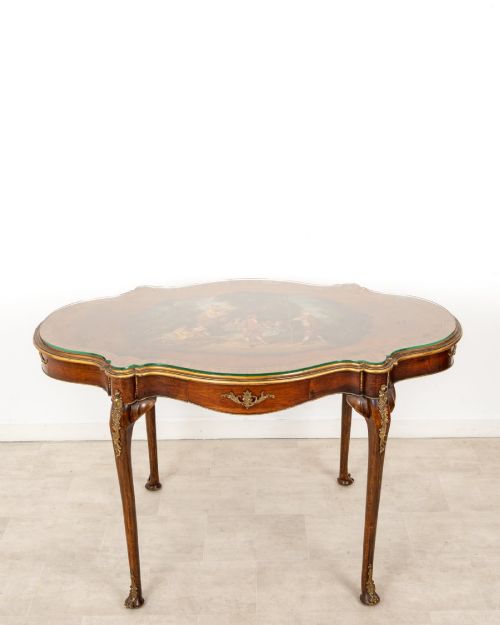
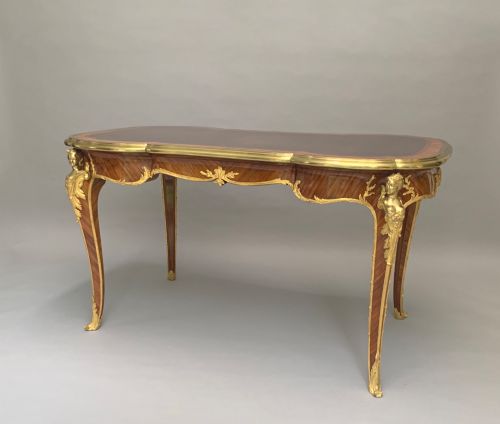
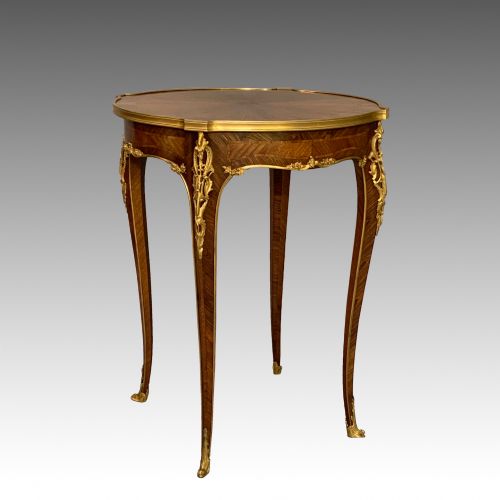
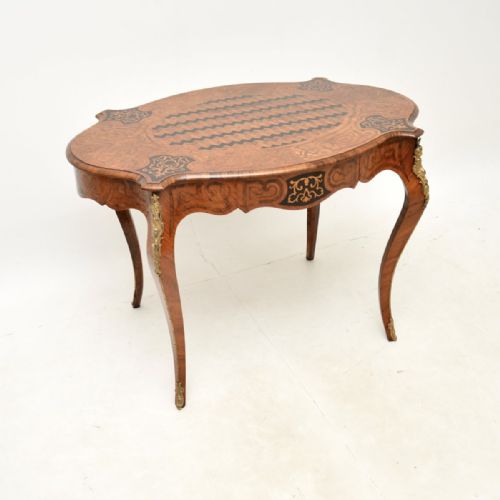
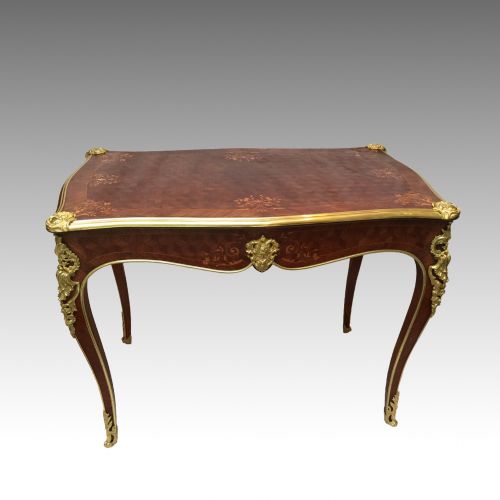
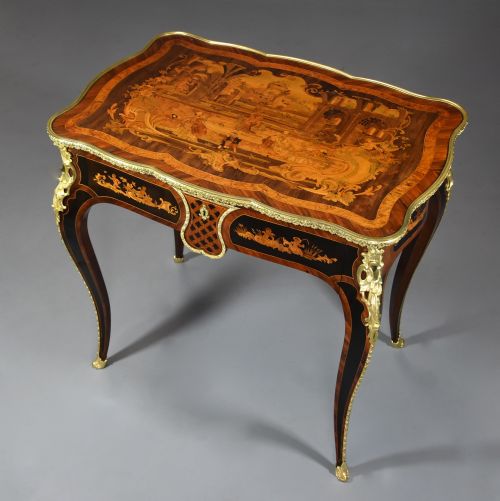
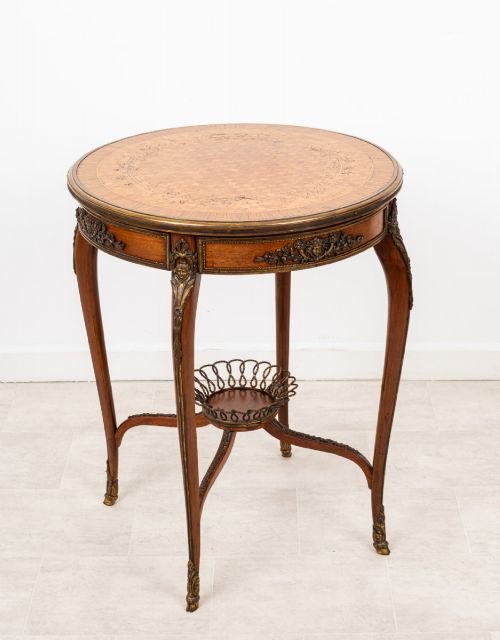
A bronze mounted centre table stands free in a room rather than against a wall, finished on all sides for 360-degree display. The form encompasses occasional tables, writing desks, and gueridons designed for formal reception rooms.
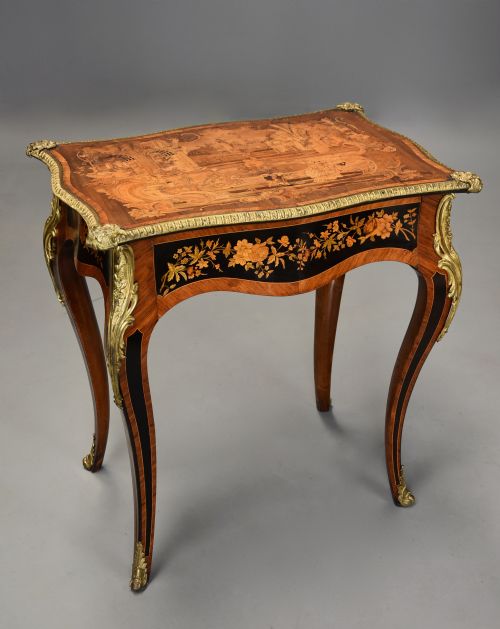
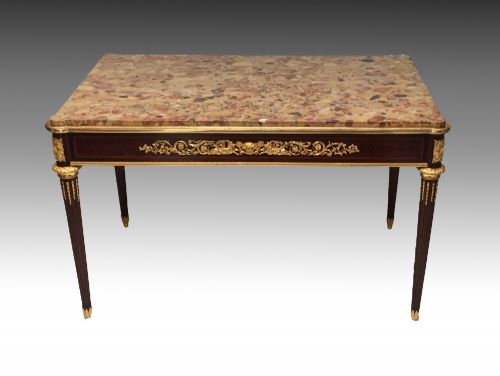
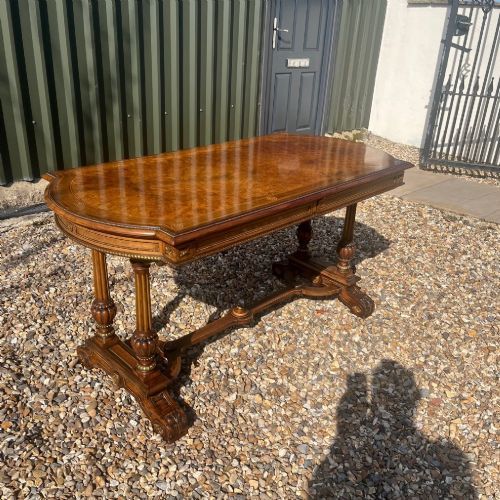
Most examples originate from nineteenth-century France and Victorian Britain, spanning revival periods like Louis XV and Louis XVI alongside the French Empire style. Makers utilised richly grained woods such as kingwood, walnut, and mahogany for the main carcase.
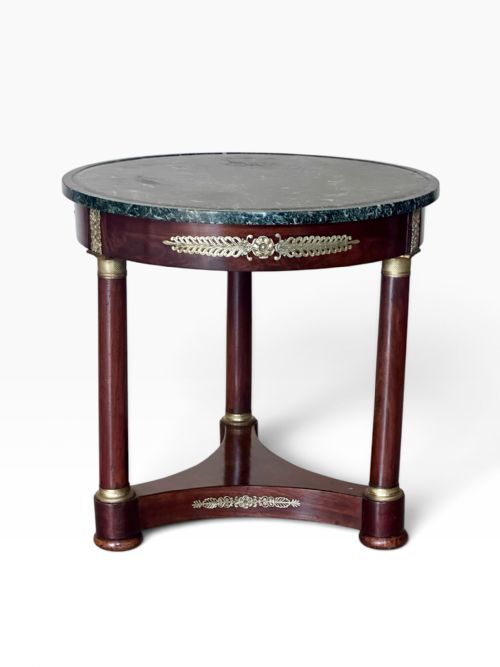
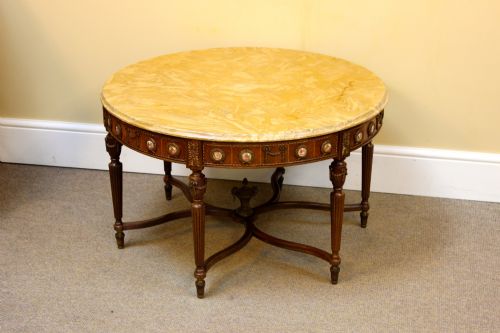
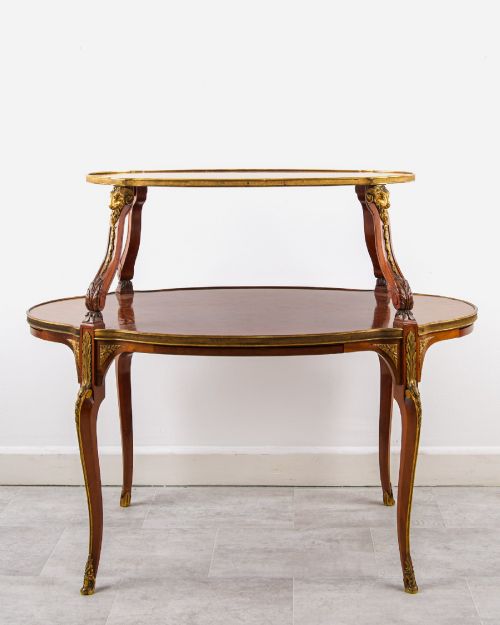
Marble tops appear frequently alongside wooden surfaces, often edged with cast metal galleries or chased mounts. Occasional variations include two-tier étagères and porcelain plaques set into the timber surface.
Materials and Technique
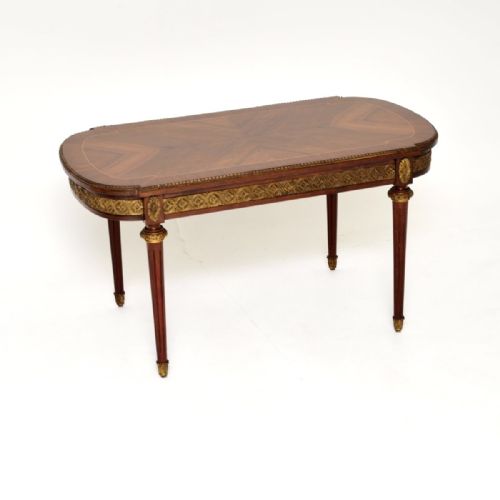
Mounts of ormolu, gilt bronze, and brass were cast, chased, and secured to corners, legs, and aprons to accent the structural lines. Marble inserts were carefully cut and fitted into recessed tops, while brass and marquetry inlay added intricate surface contrast.
Listings feature nineteenth-century French and Victorian pieces, predominantly utilising kingwood, walnut, and mahogany with ormolu mounts.
Craftsmanship and Execution
The precision of the ormolu chasing dictates the visual success of the mount, where sharp definition in the acanthus leaves and classical motifs separates skilled foundry work from soft casting. Ormolu should retain crisp detail and a rich, warm tone rather than a flat, painted finish.
Marquetry execution reveals the hand of the maker through tight joints in the veneers and thoughtful grain selection across floral or geometric patterns. Superior cabinetwork ensures the table remains rigid and stable without relying on excess adhesive or hidden structural reinforcement.
Edward Holmes Baldock·Francois Linke·Joseph-Emmanuel Zwiener·Paul Sormani·A. Beurdeley·Jackson and Graham
The Bronze Mounted Centre Table Glossary
- Ormolu
- Gilt bronze applied to furniture as decorative mounts and feet. The technique involves a mercury amalgam process on cast bronze to achieve a durable golden finish.
- Marquetry
- Decorative veneer work forming pictures or patterns using various coloured woods. Craftsmen cut thin slices of timber and fit them together like a puzzle.
- Gueridon
- A small round occasional table supported by a central pillar or three legs. Originating in the seventeenth century, the form remained popular in nineteenth-century revivals.
- Bureau Plat
- A flat-topped writing desk finished on all sides to stand centrally in a room. These desks typically incorporate leather writing surfaces and drawer tiers.
- Parquetry
- Geometric wood inlay forming repeating patterns such as cubes or chequers. It differs from marquetry by using strict geometric shapes rather than pictorial designs.
Bronze Mounted Centre Table: Frequently Asked Questions
Where should a centre table go?
These tables are designed to stand in the middle of a room, visible from all angles. They serve as central display surfaces for lamps, vases, or decorative objects.
Placement should allow adequate walkaround space, as the pieces feature detailed marquetry and mounts on every side.
How do I care for marble tops?
Marble surfaces require regular dusting with a soft dry cloth to prevent grit accumulation. Liquid spills should be blotted immediately to avoid staining the porous stone.
Avoid acidic cleaning products that can etch the polished surface over time.
What is a gueridon table?
A gueridon is a specific type of small, freestanding circular table typically supported by a central column or three slender legs. They function well as occasional pieces for lamps or drinks.
Many examples feature marble tops surrounded by pierced ormolu galleries.
How do I identify Louis XV style?
Louis XV revival pieces feature asymmetric curves, cabriole legs, and naturalistic floral marquetry. The overall silhouette avoids straight lines in favour of flowing, organic contours.
Ormolu mounts on these pieces tend to mimic scrolling foliage and shell motifs.