
Bronze Metal Vases
Bronze metal vases bring weight, rich patination and classical or oriental form to a room.
Bronze Metal Vases
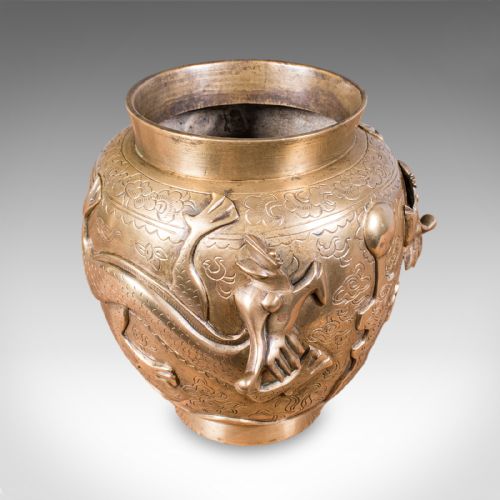
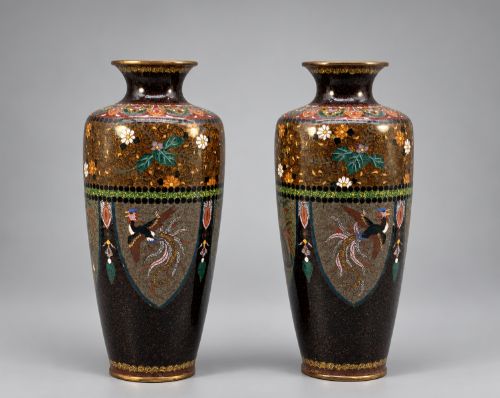
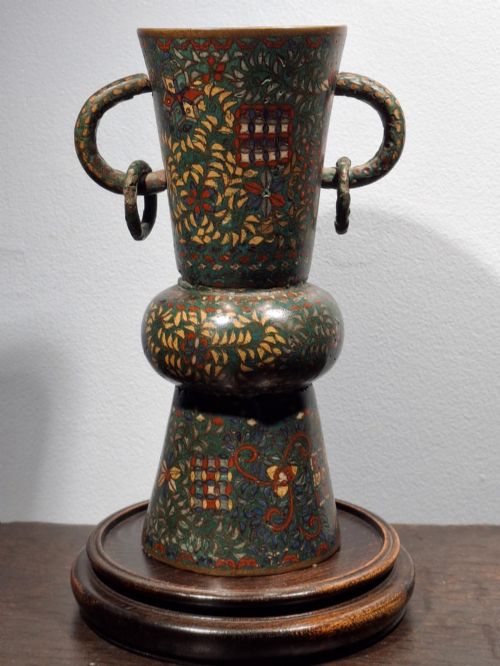
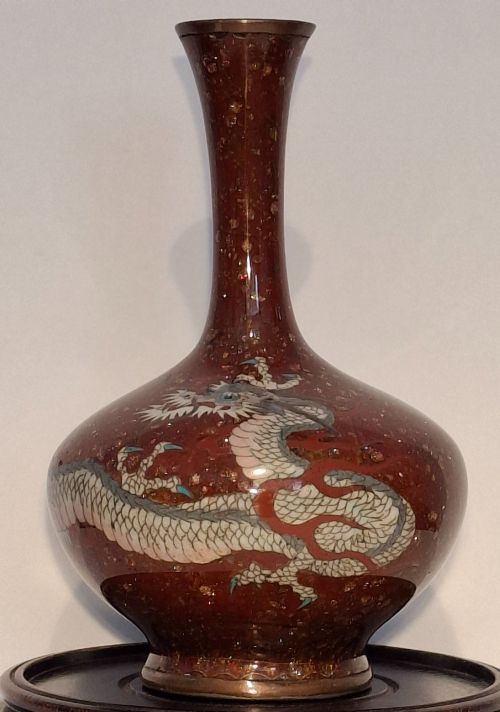
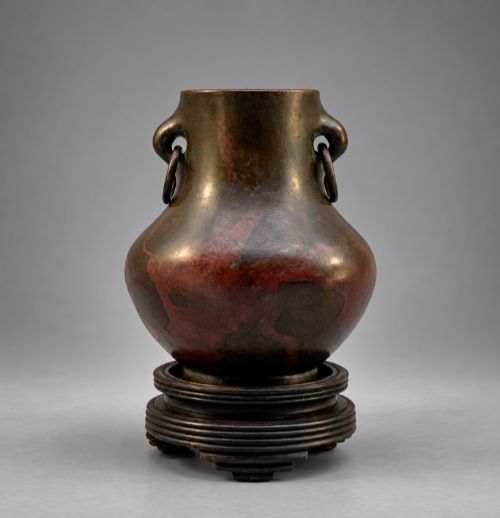
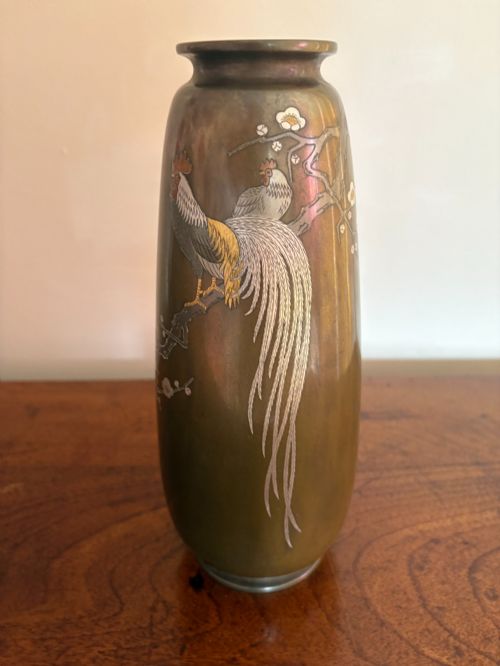
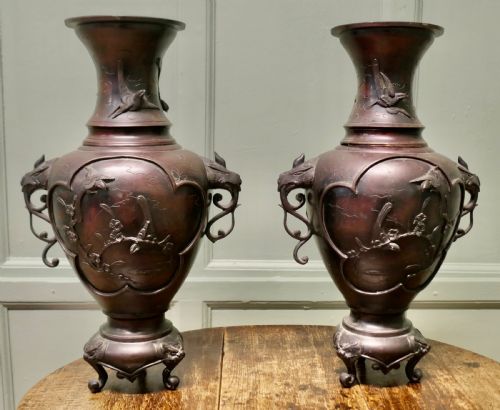
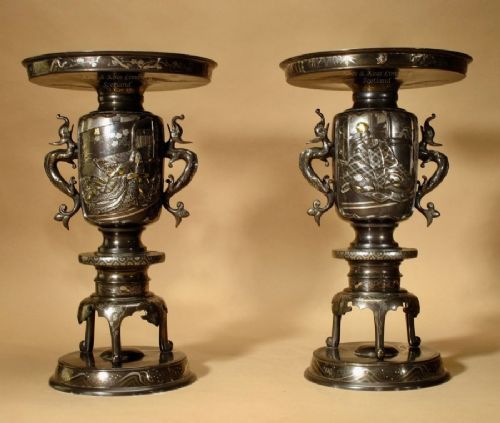
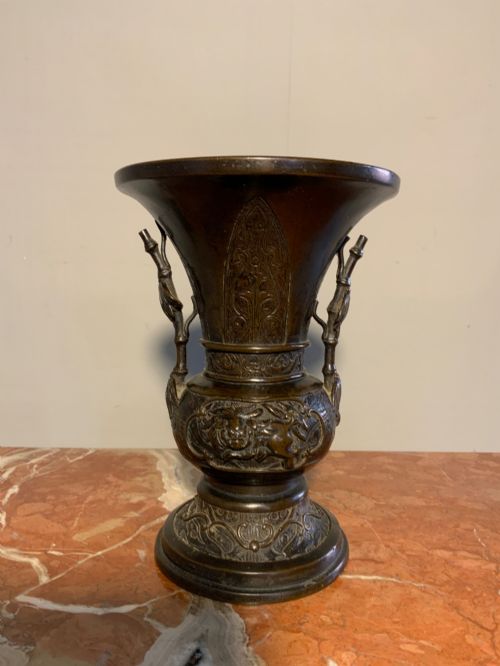
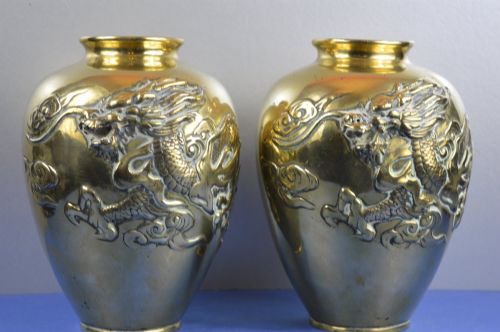
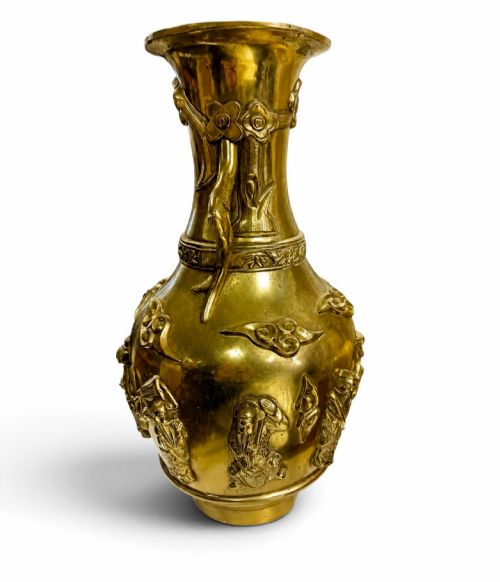
When you search for bronze metal vases, you encounter a varied collection of vessels ranging from classical European antiquarian reductions to intricate East Asian decorative items. The selection frequently includes Japanese Meiji period examples alongside Chinese vessels and French Grand Tour pieces dating from the nineteenth century.
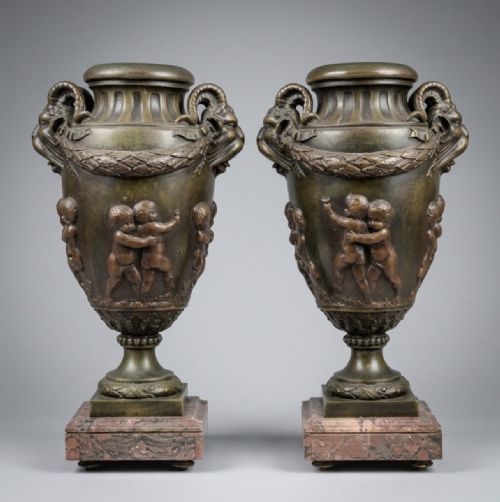
These objects span functional flower holders, monumental decorative urns, ewers and lidded vessels mounted on marble plinths. The nineteenth century yields the highest volume of examples, reflecting a period of intense enthusiasm for classical revivalism and imported oriental artistry.
Buyers choose these pieces to anchor a room with solid metalwork, whether through the dark patination of a campana shape or the fine inlay of an eastern baluster vase. They serve equally as sculptural centrepieces on tables and as paired architectural ornaments on mantelpieces.
How they were made
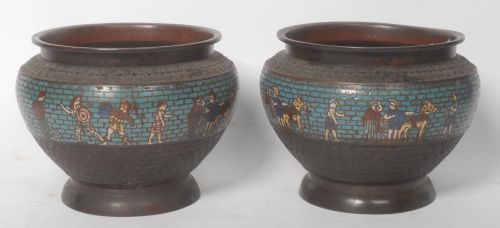
The primary material is cast bronze or copper alloy, frequently enriched with patination, gilding, or ormolu mounts to highlight the sculptural details. Many pieces incorporate mixed metal inlay, champleve enamel, or applied elements such as silver and copper highlights.
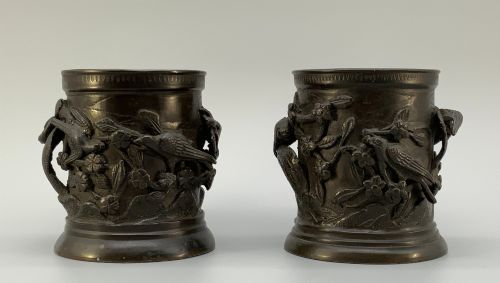
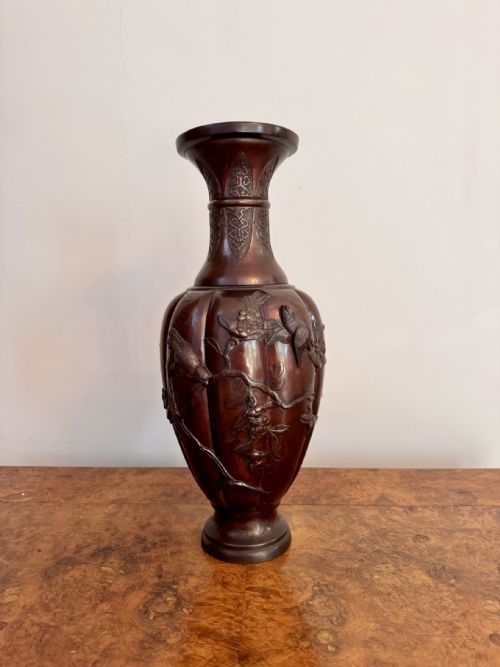
Foundries utilised traditional lost-wax casting methods or sand-casting techniques to achieve complex relief decoration, ranging from birds and blossom to classical mythological figures. Bases often combine the metal body with contrasting elements of carved marble or polished stone.
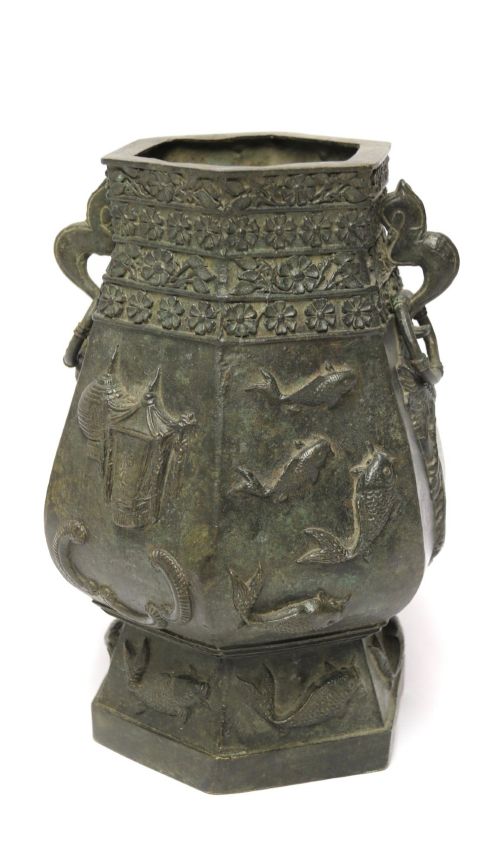
Several Meiji period vases depict animated scenes of carp, toads, and monkeys clambering over the metalwork.
What varies in quality
Quality rests in the crispness of the casting and the precision of the chasing, where sharper relief and cleanly defined figures distinguish superior works from softer, commercial productions. The depth and stability of the natural or applied patination also indicate the care taken during finishing.
Signed works by noted makers or those featuring complex mixed metal inlay and cloisonne enamel demonstrate higher standards of craftsmanship. The inclusion of original matched pairs, substantial weight, and integral architectural components like marble bases further elevate the status of a piece.
KANASAWA·Suzuki Chokichi·Masayuki·Inoue of Kyoto·NOGAWA·Hamada Yoshifumi
The Bronze Metal Vases Glossary
- Patinated bronze
- Bronze that has been treated with chemical solutions to produce a stable surface colour, ranging from deep brown to verdigris. This finish protects the metal and accentuates sculptural relief.
- Grand tour
- A nineteenth-century tradition where wealthy travellers collected classical antiquities and reductions of famous monuments in Italy. These bronze vases often replicate celebrated archaeological finds.
- Campana urn
- A bell-shaped vessel with a flared rim and foot, originating from ancient Roman pottery and widely revived in nineteenth-century metalwork. They frequently feature Bacchic handles or classical friezes.
- Champleve enamel
- A technique where troughs or cells are hollowed out of the metal surface and filled with vitreous enamel before firing. The surrounding metal lines form a distinct pattern between the coloured areas.
- Ormolu
- Finely ground high-carat gold mercury-gilded to a bronze object, creating a bright golden finish. It provides rich contrast against dark patinated bronze or marble components.
Bronze Metal Vases: Frequently Asked Questions
What is a Grand Tour bronze vase?
A Grand Tour bronze vase is a nineteenth-century miniature reduction of a famous classical antiquity, such as the Warwick or Borghese vase, collected by travellers in Italy.
These decorative objects were cast in bronze, sometimes with ormolu mounts, to bring classical European heritage into Victorian homes as mantelpiece ornaments.
How do I identify a Meiji period bronze vase?
Meiji period bronze vases date from the late nineteenth to early twentieth century in Japan and typically display exceptional metallurgical skill, often incorporating mixed metal inlay.
They frequently feature naturalistic motifs such as birds, blossom, dragons or figures, and may carry artist signatures or foundry marks on the base.
Were these vases used for holding flowers?
While many historical metal vessels functioned purely as decorative urns or display objects, numerous examples were designed specifically as flower holders or ritual vessels.
Interior cavities and watertight construction allowed them to hold water and stems, though many survive today valued primarily for their sculptural and decorative presence.
What is the difference between bronze and spelter?
Bronze is a durable alloy of copper and tin or other metals, valued for its strength, weight, and capacity to take rich patination.
Spelter is a softer zinc-based alloy that was frequently used as a cheaper substitute in the nineteenth century, often given a bronzed finish to imitate solid metalwork.