


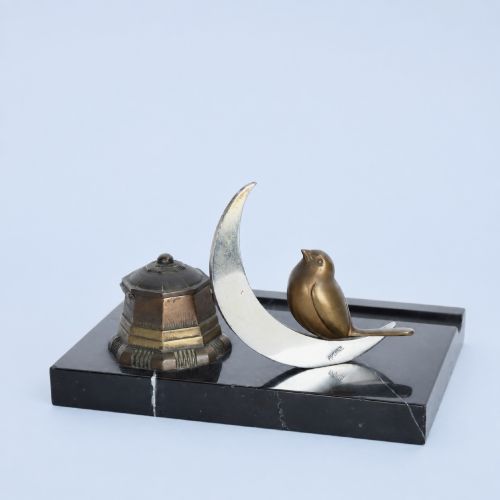




Bronze Marble Inkstand
A bronze marble inkstand combines heavy stone and cast metal to anchor a desk with nineteenth-century weight.
Bronze Marble Inkstand
A bronze marble inkstand brings together carved stone bases and cast metal mounts to hold writing ink upon a desk. Pieces matching this bronze marble inkstand search span the nineteenth century through the art deco period, drawing on French Empire, neoclassical, and art nouveau styles.
Most examples rely on a sturdy slab of marble, frequently mounted with ormolu, gilt bronze, or patinated bronze inkwells and decorative figures. The form ranges from simple desk tidies and single inkwells to elaborate double inkstands featuring lions, birds, and portrait busts.
Origins lean heavily toward French workshops and continental makers, incorporating green marble, sienna marble, black marble, and onyx. Buyers encounter everything from grand tour souvenirs to signed foundry pieces designed for formal writing desks.
Assessing Quality and Execution
The crispness of the bronze chasing dictates the visual success of the piece, separating finely detailed animal figures and foliate mounts from softer, commercial castings. Heavier, richly coloured marble bases with precise bevelling indicate superior workshop selection.
Signed works by documented makers command greater attention due to the known standard of the foundry. Original glass liners, intact gilding, and matching components preserve the integrity of the ensemble.
Bronze Marble Inkstand Retail Price Guide 2026
Typical asking prices for bronze marble inkstand among the pieces listed under this phrase on Sellingantiques today, from the lower quarter to the upper quarter. They describe what is for sale here now, not the wider market.
Listings feature pieces spanning the 1800s to 1930, uniting marble, ormolu, and patinated bronze in French Empire, Art Nouveau, and Neoclassical styles.
Franz Bergmann·Lefebvre of Belgium·Albert Marionnet·Jules Dalou
The Bronze Marble Inkstand Glossary
- Ormolu
- Gilt bronze produced by applying a mercury and gold amalgam to cast bronze and heating it until the gold adheres. This technique creates a durable, warm metallic lustre characteristic of nineteenth-century desk accessories.
- Encrier
- The French term for an inkstand or inkwell. Makers used this designation for desk furniture housing ink pots, sanders, and pen trays.
- Sienna marble
- A yellow-brown Italian marble with deep purple and grey veining. It provides a striking contrast to patinated and gilded bronze mounts.
- Grand Tour
- The nineteenth-century practice of young Europeans travelling the continent to collect culture and mementos. Many portable bronze and marble inkstands originated as travel souvenirs.
- Patinated bronze
- Metal treated with chemical solutions to alter its surface colour to brown, black, or green. This finish protects the bronze while defining sculptural details.
Bronze Marble Inkstand: Frequently Asked Questions
Are these inkstands still practical for daily writing?
While these pieces were built for functional desktop use with dip pens and liquid ink, modern writers typically treat them as decorative desk accessories. Many historic inkwells lack airtight seals, causing liquid ink to evaporate quickly.
Collectors appreciate them for their sculptural presence and historical craftsmanship rather than active daily service. Glass or ceramic liners should be handled with care if removed for cleaning.
How can I tell nineteenth-century pieces apart?
Examine the casting quality, fastening screws, and the natural wear on the base. Nineteenth-century examples often feature hand-chased bronze details and heavy stone bases shaped by period masons.
Stylistic cues such as neoclassical motifs or empire laurel wreaths point directly to specific decades of production. Signed pieces or foundry marks provide further confirmation of origin.
What is the difference between an inkstand and an inkwell?
An inkwell is a single container designed specifically to hold writing ink. An inkstand is a larger desk set that typically incorporates one or more inkwells alongside trays for pens, stamps, or sanders.
Desk sets often sit on a substantial tray base made of marble or wood, uniting the individual writing implements into one cohesive desk accessory.