


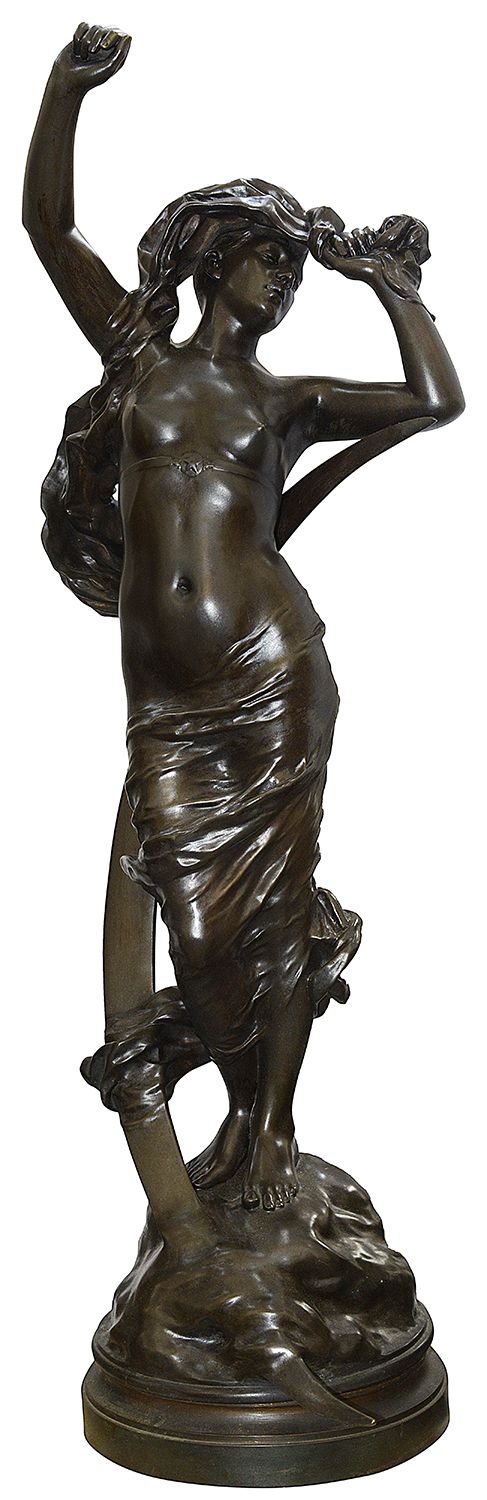


Bronze Maiden Statuette
A bronze maiden statuette captures classical grace and domestic elegance in cast metal, bringing nineteenth and twentieth-century sculpture straight to your mantelpiece.
Bronze Maiden Statuette
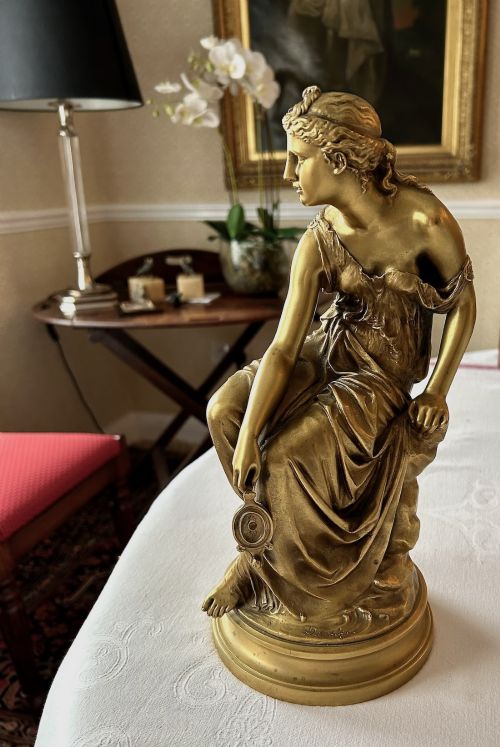
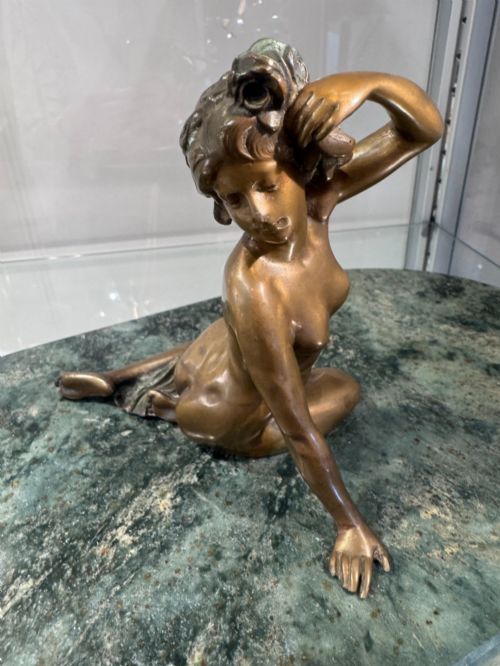
A bronze maiden statuette spans the nineteenth century through the 1930s, taking forms from neoclassical figures and mythological subjects to Art Nouveau dancers and Art Deco studies. These works range from substantial mantel sculptures by named French founders to table lamps mounted on china bases.
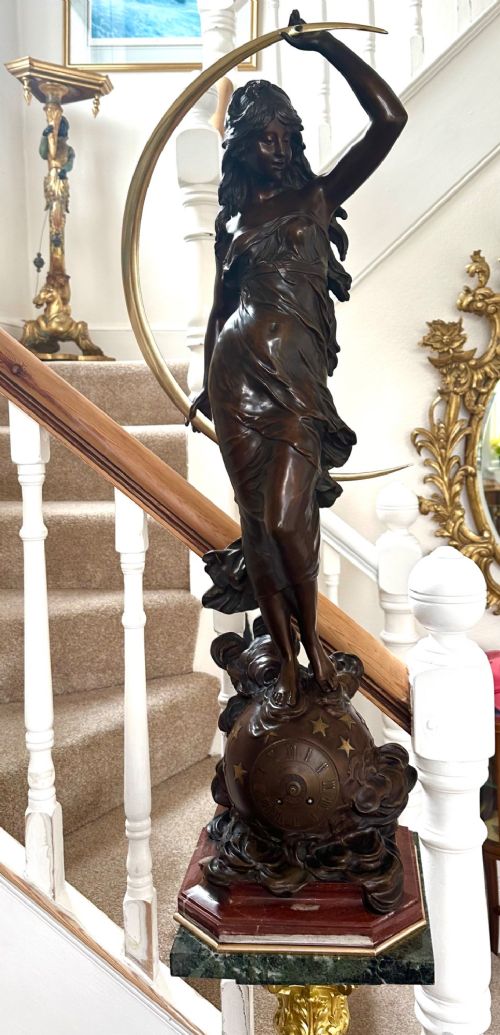
The pieces you meet most often on this page are nineteenth-century French casts and early twentieth-century interpretations, featuring patinated or gilt surfaces. Sculptures depict seated women, standing maidens, and classical heroines like Selene and the Danaides, sometimes paired with marble plinths.
Makers and foundries of the period utilised traditional lost-wax or sand-casting methods to render flowing drapery and detailed hair. While some examples stand independently as pure sculpture, others integrate functional elements such as lighting.
Materials and casting methods
Foundries cast these figures primarily in bronze, applying patinated or gilt finishes to alter the surface colour and texture. Many pieces incorporate secondary materials, mounting the cast figures upon marble bases or china lamp components.
French workshops employed skilled artisans to chase and finish the raw metal casts, defining details like plaited braids and classical drapery. The combination of patinated bronze with contrasting stone or ceramic provides structural stability and visual weight.
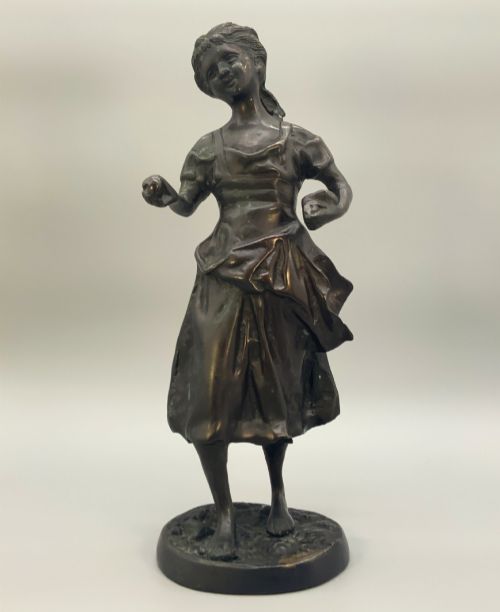
Whip Girl stands ready in bronze, proving that even classical maidens occasionally carried leather.
Judging quality in cast bronze
The choice of base materials also distinguishes the range, with solid marble plinths and gilt surfaces marking out more ambitious commissions. Signatures from established sculptors and identifiable Parisian foundries add another layer of distinction to the finished statuette.
Etienne-Henri Dumaige·Bruno Zach·Moreau Family·August Moreau·S. Kinsburger·Houdebine Paris·Charlotte Monginot
The Bronze Maiden Statuette Glossary
- Patinated bronze
- Bronze that has been chemically treated to produce a specific surface colour, ranging from dark brown to green tones. This finish protects the metal and defines sculptural contours.
- Gilt bronze
- Bronze coated with a thin layer of gold or gold-coloured alloy to give a brilliant, reflective surface. It appears frequently in neoclassical and French decorative works.
- Lost-wax casting
- A traditional method of creating metal sculptures from an original model coated in wax, which is melted away to form a mould. This technique allows for fine, intricate detail in the final bronze figure.
- Neoclassical
- A style drawing inspiration from the art and culture of classical antiquity, focusing on proportion, classical drapery, and mythological themes. Figures of maidens in this style reflect ancient Greek and Roman ideals.
- Grand Tour
- A nineteenth-century tradition where travellers collected small bronzes and antiquities across Europe. These statuettes served as cultural souvenirs of classical sites.
Bronze Maiden Statuette: Frequently Asked Questions
What periods do these bronze maidens come from?
The listings span from the nineteenth century through the Victorian era and into the Art Nouveau and Art Deco periods of the 1920s and 1930s.
Most works originate from French foundries and sculptors working between 1880 and 1930.
How were these figures displayed originally?
These statuettes stood on mantelpieces, tables, and cabinets as decorative art within period interiors.
Some examples were adapted as table lamps, combining bronze figures with china bases for domestic illumination.
What materials support the bronze figures?
Many statuettes feature solid marble bases that anchor the metal sculpture and elevate its presentation.
Others incorporate patinated or gilt bronze surfaces, sometimes mounted alongside ceramic components.
How can I tell a French nineteenth-century bronze?
Nineteenth-century French bronzes often bear foundry stamps or artist signatures directly into the metal base.
Stylistic cues include neoclassical drapery, classical subject matter, and refined patination typical of Parisian workshops.