





Bronze Inkwell Stand
A bronze inkwell stand brings sculptural presence to a desk, holding writing vessels in patinated metal.
Bronze Inkwell Stand
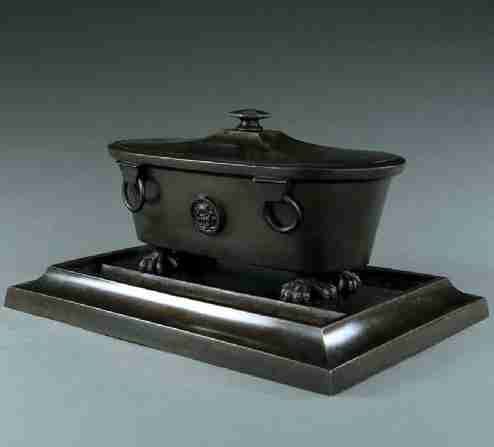
A bronze inkwell stand serves as a desk accessory combining metal receptacles for ink with a fixed base or tray. These pieces range from simple nineteenth century containers to elaborate figural and architectural desk stands.
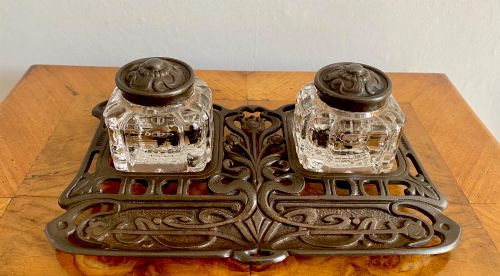
The bronze inkwell stand appears frequently in nineteenth century French and English forms. Collectors encounter styles spanning French Empire, Art Nouveau, Neoclassical, and Victorian novelty pieces.
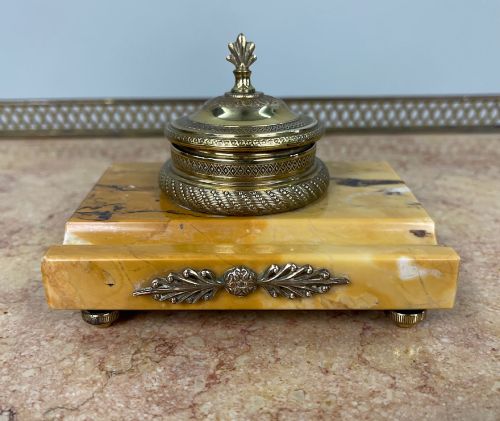
Makers utilised various metals alongside bronze, creating desk sets that incorporated marble, mahogany, and glass. Many examples feature fitted glass ink inserts paired with hinged lids and integrated pen rests.
How They Were Made
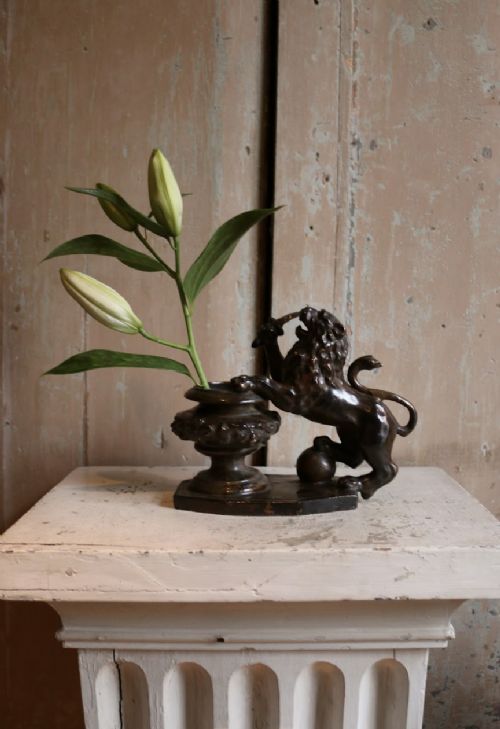
Foundries cast bronze and ormolu into intricate figural and architectural shapes, employing patination and gilding to achieve varied surface finishes. Artisans chased the cooled metal surfaces by hand to sharpen details on motifs such as lions, dogs, and human busts.
Stonemasons cut and polished marble, onyx, and coromandel-wood to form heavy bases that anchored the metalwork. Glassmakers blew and moulded clear or coloured inserts to fit securely within the bronze collars.
Bronze Inkwell Stand Retail Price Guide 2026
Typical asking prices for bronze inkwell stand among the pieces listed under this phrase on Sellingantiques today, from the lower quarter to the upper quarter. They describe what is for sale here now, not the wider market.
Mr Fox wears a nightgown on one gilt bronze inkwell, proving that nineteenth century desk accessories did not take themselves too seriously.
What Varies in Quality
The refinement of the casting and hand-chasing dictates the distinction between standard production and exceptional studio work. Crisp definition in figural subjects, such as animals or classical figures, indicates superior craftsmanship.
The integration of materials determines the overall cohesion of the stand. Heavy marble or onyx bases paired with fire-gilt ormolu and original glass ink inserts represent the higher tier of desk accessories.
Albert Marionnet·Maurice Dufrene
The Bronze Inkwell Stand Glossary
- Ormolu
- Gilded bronze produced by applying a mixture of mercury and gold leaf to a bronze base and heating it. This technique creates a durable, luminous golden finish characteristic of French decorative arts.
- Patinated Bronze
- Bronze treated with chemical solutions to alter its surface colour and tone. This process darkens the metal or creates green and brown hues that highlight sculptural contours.
- Champlevé Enamel
- A technique where troughs are dug into the bronze surface and filled with vitreous enamel paste before firing. The piece is then ground smooth to create colourful decorative patterns.
- Grand Tour
- Nineteenth century travel souvenirs acquired by wealthy Europeans visiting classical sites. These small bronzes often replicated ancient sculptures or architectural elements.
- Desk Stand
- A larger plateau or tray designed to hold multiple inkwells, pen rests, and sometimes candlestands or wafer boxes. It consolidates writing implements onto a single unified base.
Bronze Inkwell Stand: Frequently Asked Questions
How do I date a bronze inkwell stand?
Dating relies on stylistic indicators such as the flowing organic lines of Art Nouveau or the classical symmetry of Neoclassical and French Empire designs. Material combinations, such as ormolu mounted on mahogany or onyx, also point to specific nineteenth century decades.
Examining the manufacturing techniques and the presence of original glass inserts provides further clues to the period of origin. Hallmarks or maker signatures, where present, help narrow down the exact timeframe.
Were these stands used daily?
These stands functioned as essential desktop equipment for writing letters and conducting correspondence before the widespread adoption of the fountain pen. Owners dipped steel or quill pens directly into the glass ink inserts housed within the metal framework.
Their heavy bases made of marble or cast bronze ensured the stands remained stable during vigorous daily writing. Many wealthy households maintained multiple sets across different rooms and studies.
How do I care for antique bronze?
Maintaining antique bronze requires gentle dusting with a soft, dry cloth to prevent the accumulation of dirt in recessed details. Avoid using harsh metal polishes or chemical cleaners that can strip away the original historical patination.
Preserving the surface involves keeping the metal away from excessive moisture and direct sunlight. Handled carefully, the natural patina will continue to deepen over time.