


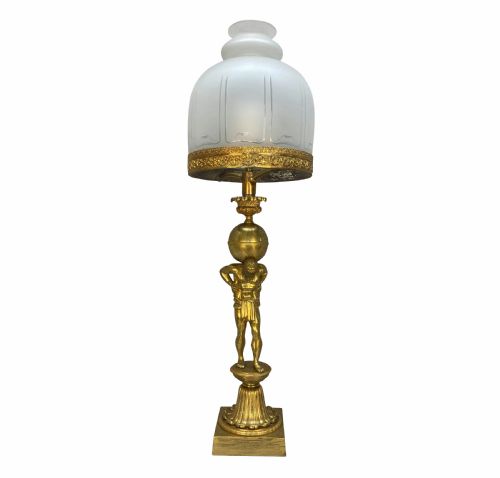

Bronze Glass Light Shade
A bronze glass light shade combines rich metalwork with luminous glass to cast a warm, atmospheric glow in any room.
Bronze Glass Light Shade
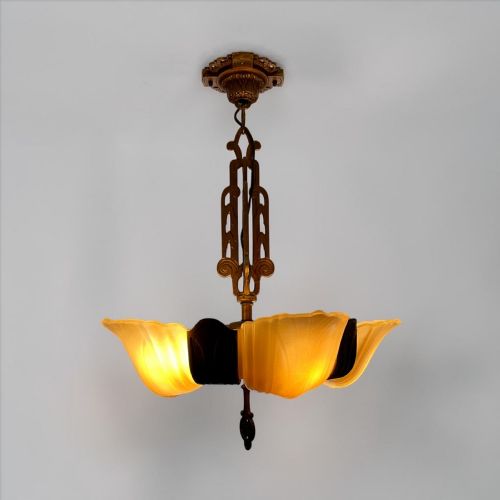
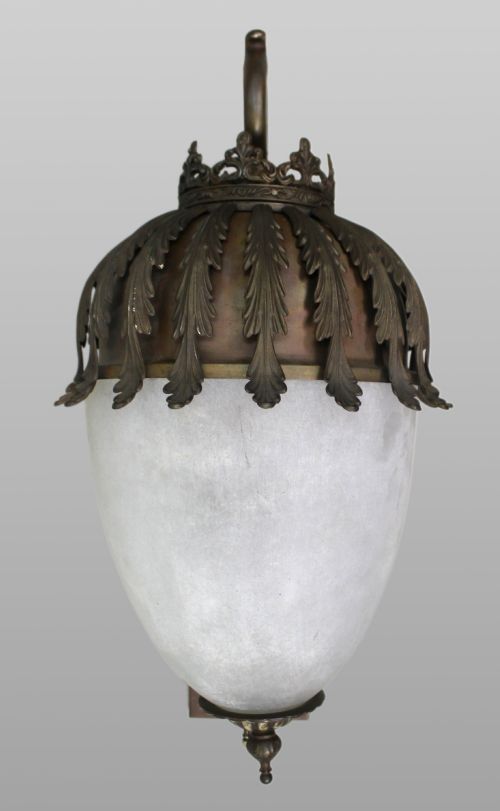
A bronze glass light shade represents a diverse group of light fittings that combine bronze, brass, or gilt metal frameworks with glass elements. When searching for a bronze glass light shade, buyers encounter everything from slip shade ceiling lights and opalescent pendants to heavy chandeliers and table lamps. The pieces span from the nineteenth century through the Edwardian era and into the Art Deco period of the nineteen-thirties.
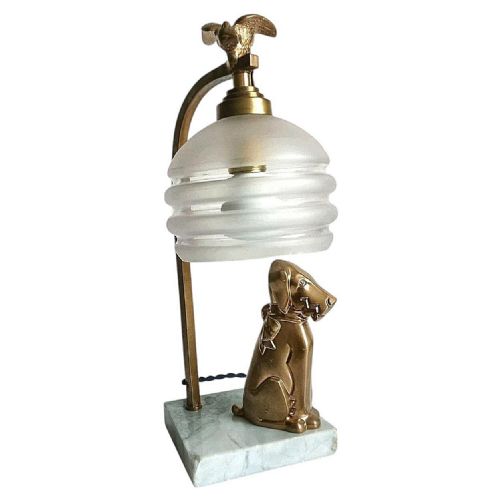
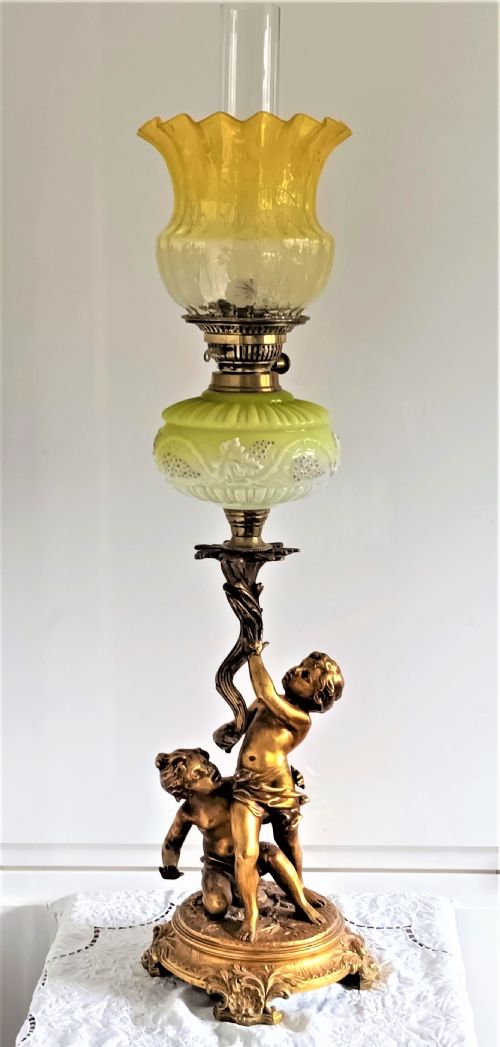
The selection here encompasses ceiling lights, wall sconces, and desk lamps originating from English, French, and American workshops. Forms range from simple frosted glass shades mounted in bronze to elaborate figural bases featuring cherubs, dogs, and parrots. These luminaires served practical illumination purposes in hallways, grand salons, and offices alike, functioning simultaneously as decorative interior objects.
Materials and construction methods
Maker workshops built these fixtures using durable metal frames cast in bronze, brass, or gilt metal, often combined with marble bases or spelter structures. Metal components were cast, chased, and gilded, or finished in darker patinations to suit contemporary tastes of the nineteenth and twentieth centuries. Structural integrity relied on robust mounting points designed to support heavy glass elements safely.
The glass components paired with these metal mounts took various forms, including frosted glass, opaline glass, cut crystal, and moulded slip shades. Manufacturers utilised specialised pressing and blowing techniques to create diffusers that softened the light emitted from early electric bulbs or oil burners. The intersection of heavy metal casting and delicate glasswork defines the technical achievement of these pieces.
Materials recur across the inventory in combinations of frosted glass, opaline glass, cut glass, bronze, brass, and gilt metal.
Assessing quality in period lighting
Quality in these luminaires rests primarily on the crispness of the metal casting and the integrity of the glass elements. Superior examples display finely detailed chasing on bronze or ormolu mounts, where human figures, foliage, and geometric motifs retain sharp definition. Inferior pieces often exhibit softer casting details and simpler, mass-produced connections between metal and glass components.
The harmony between the metal armature and the glass shade dictates the aesthetic success of the fixture. High-grade fittings utilise thick, heavy glass - such as opalescent or cut crystal - that fits securely within its bronze or brass collar without loose tolerances. The weight and stability of the base or suspension hardware further separate standard utilitarian items from exceptional decorative commissions.
Perry & Co·The Charles Parker Company·Tiffany Studios NYC·Auguste Moreau
The Bronze Glass Light Shade Glossary
- Slip shade
- A type of moulded glass shade used predominantly in Art Deco light fixtures that slots directly into a metal frame or basket. These shades distribute light evenly while displaying stylised geometric or floral relief patterns.
- Opaline glass
- A milk-white or tinted translucent glass popular in nineteenth-century lighting. It softens bulb glare and diffuses a gentle, milky illumination across the room.
- Ormolu
- Gilt bronze produced by applying a finely ground high-carat gold mercury amalgam to a bronze object. This technique imparts a rich, lasting golden finish characteristic of fine French decorative arts.
- Spelter
- An alloy of zinc and other metals utilised as a cheaper alternative to bronze for figural lamp bases and decorative mounts. It often received a bronze-coloured patination to mimic more expensive materials.
- Chandelier
- A branched ceiling-mounted lighting fixture designed to hold multiple bulbs or candles. Period examples frequently incorporate cut glass crystals and bronze frames to maximise light reflection.
Bronze Glass Light Shade: Frequently Asked Questions
Can these antique lights be rewired for modern use?
Most antique fixtures accept modern wiring safely when entrusted to a qualified professional restorer. Rewiring ensures compliance with current electrical standards while retaining the original sockets and structural hardware where possible.
Discuss wiring options with your electrician to preserve inline switches or unique mounting brackets. Professional adaptation protects the historic value of the metalwork during installation.
What is the difference between an oil lamp and a ceiling light?
Oil lamps functioned as portable or table-bound lighting sources utilising liquid fuel reservoirs and burners before widespread electrification. Ceiling lights hung permanently from overhead suspension points to illuminate entire rooms from above.
Many period oil lamps later underwent conversion to electricity during the twentieth century. Ceiling lights, conversely, were engineered specifically for overhead structural loads from the outset.
Where should I hang a bronze ceiling light?
Hang ceiling lights in rooms with sufficient vertical clearance, such as high-ceilinged hallways, dining spaces, or living rooms. Heavy chandeliers and lanterns require secure anchoring into ceiling joists rather than plaster alone to support their substantial weight.
Consider the scale of the room when selecting a pendant or lantern to maintain visual balance. Positioning the fixture centrally allows the bronze frame and glass shade to distribute light effectively.