


Bronze Floral Vessel
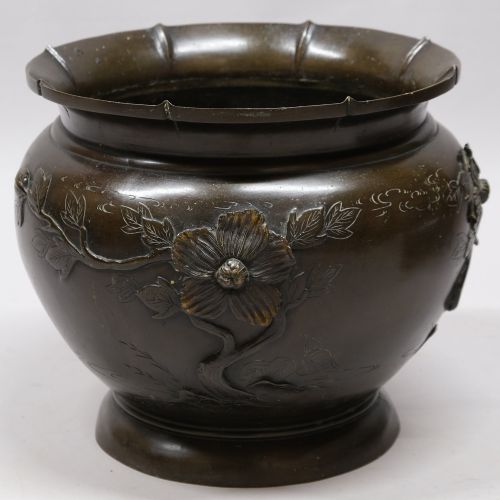
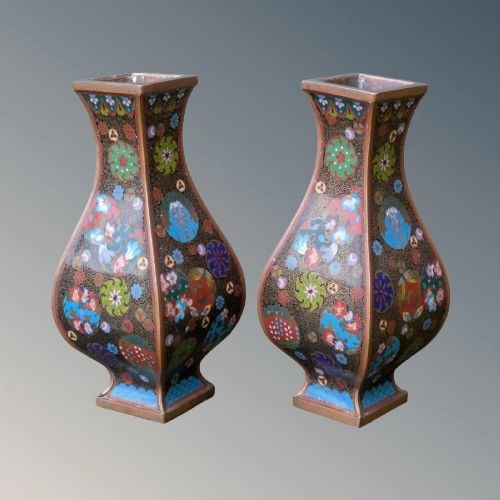
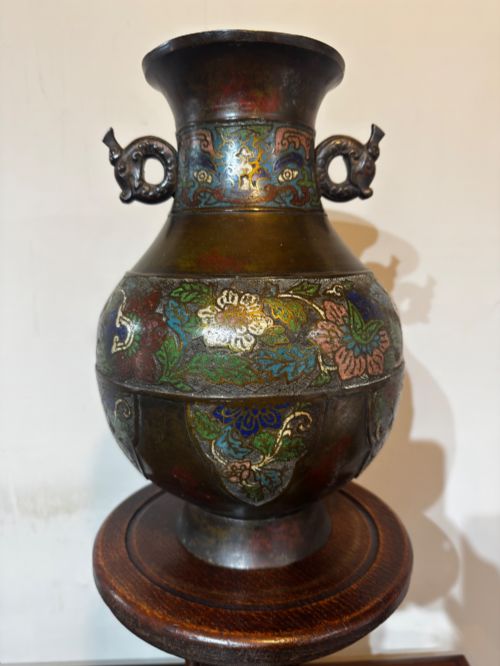
These bronze floral vessels are decorative pieces and planters forged from copper alloy and enamel.
Bronze Floral Vessel
A bronze floral vessel serves as a container for displaying stems, branches, or potted plants in domestic settings. The pieces gathered here range from nineteenth century Japanese jardiniere bowls to Chinese cloisonne vases and Italian Grand Tour goblets.
How they were made
The foundation of each piece is cast bronze, copper, or brass, sometimes enriched with mixed metals. Artisans applied surface decoration through champleve and cloisonne enamel techniques, wiring thin metal strips to form cells filled with coloured glass paste before firing.
Japanese and Chinese workshops utilised intricate relief work, soldering birds, floral motifs, and raised details onto the vessel bodies. European Grand Tour pieces and later twentieth century items demonstrate alternative casting and patination methods.
Object forms span from heavy ginger jars and jardiniere bowls to delicate posy urns and sake kettles.
What varies in quality
The refinement of the casting and the precision of the enamel work dictate the standing of each vessel. Finer examples display crisp, deeply chased relief details and evenly fired cloisonne cells without pitting or surface distortion.
Artisanal signatures and mixed metal inlay elevate certain pieces above standard production items. The weight of the metal and the complexity of the decorative scheme reflect the skill invested by the maker.
Charles Korschann
The Bronze Floral Vessel Glossary
- Cloisonne
- An enamelwork technique where thin metal wires are soldered to a metal base to create compartments filled with paste and fired. This method produces intricate colourful patterns across the body of the vessel.
- Champleve
- A technique where troughs or cells are carved directly into the surface of the metal and filled with enamel before firing. It yields bold, deeply embedded designs.
- Jardiniere
- A large decorative bowl or pot designed to hold growing plants or floral arrangements. They frequently appear in ceramic or bronze forms.
- Meiji Period
- The era in Japanese history spanning from eighteen sixty-eight to nineteen twelve, noted for opening trade and producing highly detailed metalwork and cloisonne.
- Grand Tour
- A traditional trip through Europe undertaken by upper-class young men in the eighteenth and nineteenth centuries, resulting in the acquisition of souvenirs such as bronze goblets.
Bronze Floral Vessel: Frequently Asked Questions
What is a bronze floral vessel?
A bronze floral vessel is a metallic container designed to hold flowers, plants, or serve as an ornamental centrepiece. These items encompass items such as vases, jardiniere bowls, and ginger jars.
They reflect diverse cultural traditions, originating from Japanese Meiji workshops, Chinese dynasties, and European Grand Tour travels. Each piece combines metal casting with decorative surface techniques.
How were these vessels used historically?
Historically, these vessels functioned as practical holders for floral displays or interior ornaments on desks and tables. Some acted as planters for indoor greenery, while others stood as decorative objects of status.
Export markets in the nineteenth century drove the production of many Japanese and Chinese examples for Western homes. European versions often served as commemorative souvenirs from continental travel.
How do I clean a bronze vessel?
Cleaning requires a soft, dry cloth to remove dust without disturbing the patina or enamel surfaces. Avoid harsh chemical cleaners or abrasive polishes that strip historical finishes.
Enamelled sections should be treated with particular care to prevent moisture damage or scratching. Gentle maintenance preserves the integrity of the original metalwork.
How can I tell the period?
Dating relies on stylistic markers, manufacturing techniques, and regional motifs characteristic of specific eras like the Meiji or Qing periods. Nineteenth-century pieces often display distinct patination and hand-applied cloisonne work.
Signatures or marks on the base provide further clues to origin and approximate date. Comparing the weight, casting method, and decorative style helps place an item within its historical context.