



Bronze Enamel Plate
A bronze enamel plate brings complex metalwork and meticulous surface pattern into a room, offering striking decorative presence from the Meiji and Edo periods.
Bronze Enamel Plate
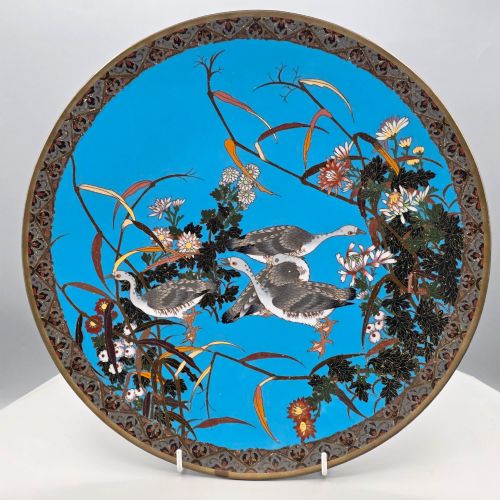
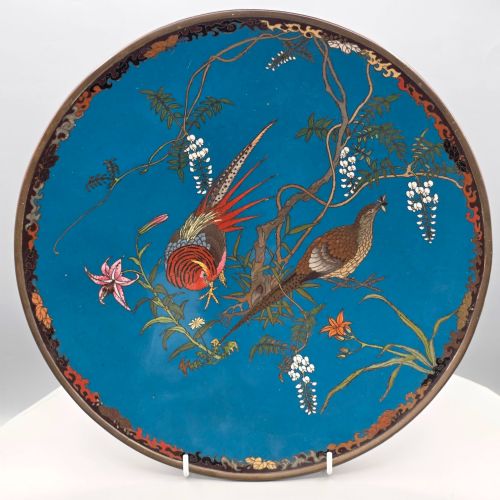
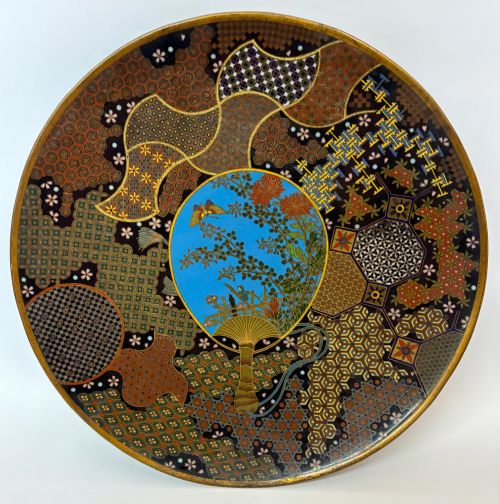
A bronze enamel plate encompasses decorative chargers, wall plates and dishes originating from Japan during the nineteenth century. These objects display intricate pictorial scenes featuring birds, geese, flowers, chrysanthemums, butterflies, frogs, koi and dragons.
The selections span the Meiji period and the Edo period, capturing the evolution of decorative metalwork and surface finishing. They serve primarily as display pieces, often taking the form of large chargers measuring up to forty centimetres across.
How they were made
The construction relies on a base of bronze, brass or copper, shaped into plates, dishes and chargers. Artisans applied cloisonne enamel, often outlining motifs with fine brass or silver wire to contain the coloured glass pastes before firing.
Certain variations utilise porcelain bases with surface treatments imitating tree bark, known as totai shippo. The process demands precise temperature control during firing to fuse the enamel securely to the metal substrate.
Bronze Enamel Plate Retail Price Guide 2026
Typical asking prices for bronze enamel plate among the pieces listed under this phrase on Sellingantiques today, from the lower quarter to the upper quarter. They describe what is for sale here now, not the wider market.
Even tiny frogs and leaping koi managed to find their permanent copper outlines across these nineteenth-century metal plates.
What varies in quality
The distinction between standard items and superior examples lies in the complexity of the wirework and the depth of the enamel palette. Finer pieces demonstrate tighter cell division and more ambitious pictorial subjects, such as single dragons or leaping koi.
Signatures by specific workshops, including Kinkozan, separate workshop production from anonymous pieces. The crispness of the final polish and the absence of clouding in the vitreous enamel fields indicate superior execution.
Kinkozan
The Bronze Enamel Plate Glossary
- Cloisonne Enamel
- A technique where fine wire is soldered to a metal base to create compartments filled with enamel paste. This method allows for detailed pictorial designs to be rendered in colour.
- Charger
- A large decorative plate intended for display on a wall or a stand rather than for dining use. These pieces often measure over thirty centimetres in diameter.
- Totai Shippo
- A Japanese technique involving enamel applied over a porcelain body rather than solid metal. It produces textured surfaces resembling organic materials like tree bark.
- Meiji Period
- A historical Japanese era spanning from 1868 to 1912, noted for the refinement of decorative arts and international export of metalwork. Pieces from this time show high technical ambition.
Bronze Enamel Plate: Frequently Asked Questions
How do I hang a bronze enamel plate?
These decorative plates and chargers require specialised wall mounts that grip the rim securely without applying undue pressure to the enamel surface. Ensure the fixing matches the weight of the metal charger.
Position the piece away from direct sunlight to protect the coloured enamels from fading over extended periods of time.
What is the difference between a plate and a charger?
Chargers are substantially larger decorative vessels designed specifically for display on walls or tabletops rather than functional dining use. Plates within this group can vary in size but generally measure smaller than major chargers.
Both forms utilise similar cloisonne wirework techniques across bronze, brass and copper foundations.
How do I date a Japanese cloisonne piece?
Dating relies on stylistic markers, wire composition, and the presence of artist signatures or workshop marks. Pieces from the mid nineteenth century often exhibit distinct colour palettes compared to those produced around nineteen hundred.
The listings show examples stretching from the Edo period through the Meiji period.
How should I clean a bronze enamel plate?
Dust the surface gently with a dry, soft cloth to remove everyday particles without disturbing the fine wire partitions. Avoid harsh chemical cleaners or abrasive polishes that can scratch the vitreous enamel.
Maintain stable indoor humidity levels to preserve the integrity of both the metal base and the glass paste.