
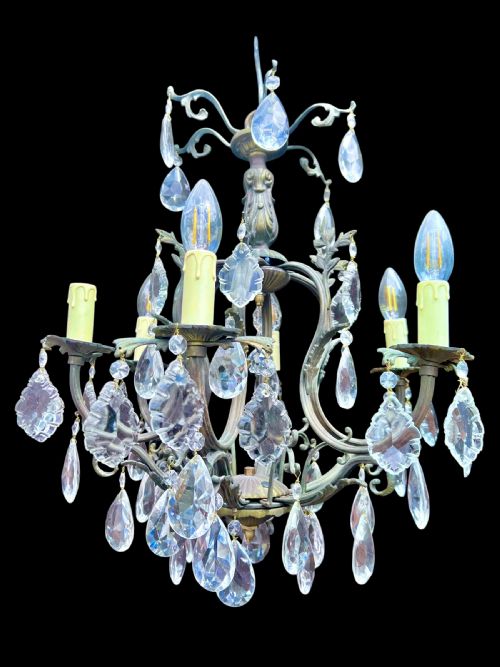
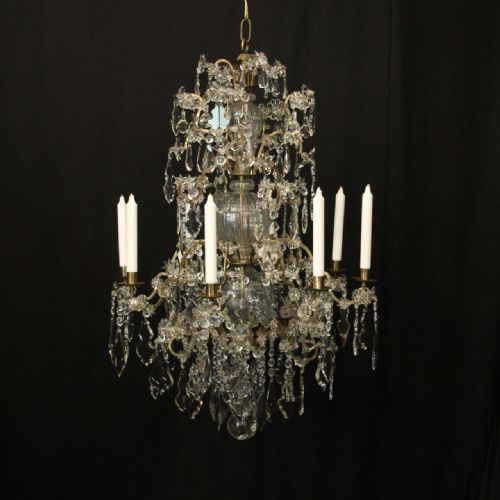
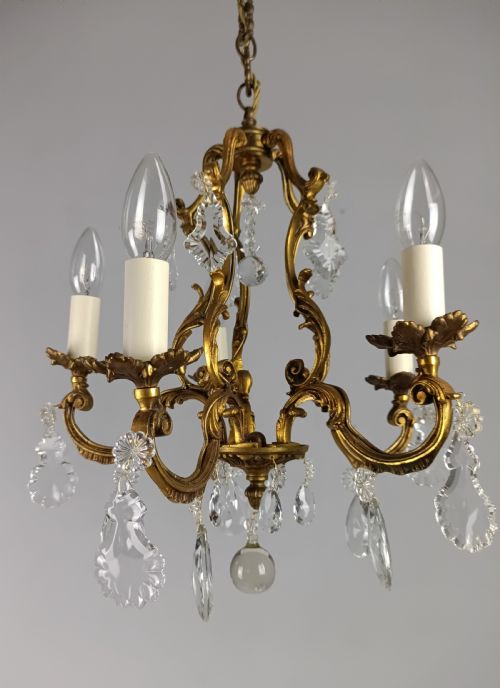


Bronze Cut Glass Chandelier
A bronze cut glass chandelier brings substantial weight and brilliance to a room, combining cast metal frames with faceted crystals.
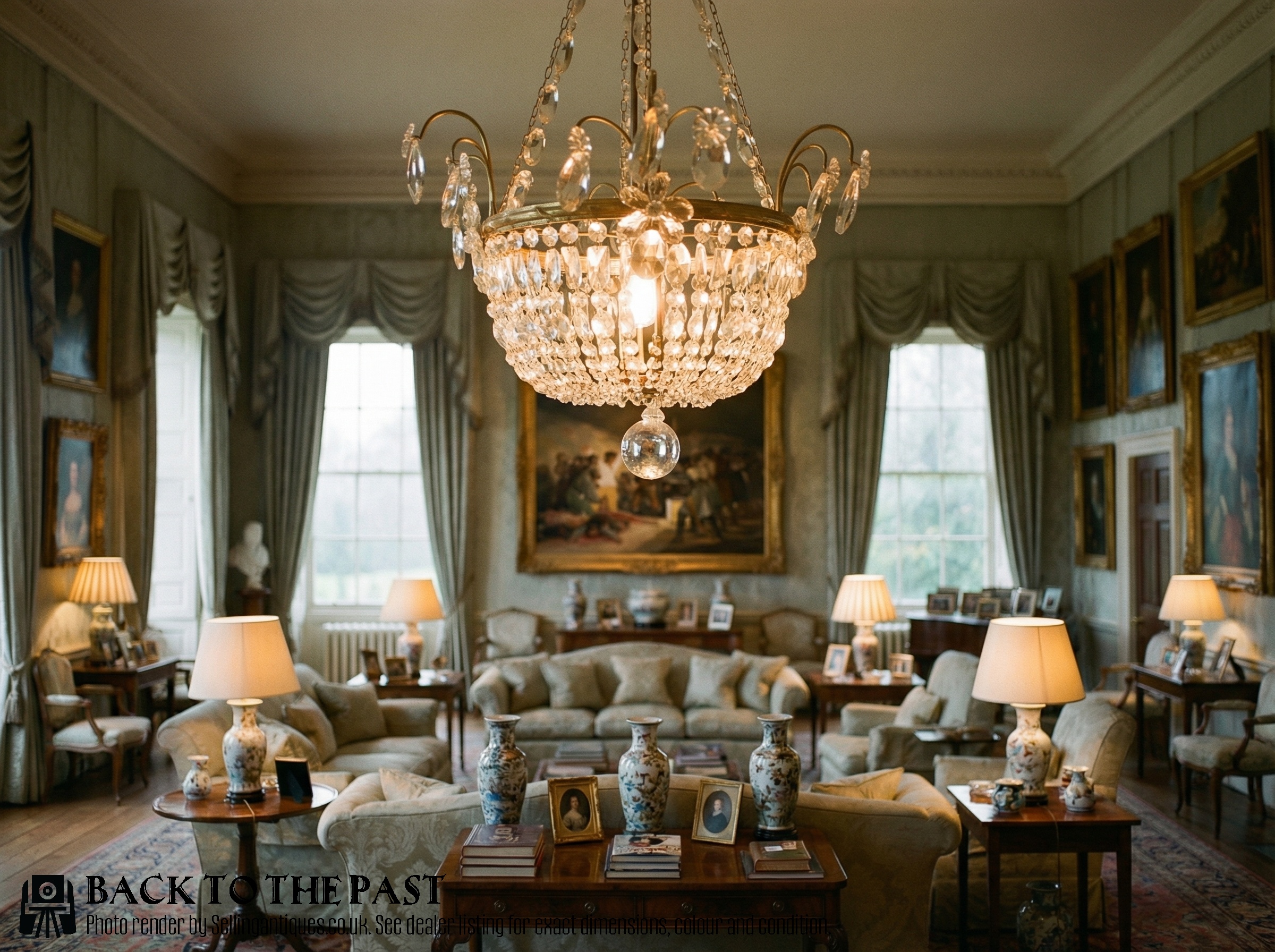
Bronze Cut Glass Chandelier
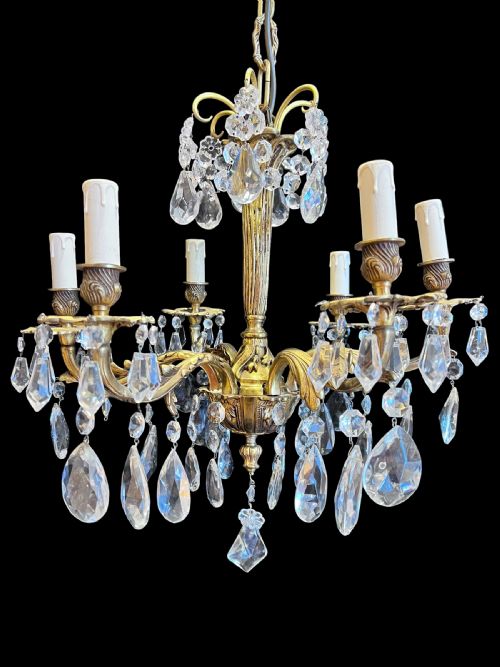
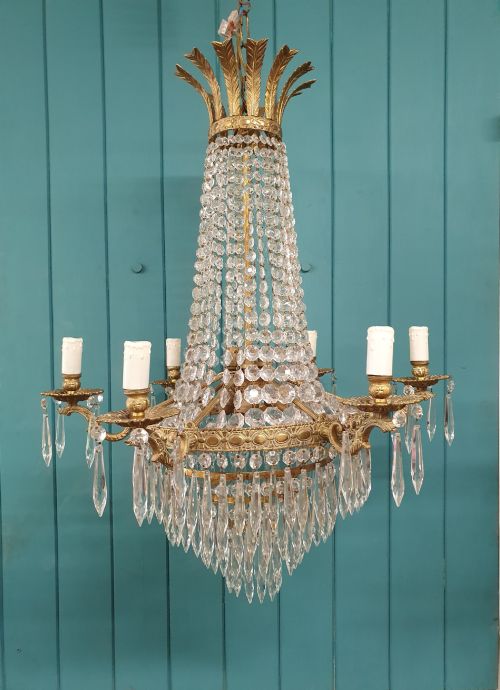
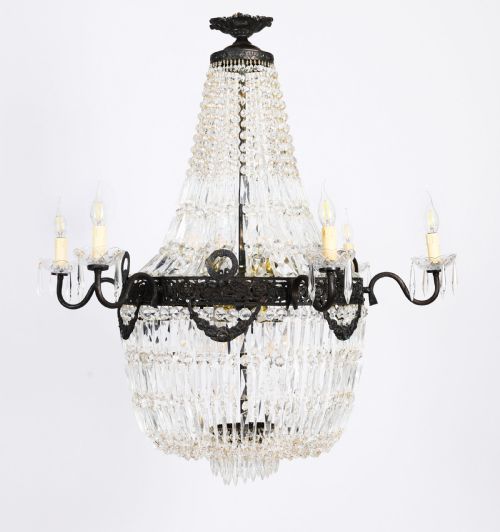
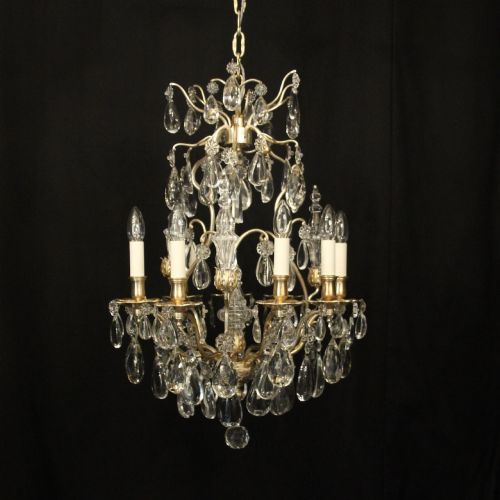
When searching for a bronze cut glass chandelier, buyers encounter a variety of forms including multi-light ballroom fixtures, basket lights, tent designs, and hall lanterns originating from the nineteenth and early twentieth centuries. French influences dominate the selection, spanning Louis Revival, French Rococo, and Empire styles alongside Victorian and Edwardian examples.
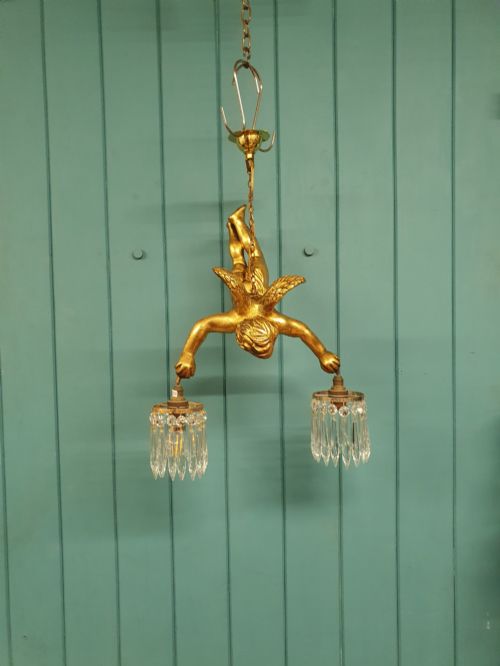
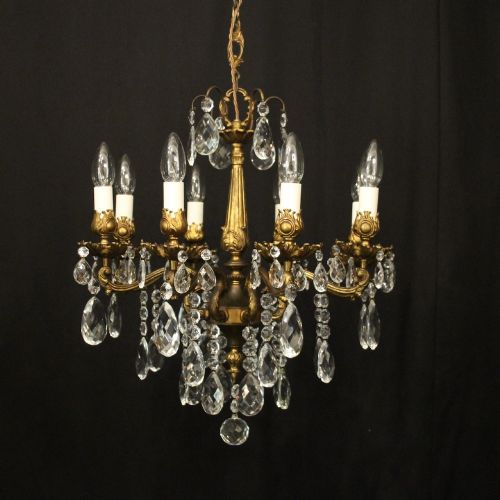
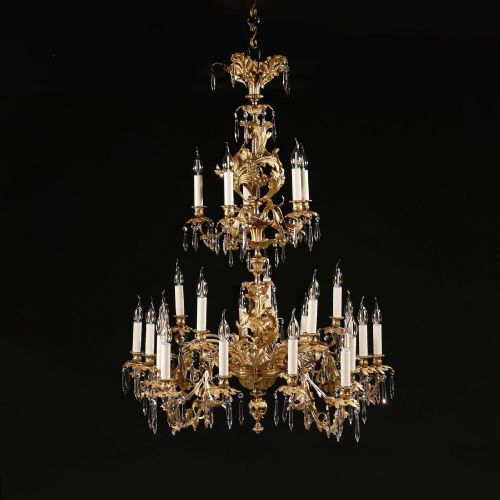
The typical piece pairs a gilt bronze, brass, or ormolu framework with suspended cut glass or crystal drops, ranging from smaller single-light pendants to massive twenty-five light centerpieces. These overhead lights served grand salons and domestic rooms alike, establishing a strong focal point through ornate metalwork and light refraction.
How they were made
Maker workshops cast frames in bronze, brass, or spelter, frequently applying a gilt or silvered finish to the metal surface. These structural mounts hold arms, rings, and cage tiers designed to support heavy glass components.
Artisans hung cut glass and crystal prisms, spikes, beads, and fruit drops from the metal frames using wire loops or pins. Hand-cutting facets onto the glass pieces maximises the sparkle and distribution of light from candle or electric sources.
Object forms range from massive twenty-five light ballroom chandeliers down to compact hall lanterns and basket lights.
What varies in quality
The standard of a bronze cut glass chandelier depends heavily on the precision of the metal casting and the depth of the hand-cut facets on the glass elements. Finer pieces display crisp botanical or rococo relief on the bronze frame and heavy crystal drops with sharp, clean edges that scatter light intensely.
Scale and complexity also define the better examples, from simple single-light baskets to intricate multi-tiered tent and birdcage constructions with numerous candle arms. The integration of specialised elements, such as coloured crystal fruits or elaborate gilt mounts, separates standard production from exceptional work.
La Mason Bagues·Baccarat
The Bronze Cut Glass Chandelier Glossary
- Ormolu
- Gilded bronze achieved through a mercury amalgamation technique or later electroplating. This finish gives the metal framework a warm golden lustre.
- Tent chandelier
- A lighting fixture featuring a cascade of glass beads gathered from an upper crown down to a wider metal ring. This creates a distinctive tent-like silhouette above the lower lights.
- Cage chandelier
- A style where the structural metal frame forms an open armature or skeleton that supports dense rows of crystal drops. The design encloses the central stem completely within glass.
- Plafonnier
- A ceiling light fixture mounted flush or very close to the ceiling surface rather than suspended on a long chain. These often incorporate cut glass bowls or plates within bronze mounts.
- Electrolier
- A term historically used for a large hanging light built specifically for electricity rather than converted from gas or candles.
Bronze Cut Glass Chandelier: Frequently Asked Questions
How do I clean a crystal chandelier?
Cleaning requires a specialised glass cleaner and soft cloths applied carefully to each individual pendant and arm. Many pieces feature wired drops that benefit from being wiped in place rather than removed.
Working systematically from the top tier downwards prevents tangling or dislodging delicate glass spikes and fruit decorations.
Were these lights originally electrified?
Most pieces dating from the nineteenth century or earlier were originally designed for candles or gas before later conversion to electricity. Surviving examples often show adaptations to the central stems and arms to house modern wiring safely.
Electroliers from the early twentieth century onward were built from the start to accommodate electric lamp holders.
How do I determine the period of a chandelier?
Dating relies on examining the casting style, the cut of the glass, and the construction methods of the metal frame. Victorian and nineteenth-century pieces frequently display heavy gilt bronze mounts and hand-cut crystal drops, while 1920s and 1930s examples lean towards Arts and Crafts or simplified revival forms.
Matching the stylistic cues of the metalwork to known French or English design periods helps narrow down the decade of manufacture.
Can these chandeliers be hung from low ceilings?
While grand multi-tiered fixtures require considerable ceiling height, smaller basket lights and plafonniers suit domestic rooms with lower clearances. Chain lengths can often be adjusted during installation to modify the overall drop.
Selecting a flush-mounted or single-light lantern provides the visual impact of bronze and glass without demanding excessive vertical space.