


Clear Crystal Basket Light
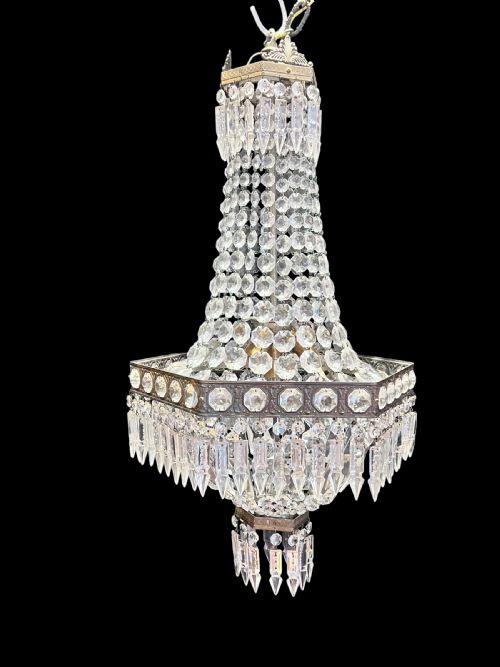
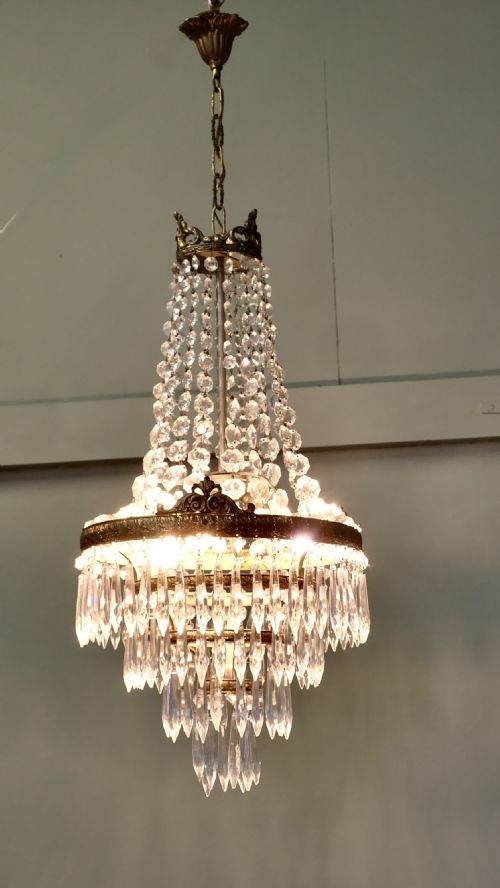
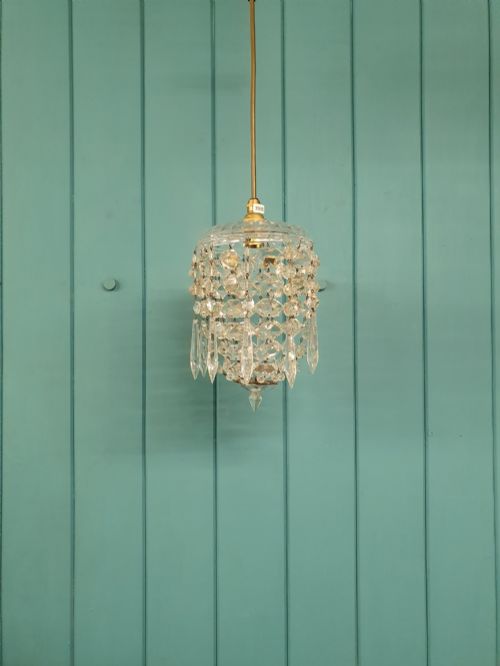
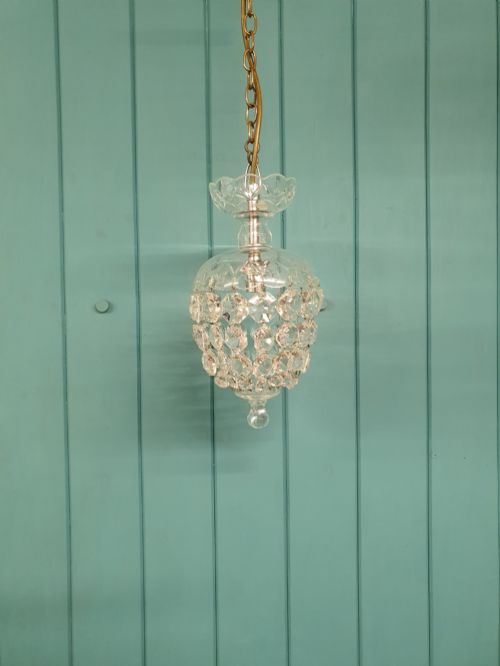
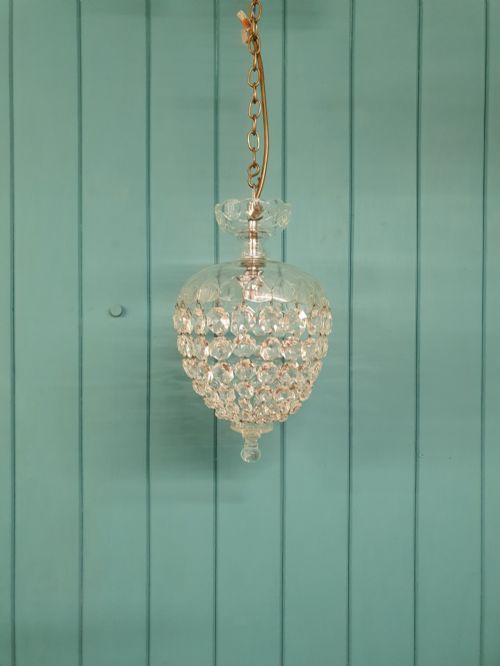
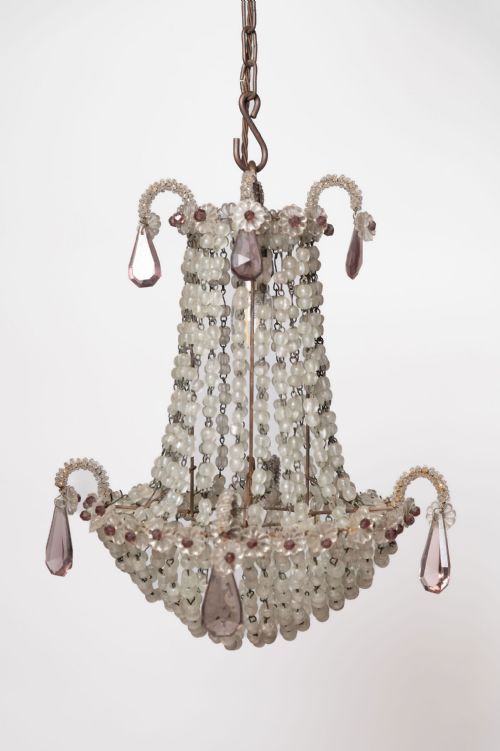
A clear crystal basket light brings luminous French Empire and Edwardian elegance to a room through cascading tiers of cut glass.
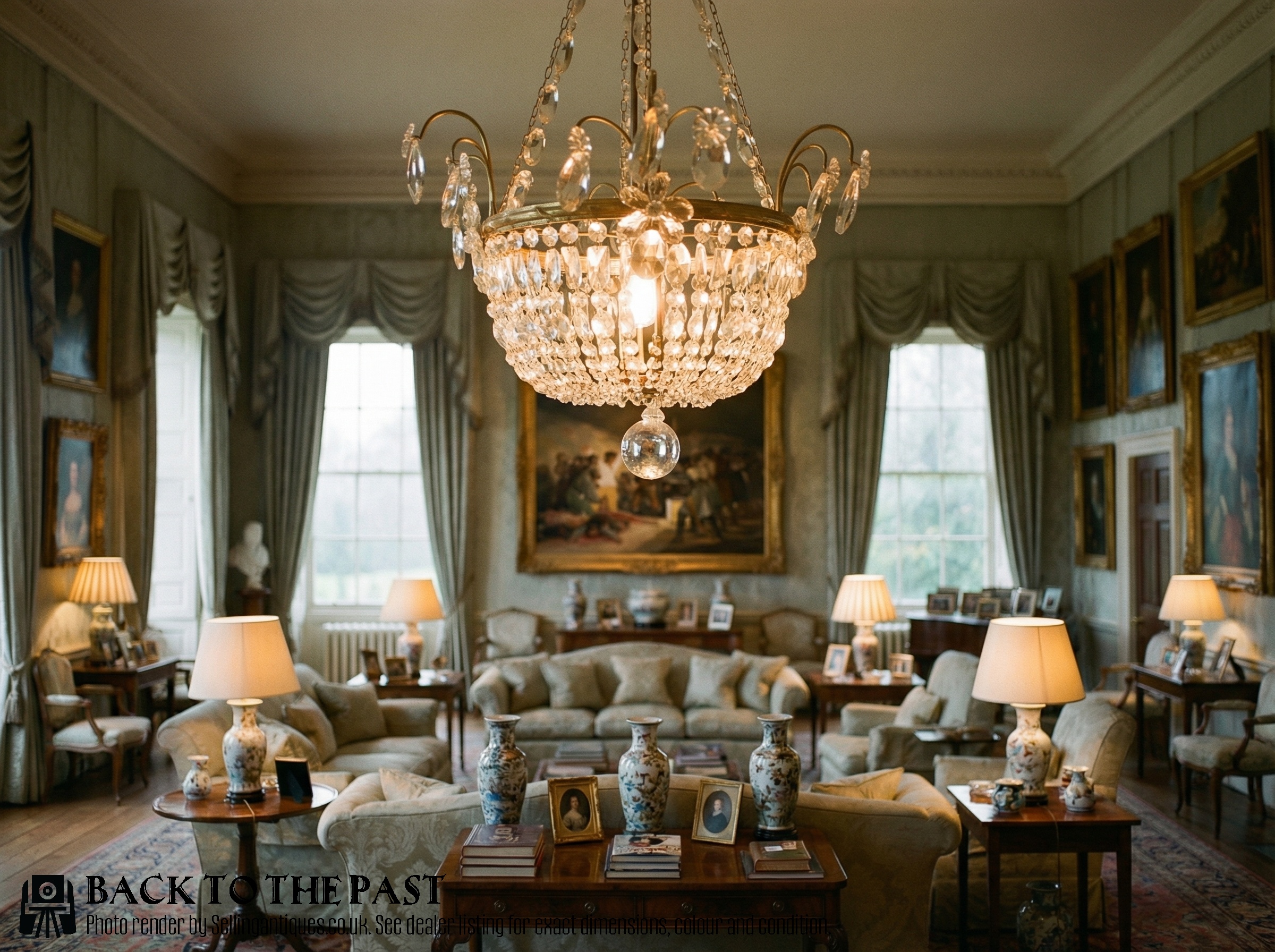
Clear Crystal Basket Light
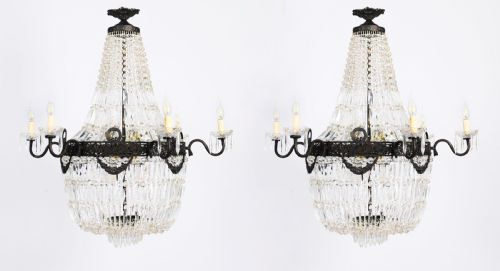
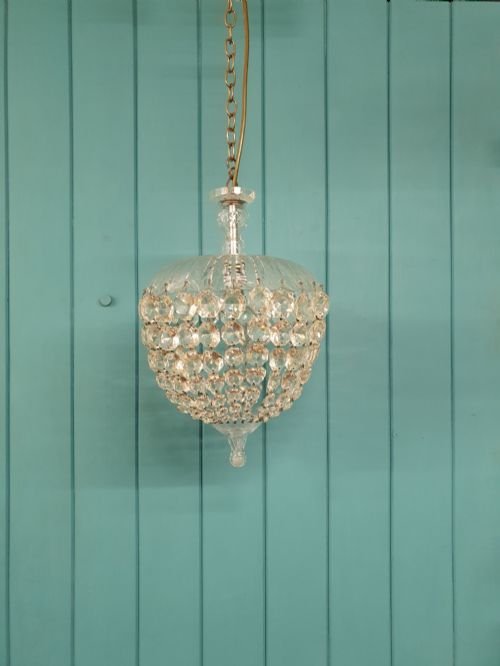
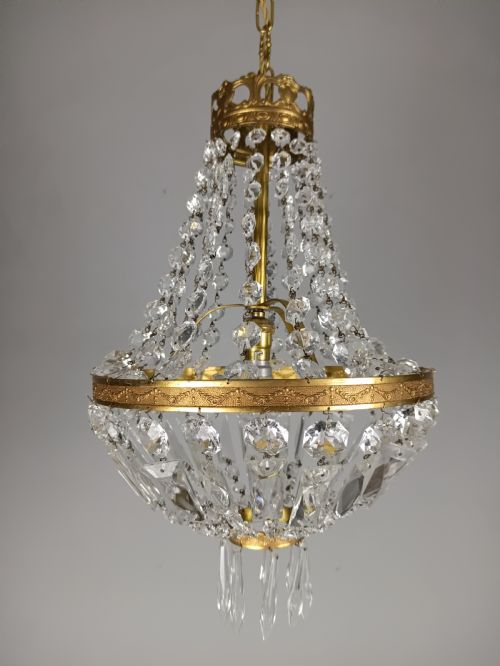
A clear crystal basket light encompasses formal chandeliers, wall lights and ceiling fixtures originating predominantly from the Edwardian era through to the nineteen thirties. These decorative luminaires typically adopt French Empire, Louis Revival and Regency stylistic vocabularies, featuring integrated metal frameworks draped in glass drops.
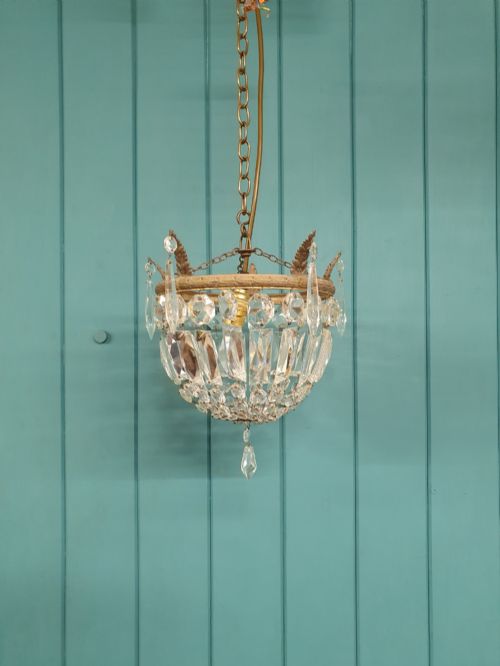
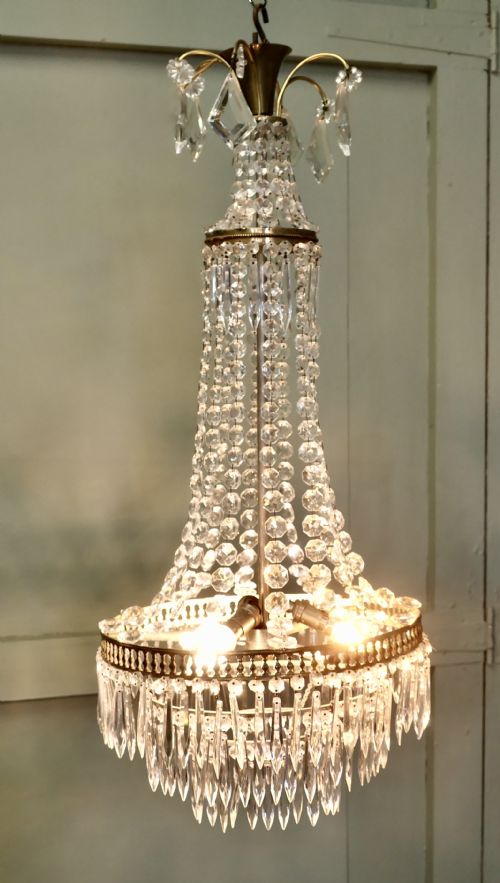
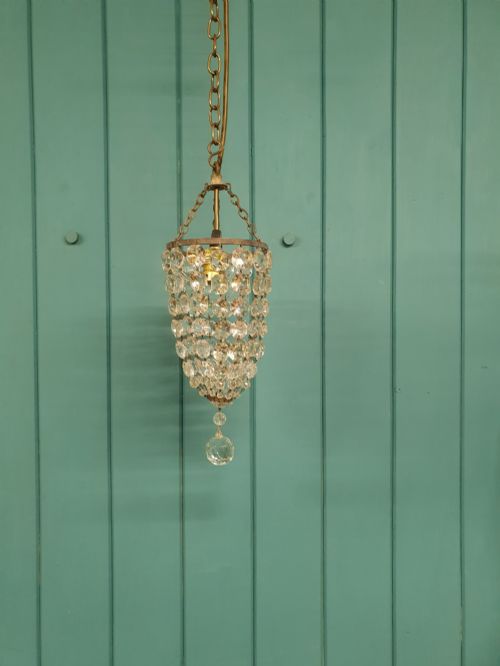
The most frequently encountered versions on this page are compact bag and basket chandeliers measuring between five and twelve inches, alongside larger multi-light tent and waterfall configurations. These forms suspend from ceilings via brass or bronze mounts, casting dispersed refractions from cut crystal and beaded glass elements.
Examples range from single-light dome fixtures to grand fourteen-light ballroom centerpieces. They merge architectural metalwork with dense configurations of prisms, coffin drops and glass beads.
How they were made
Makers constructed the primary structural frameworks using cast brass and bronze mounts to support the heavy glass components. These metal bodies were shaped into hoops, domes, and bands designed to receive numerous individual drops.
Artisans hung cut crystal, cut glass, and beaded glass elements from the metal frames utilising fine wire pins. The prisms, coffin drops and beads were hand-cut and polished to maximise light refraction across the French style silhouettes.
Materials recorded on this page include brass, bronze, cut crystal, cut glass, and beaded glass with blue prism accents.
What varies in quality
The standard of a clear crystal basket light depends heavily on the precision of the glass cutting and the clarity of the crystal components. Finer examples display sharper facets on the prisms and tent strands, producing cleaner chromatic refractions when illuminated.
Construction methods and metal weight also define the hierarchy of these fixtures, distinguishing robust cast brass mounts from lighter alternative frames. The density and uniformity of the beaded glass and the complexity of the drop arrangements further separate standard production from superior pieces.
Wedgwood
The Clear Crystal Basket Light Glossary
- Tent and waterfall chandelier
- A lighting fixture featuring an upper conical section of glass strands cascading down over a lower bowl or basket. This design originated in the eighteenth century and remained popular through the Edwardian period.
- Bag chandelier
- A compact lighting form shaped like a flat-bottomed pouch or bag entirely covered in glass beads and drops. These pieces sit close to the ceiling and diffuse light uniformly.
- Coffin prism
- A long, flat-backed crystal pendant shaped like a coffin, utilised in rows along the perimeter of early twentieth-century fixtures. They swing freely to catch ambient light.
- Edwardian
- Pertaining to the reign of King Edward VII, spanning from nineteen hundred to nineteen ten, noted in these listings for refined glass domes and small bag fittings.
- French Empire style
- A classical revival design vocabulary incorporating military motifs, urns, and symmetrical crystal draping influenced by nineteenth-century French interiors.
Clear Crystal Basket Light: Frequently Asked Questions
How do I clean a crystal basket light?
Maintenance requires removing dust with a soft feather duster before wiping individual glass drops with a dilute solution of warm water and mild dish soap. Each prism should be dried immediately with a lint-free cloth to restore its reflective brilliance without straining the delicate wire fixings.
Leaving the components attached during cleaning prevents misplacement of the original brass pins and glass drops. Working carefully from the top tier downward ensures the entire metal and glass structure receives even attention.
Where should I hang a bag chandelier?
These compact fixtures suit hallways, cloakrooms, bedrooms and smaller reception spaces where lower ceiling heights preclude a hanging drop chandelier. Their shallow profile allows adequate headroom while delivering decorative illumination.
Positioning them centrally within a room highlights their intricate beadwork and cut glass patterns. They also function effectively as paired wall lights in larger drawing rooms.
What is the difference between cut glass and crystal?
Cut glass relies on mechanical or hand-ground surface facets applied to standard soda-lime glass compositions. Crystal incorporates lead oxide into the batch, producing a heavier material with a higher refractive index that disperses light into spectral colours more vividly.
Both materials appear frequently across Edwardian and nineteen thirties lighting fixtures. Lead crystal generally offers greater brilliance and sharper edge definition on faceted drops.
How can I date a crystal basket light?
Dating relies on examining the wiring methods, metal alloy patination, and the specific configurations of the glass drops. Edwardian pieces often feature smaller dome forms and simpler brass mounts, while nineteen thirties examples frequently adopt distinct bag shapes and specific prism cuts.
Checking the fastening pins for signs of age and hand-workmanship helps verify the period. Comparing the overall proportion against known stylistic trends from nineteen hundred to nineteen thirty provides further chronological context.