

Bronze Crystal Pendant Light
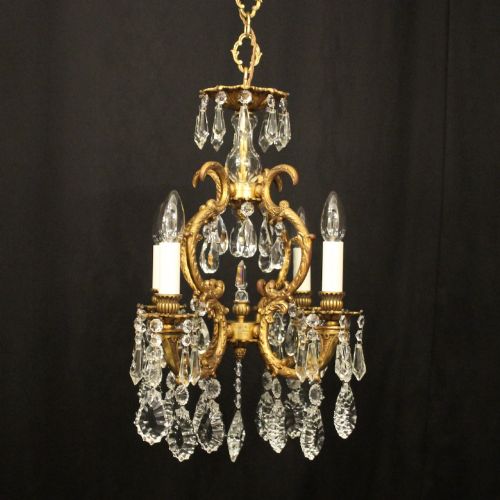
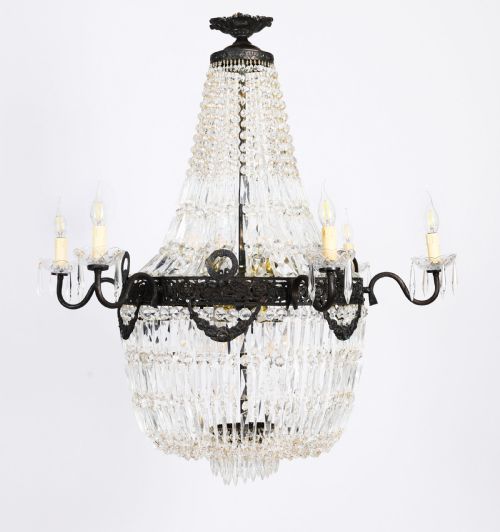
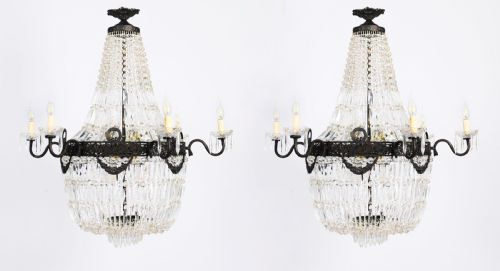
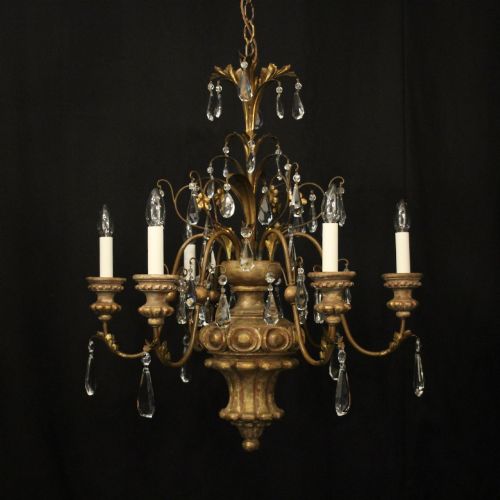
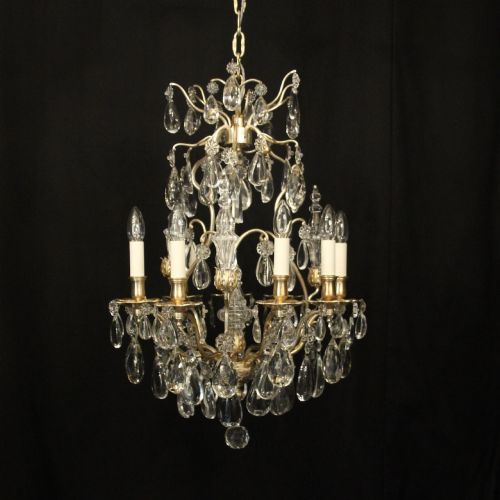
These bronze crystal pendant light fixtures combine cast metal frames with faceted glass to transform a room with reflected illumination.
Bronze Crystal Pendant Light
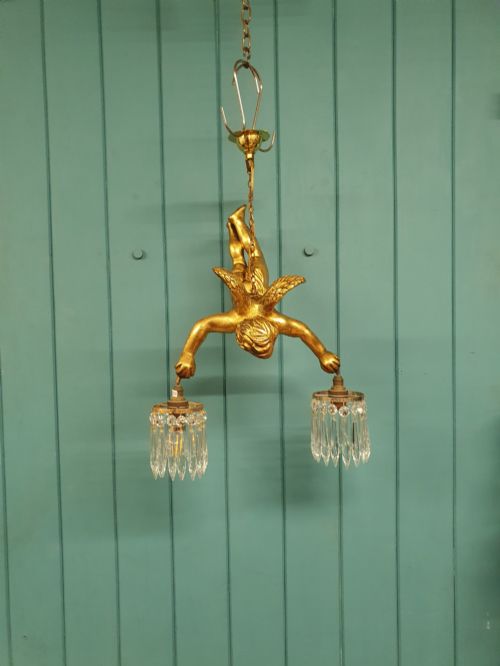
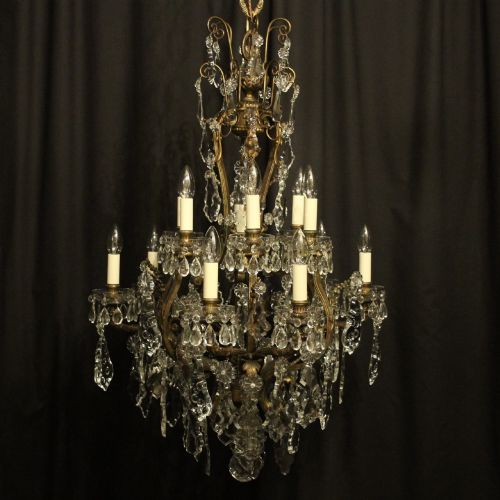
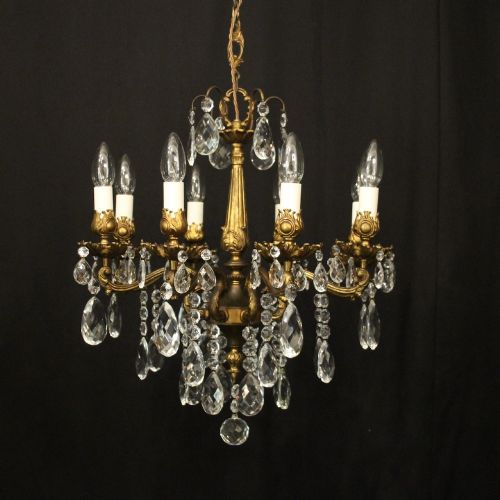
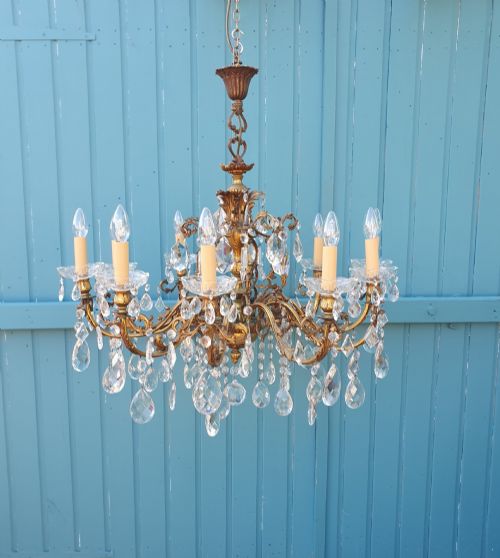
A bronze crystal pendant light brings together cast metal frameworks and suspended glass elements designed for overhead illumination. Buyers seeking a bronze crystal pendant light will encounter varied forms rooted in continental design traditions from the nineteenth and early twentieth centuries. The selection centres heavily upon French lighting pieces, ranging from compact single-light fittings to multi-armed configurations.
Period examples span the Victorian era, the 1800s, 1890, 1900, 1910, 1920, and 1930. Alongside chandeliers and ceiling lights, the inventory includes wall sconces and wall lights sharing similar metal and glass construction. Styles lean towards French Empire, French Rococo, Louis Revival, and Florentine Baroque aesthetics.
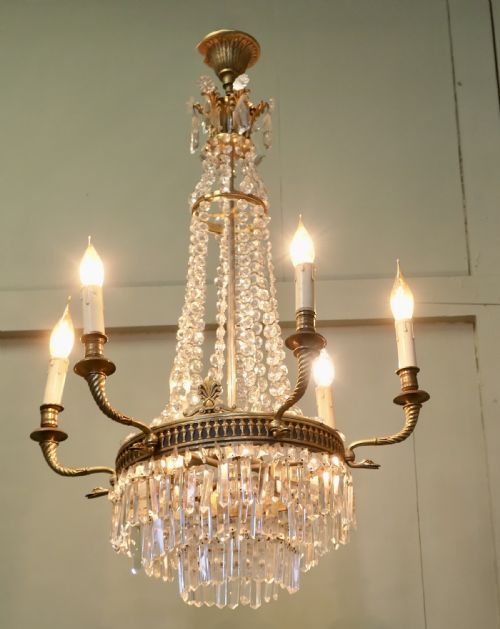
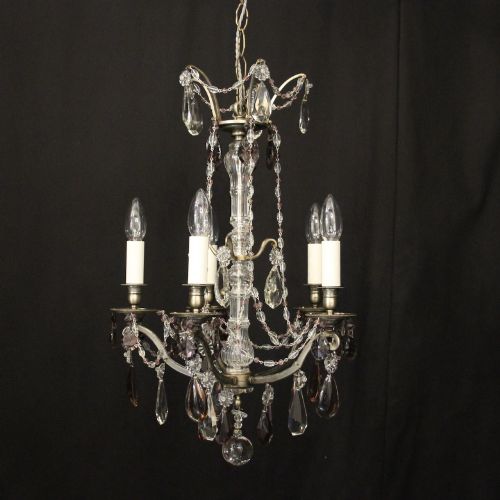
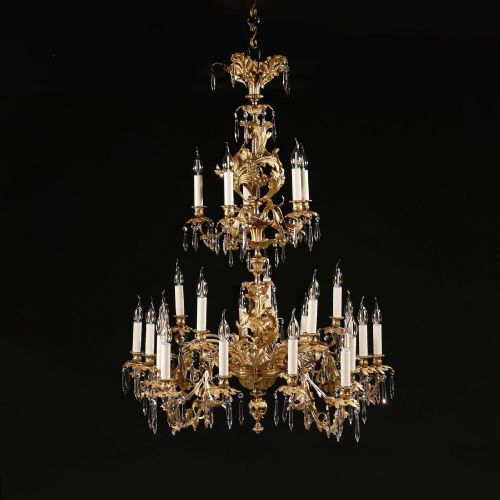
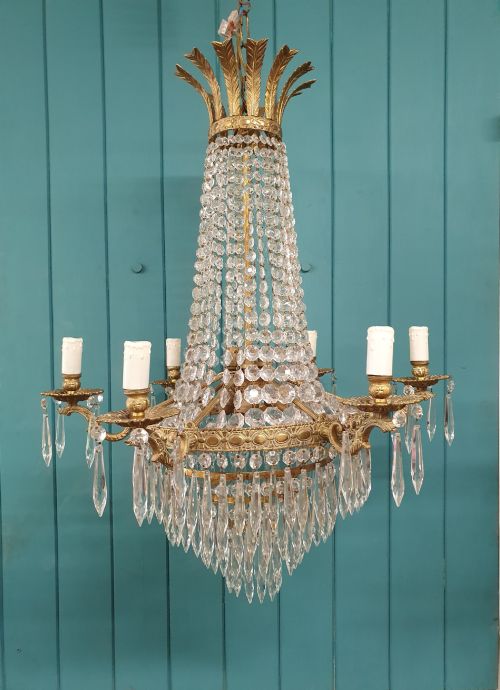
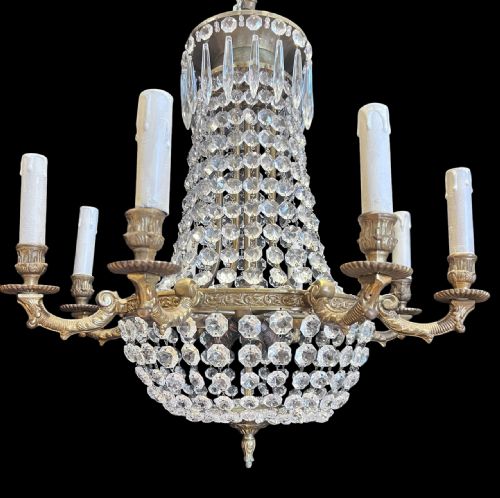
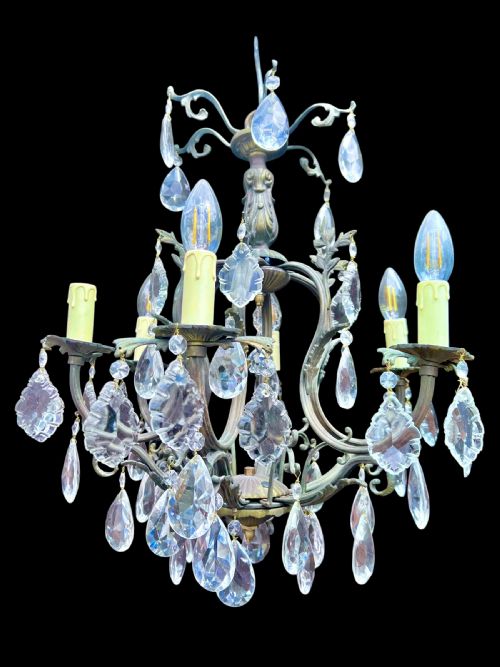
The dominant presentation relies on gilded bronze, brass, or cast bronze paired with cut crystal and glass drops. Many items incorporate tent and waterfall configurations, whilst others utilise elaborate fruit motifs in amber, mauve, or coloured crystal.
How they were made
Construction relies upon casting bronze, brass, or spelter into structural arms, bands, and decorative mounts which are subsequently gilded or silvered. Metal components provide the rigid skeletal framework required to support suspended glass weights.
Crystal and glass elements are shaped by cutting, moulding, and polishing to create prismatic drops, spikes, beads, and fruit forms. These glass components are wired or pinned directly to the metal armature using metal connectors.
Several chandeliers feature hand-hung glass grapes, apples, and pears that bring an unexpected orchard harvest indoors.
What varies in quality
Quality differentiates through the crispness of the metal casting and the depth of the applied gilding. Finer examples display sharply rendered ornamentation on the bronze or brass framework, whereas simpler pieces show softer surface detail.
The clarity and cut of the crystal components also distinguish grades of manufacture. Pieces utilising heavily faceted, high-refractive glass produce superior light dispersion compared to plain moulded alternatives.
The Bronze Crystal Pendant Light Glossary
- Tent chandelier
- A lighting fixture featuring an upper crown from which strings of crystal beads drop outward to form a tent-like canopy above the main body.
- Waterfall chandelier
- A design where cascading tiers of crystal drops flow downward from the central ring, resembling falling water.
- Gilt bronze
- Bronze metal treated with a thin layer of gold or gold-coloured alloy to impart a lustrous metallic finish.
- Spelter
- A zinc alloy commonly utilised as a less costly alternative to bronze for cast decorative figures and mounts.
Bronze Crystal Pendant Light: Frequently Asked Questions
How do I clean a crystal chandelier?
Maintenance involves wiping individual glass drops with a mild cleaning solution whilst supporting each piece by hand.
Harsh chemical sprays should be avoided to protect the underlying metal gilding from damage.
Are these lights wired for modern use?
Most antique fixtures require professional rewiring to meet contemporary electrical standards upon installation.
A qualified electrician can adapt internal lamp holders safely while retaining the external period frame.
What distinguishes Empire style lighting?
Empire style fixtures draw inspiration from classical antiquity, featuring symmetrical geometry and military motifs.
They frequently incorporate tent arrangements and arrow or urn finials.
Can heavy chandeliers hang from any ceiling?
Substantial bronze and crystal fittings demand secure ceiling joist anchorage to support their considerable weight.
Plasterboard alone cannot sustain these fixtures without adequate structural reinforcement.