





Bronze Clock Garnitures
Bronze clock garnitures bring together a central mantel clock and matching sidepieces, offering a balanced display for a period room.
Bronze Clock Garnitures
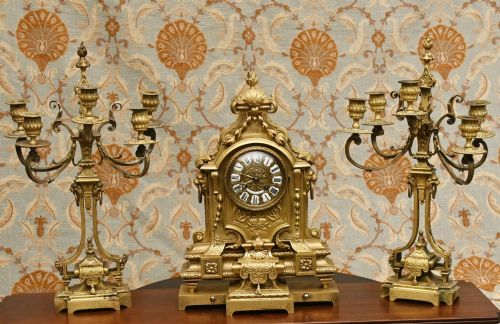
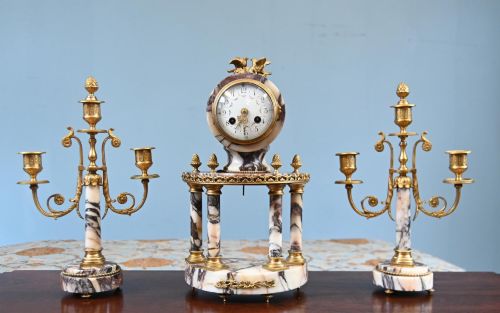
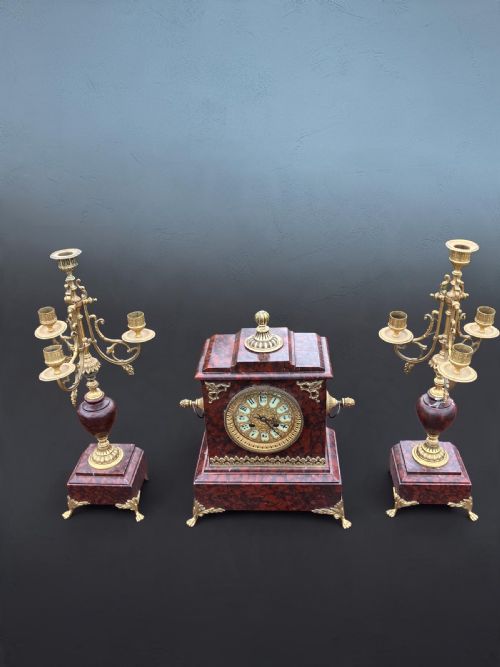
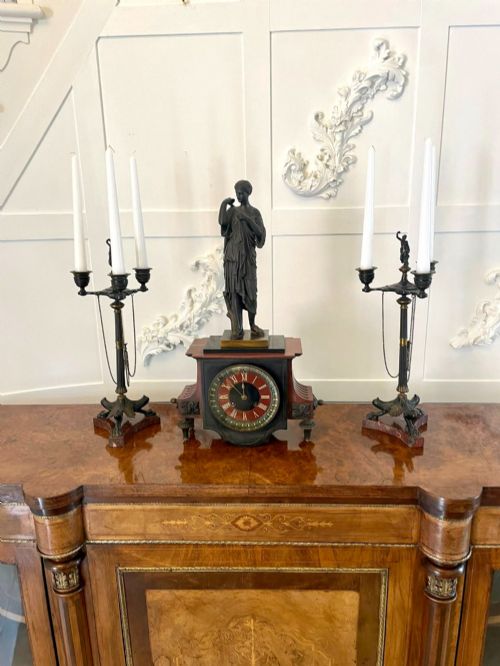
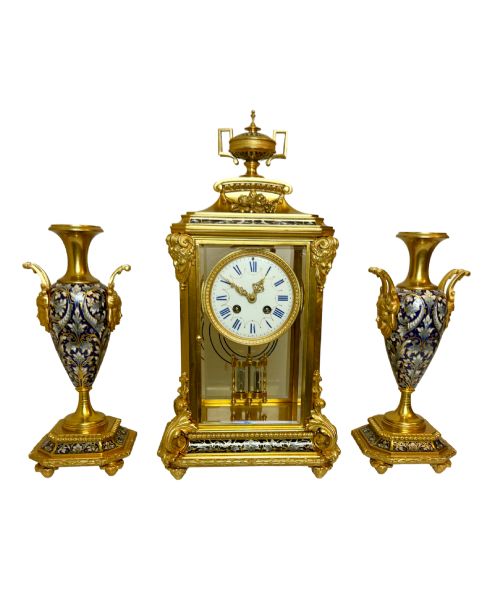
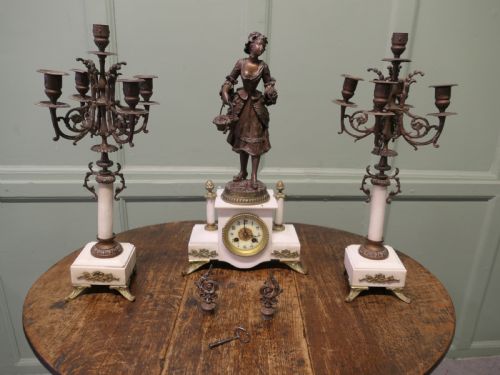
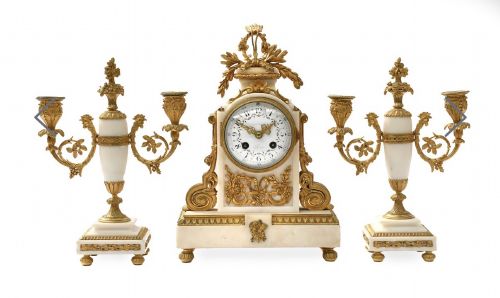
Bronze clock garnitures are matching three-piece sets comprising a central mantel clock flanked by twin candelabras, urns, or vases designed for symmetrical placement. When you examine bronze clock garnitures, you encounter matched groupings intended to sit together on a fireplace mantel or console table.
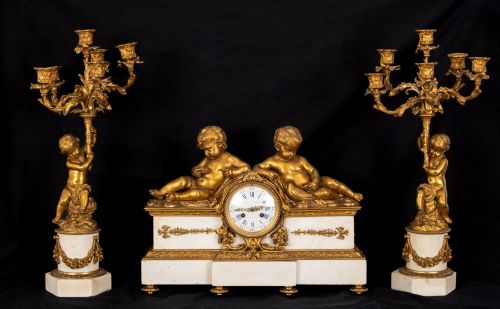
The prevailing examples on this page date from the nineteenth century, drawing heavily on French stylistic revivals such as Louis XVI, Empire, and Rococo. These pieces frequently pair cast metal with contrasting elements like white or red marble, onyx, and enamel dials.
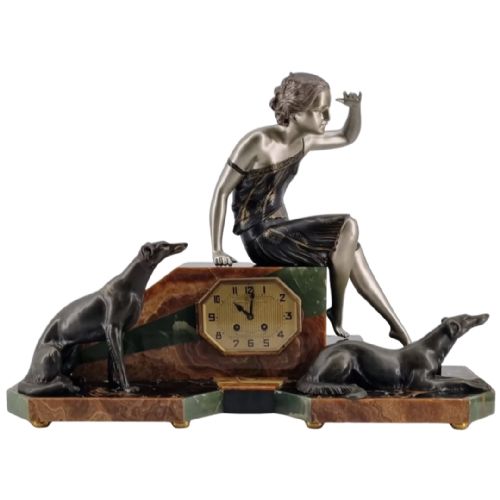
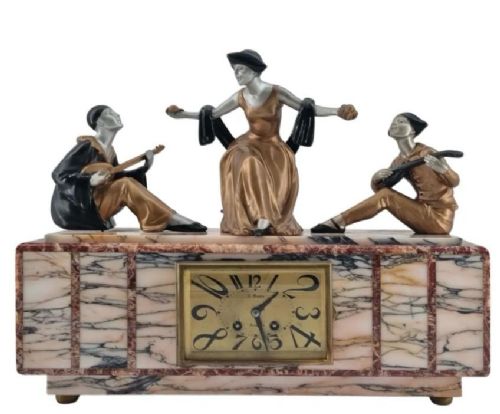
Later variants shift into twentieth-century aesthetics, notably Art Deco interpretations featuring stylised figures like Pierrot, Columbine, or greyhounds alongside simplified geometric surrounds.
Materials and construction methods
Foundries produced these sets by casting bronze or brass components, frequently applying a layer of ormolu gold gilding or chemical patination to the metal surface. This process demanded skilled chasers who finished the cast details by hand using chisels and punches to sharpen foliage, figures, and scrollwork.
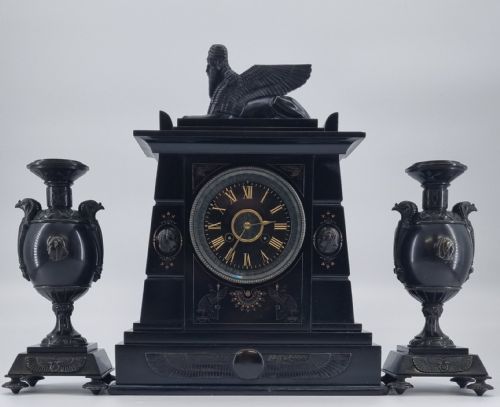
Makers integrated natural stone elements by cutting and polishing marble, onyx, or slate to form robust plinths and architectural cases that anchored the heavier metal mounts. Enamel found application on clock dials and decorative panels, requiring copper plates coated in powdered glass and fired in a kiln.
Bronze Clock Garnitures Retail Price Guide 2026
Typical asking prices for bronze clock garnitures among the pieces listed under this phrase on Sellingantiques today, from the lower quarter to the upper quarter. They describe what is for sale here now, not the wider market.
Materials appearing across the selection include gilt bronze, ormolu, marble, onyx, brass, and enamel.
Assessing quality and execution
The crispness of the bronze chasing dictates the initial visual merit, separating sharp, deeply articulated ornamentation from soft, repetitive castings. Superior sets display meticulous hand-finishing across every leaf, scroll, and figural limb.
The harmony of the materials governs overall success, ensuring the marble or onyx bases match the central clock precisely in tone and grain. Movement reliability and the inclusion of original components, such as matching glass domes or complete candelabra arms, elevate the standing of a set.
Henry Dasson·A.D Mougin
The Bronze Clock Garnitures Glossary
- Garniture
- A set of matching decorative objects designed to be displayed together, typically consisting of a central clock and two side vases or candelabras.
- Ormolu
- Finely ground metallic gold applied to an object of bronze through a mercury amalgamation process, or modern electroplating, yielding a rich golden finish.
- Champleve
- An enamelling technique where troughs are dug into a metal surface, filled with enamel powder, and fired to create colourful decorative patterns.
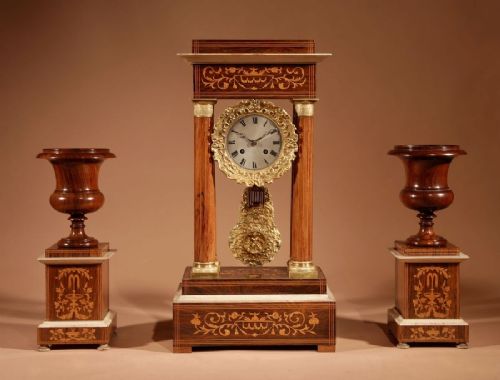
- Portico clock
- A mantel clock built within a frame of four columns, resembling a classical temple facade.
- Candelabra
- A branched candlestick holder designed to carry multiple tapers, frequently supplied as the matching sidepieces in a garniture set.
Bronze Clock Garnitures: Frequently Asked Questions
What is a bronze clock garniture?
A bronze clock garniture is a matching decorative set that includes a central mantel clock and two flanking ornaments, such as candelabras or urns. These ensembles were created to provide a unified decorative statement for a room.
They combine cast bronze or ormolu with materials like marble, onyx, and enamel dials, reflecting various historical design movements.
How were garniture sets arranged?
Garniture sets were typically positioned on a mantelpiece above a fireplace, with the clock placed centrally and the two matching sidepieces arranged symmetrically on either side.
This balanced layout creates a formal focal point that draws the eye and anchors the surrounding interior decoration.
What periods do these clocks come from?
The majority of these pieces originate from the nineteenth century, spanning Victorian production and French revival styles like Louis XVI and Empire. You will also encounter later twentieth-century examples from the Art Deco era.
Each period brings distinct stylistic markers, from ornate gilt bronze and classical motifs to streamlined figural designs.
How do I maintain a clock set?
Maintenance involves keeping the marble and bronze surfaces clean using a soft, dry cloth without harsh chemical polishes that could strip the original gilding or patination. Mechanical clock movements require professional servicing and careful winding to ensure proper operation.
Placing the set away from direct sunlight and damp environments helps preserve the delicate enamel dials and stone bases.