


Bronze Child Figurine
A bronze child figurine captures innocence and movement, offering tangible warmth through heavy metal and detailed patination.
Bronze Child Figurine
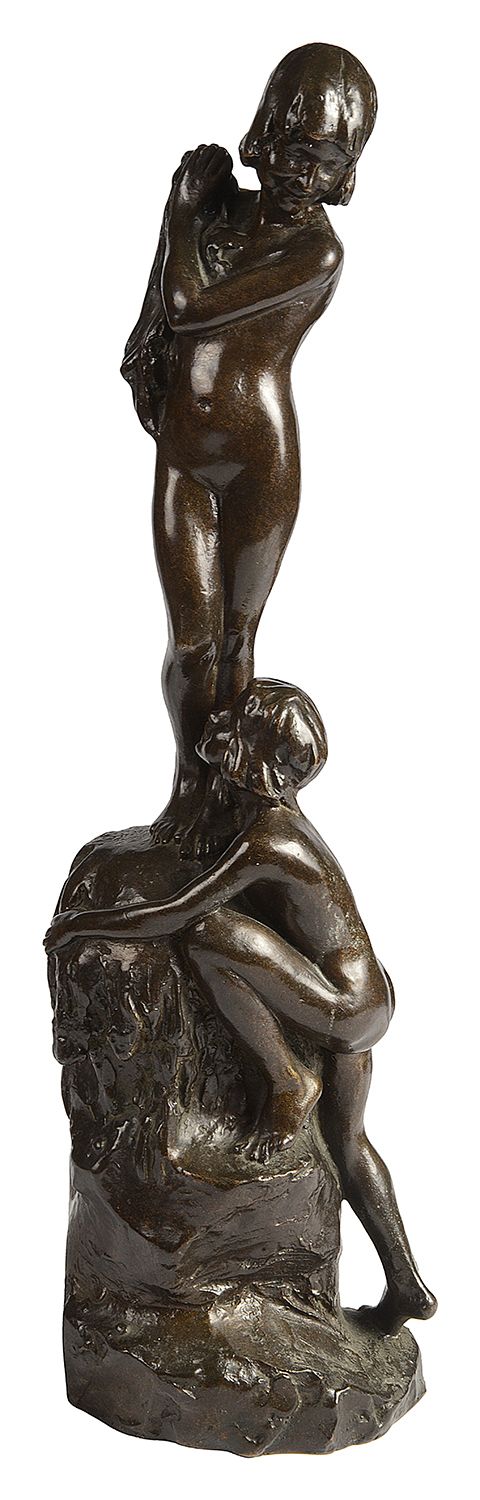
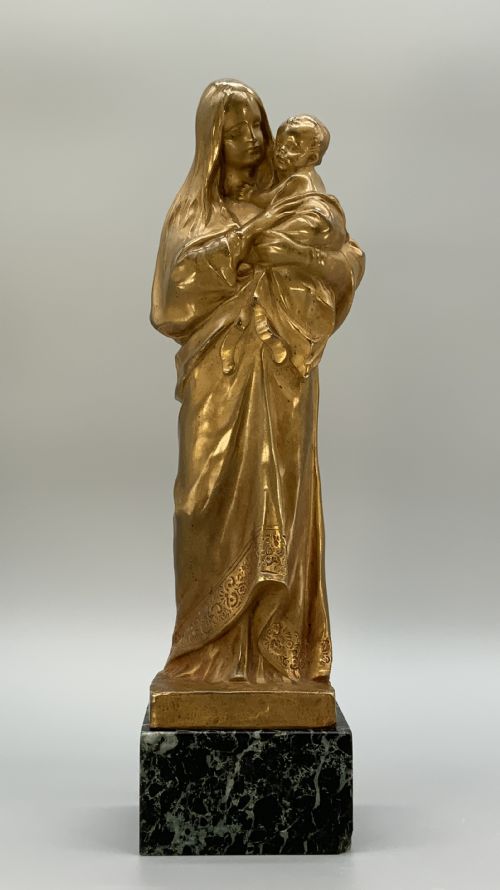
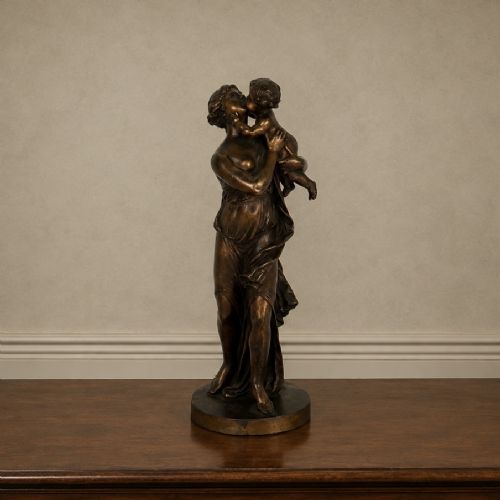
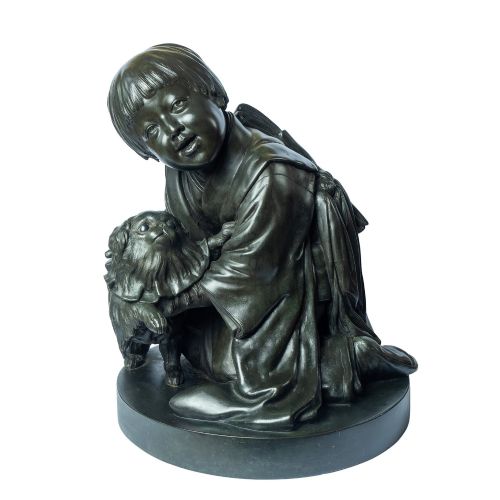
A bronze child figurine represents youth, maternity, and classical subjects cast in metal, appearing frequently in Victorian, Art Deco, and early twentieth-century works. These sculptures depict children bathing, sleeping, eating grapes, or playing with animals, often mounted on marble or alabaster bases.
The selections on this page span French nineteenth-century foundry pieces, Japanese okimono, and Austrian gilt works. Buyers encounter both single studies of young girls and boys, and larger sculptural groups depicting mother and child relationships.
Materials and casting methods
Foundries utilised bronze and sometimes spelter as the primary metal, applying dark patina or gilt finishes to surface details. Many figures sit upon heavy natural bases of marble, alabaster, or wood.
Casting techniques allowed artists to capture fine expressions, textiles, and hair. Signatures and foundry marks are frequently chiselled or cast directly into the metal body.
Listings feature works from the Victorian era, 19th Century, and 1920s, utilising bronze, spelter, marble, and alabaster.
Distinctions in craftsmanship
Quality rests in the crispness of the chasing and the depth of the metal patination. Superior pieces show articulate fingers, soft facial expressions, and clean integration between the figure and its stone base.
Signatures from recognised sculptors or established foundries elevate a piece above anonymous domestic decorative items. The weight and stability of the metal casting further distinguish better works.
Hans Müller·Masaaki·Antonio Merente·H. Chiparus·Auguste Moreau·Carl Kauba·Lucien Madrassi·Alexandre Kelety·Xavier Raphanel·Pigale
The Bronze Child Figurine Glossary
- Patina
- The chemical or natural surface coloration of the metal. Dark patina gives the bronze a deep, historic finish.
- Spelter
- A zinc-based alloy utilised as an alternative to bronze. It was commonly cast for decorative figures during the Art Deco period.
- Okimono
- A Japanese ornamental carving or sculpture meant for display. These pieces often depict daily scenes or figures in bronze.
- Gilt bronze
- Metal coated with a thin layer of gold. This finish adds brightness and highlights specific areas of the sculpture.
- Alabaster
- A fine-grained stone used for sculptural bases. It provides a pale, translucent contrast to dark metal figures.
Bronze Child Figurine: Frequently Asked Questions
What periods do these figures come from?
The pieces span the nineteenth century, the Victorian era, and the early twentieth century up to the 1930s. Art Deco and Neoclassical styles are well represented.
Foundry output from France, Austria, and Japan dominates the selection, reflecting distinct regional casting traditions.
How should I display a bronze child figurine?
Place the sculpture on a stable surface away from direct moisture, as stone bases like marble or alabaster can absorb liquids. Ensure the weight of the metal is properly supported.
Keep them out of harsh direct sunlight to preserve the patinated or gilt surface treatments over time.
Are these sculptures signed by artists?
Many examples bear the cast or engraved signature of the sculptor on the bronze base or body. Signatures help attribute the work to known artists from the period.
Some pieces remain unsigned or carry foundry marks rather than individual maker names.
What is the difference between bronze and spelter?
Bronze is a durable copper alloy that takes fine detail and deep patination well. Spelter is a softer zinc alloy often used for decorative figures in the twentieth century.
Spelter figures are lighter and require gentler handling than solid bronze sculptures.