







Bronze Cherub Centrepieces
These bronze cherub centrepieces combine cast metal figures with marble, crystal and porcelain to anchor a dining table.
Bronze Cherub Centrepieces
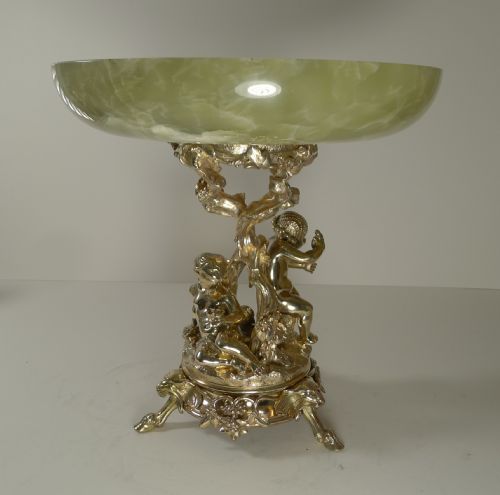
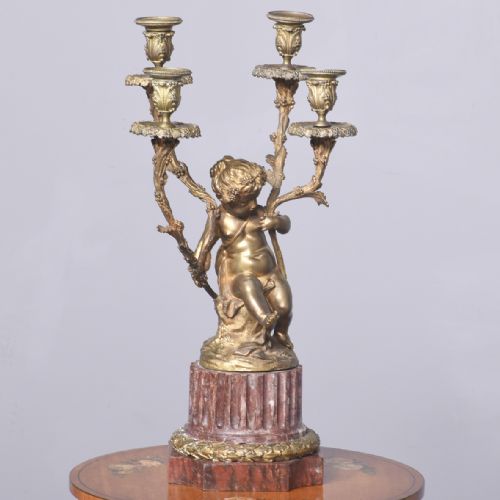
When you search for bronze cherub centrepieces, you find decorative table pieces and candle holders featuring cast figures of putti or winged cherubs. The selection includes gilt bronze, patinated bronze and ormolu examples from the nineteenth century, alongside Regency and Victorian interpretations.
Most pieces pair metal figures with bases of white or black marble, cut crystal bowls, or porcelain dishes. You will encounter tazzas, fruit bowls, comports and candelabra where cherubs support the main vessel or candle branches.
French neoclassical, rococo revival and empire styles dominate the selection, often taking the form of paired tazzas or large centrepieces. These works served as formal table decorations in nineteenth-century dining rooms.
How they were made
Foundries cast these figures in bronze before applying patination or gilding, creating the contrasting finishes seen on ormolu and patinated surfaces. Metalwork was combined with turned marble bases, cut crystal glass vessels and porcelain bodies.
Many items incorporate detailed chasing on the bronze mounts and figures after casting. Glass and stone elements were ground, polished and fitted precisely into the metal frames and mounts.
Bronze Cherub Centrepieces Retail Price Guide 2026
Typical asking prices for bronze cherub centrepieces among the pieces listed under this phrase on Sellingantiques today, from the lower quarter to the upper quarter. They describe what is for sale here now, not the wider market.
Listings feature nineteenth-century pieces combining bronze with marble, cut crystal, porcelain, malachite and blue john.
What varies in quality
The choice of supplementary materials elevates certain pieces above others. The presence of fine stones like malachite and blue john, heavy cut crystal or quality porcelain marks the upper tier of these centrepieces.
Christofle Paris
The Bronze Cherub Centrepieces Glossary
- Ormolu
- Gilded bronze, usually referring to a finely finished mercury-gilding technique used on nineteenth-century decorative metalwork.
- Tazza
- A shallow bowl or cup mounted on a stem and foot, frequently utilised for fruit or display on a dining table.
- Comport
- A decorative dish or stand raised on a base, commonly used for serving fruit or sweets during formal meals.
- Putto
- A representation of a plump, naked child, often winged, appearing frequently in classical and renaissance revival art.
Bronze Cherub Centrepieces: Frequently Asked Questions
What were bronze cherub centrepieces used for?
These pieces served as ornamental table centrepieces during formal dining in the nineteenth century, holding fruit, flowers or sweetmeats.
Many examples also functioned as candelabra, providing both visual decoration and illumination for large dining tables and sideboards.
How do I style a centrepiece at home?
Place a tazza or bowl in the centre of a large dining table or sideboard to let the bronze and marble details catch the light.
Keep surrounding table dressing simple so the figures of the cherubs and the crystal or porcelain elements remain the focal point.
Are these pieces French or English?
The majority of pieces follow French design styles such as empire, rococo revival and neoclassical, with many originating from French workshops.
English Regency examples also appear, often combining classical bronze mounts with distinct decorative stones.