

Bronze Candle Brackets
Bronze candle brackets bring refined wall lighting to interiors, offering enduring metalwork shaped in traditional French and English designs.
Bronze Candle Brackets
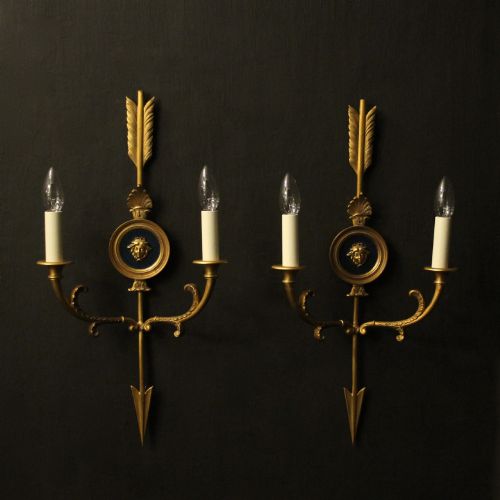
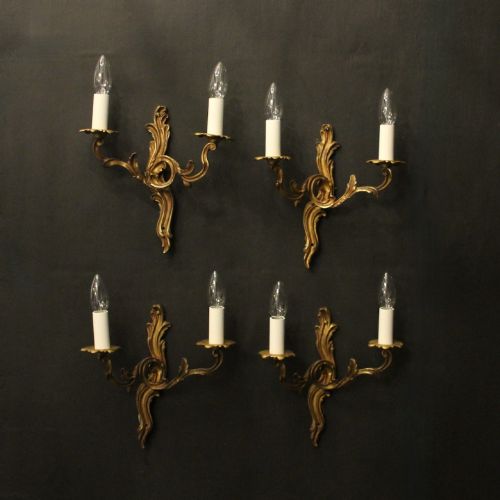
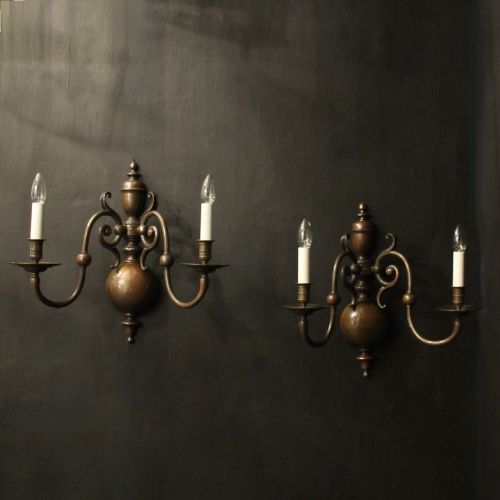
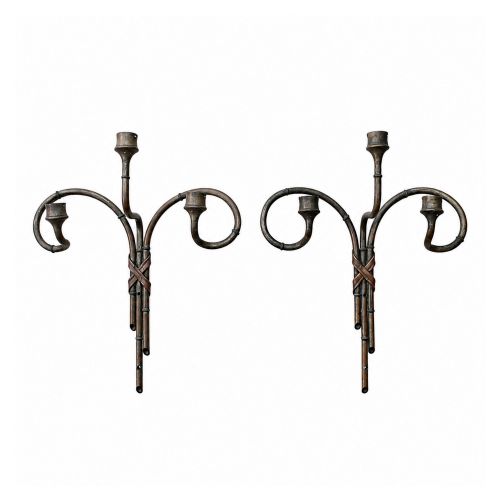
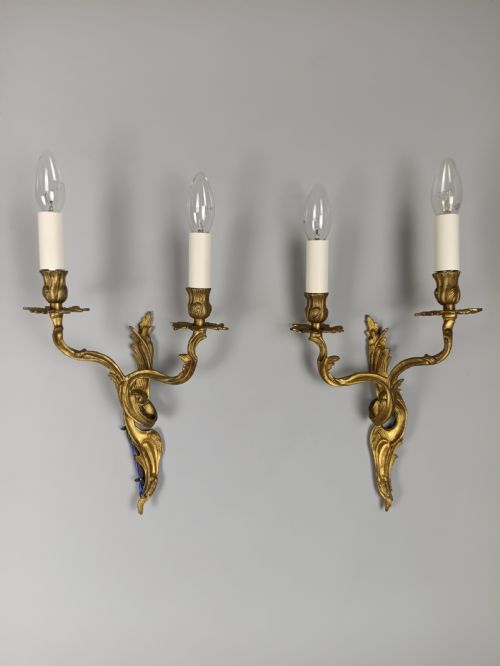
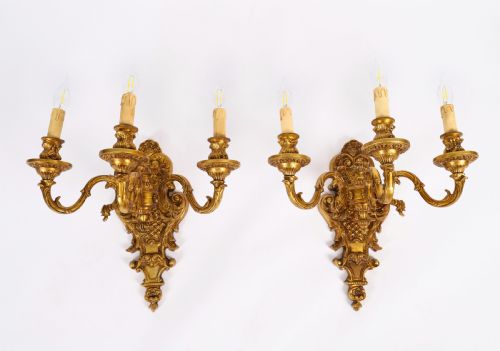
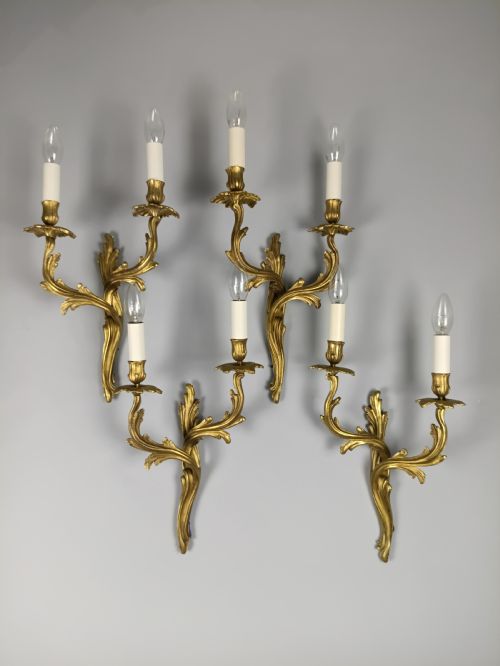
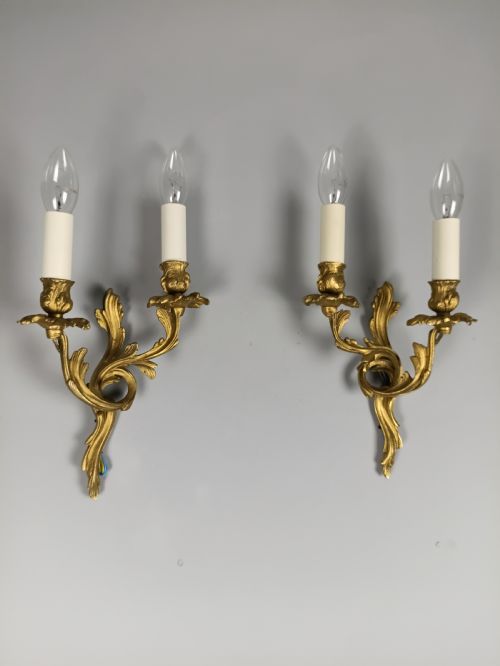
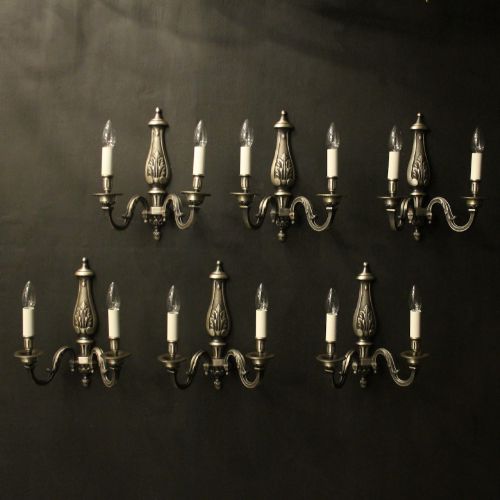
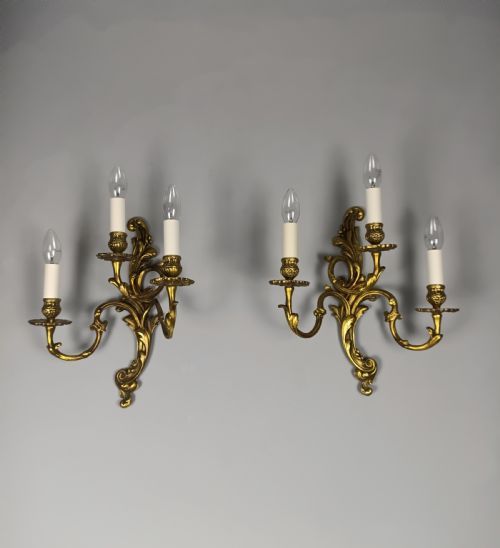
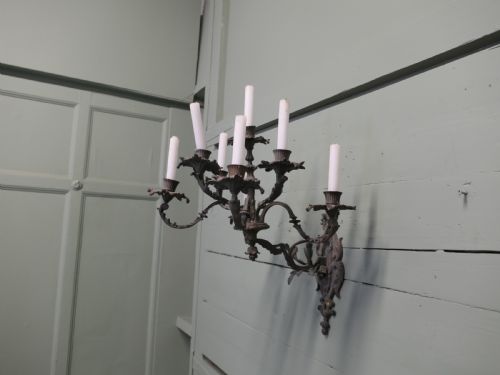
Bronze candle brackets are wall-mounted lighting fixtures designed to hold candles or accommodate wiring, appearing as wall lights, wall sconces, and appliques across this selection. These pieces originate predominantly from French and English workshops, spanning the nineteenth century through the 1930s.
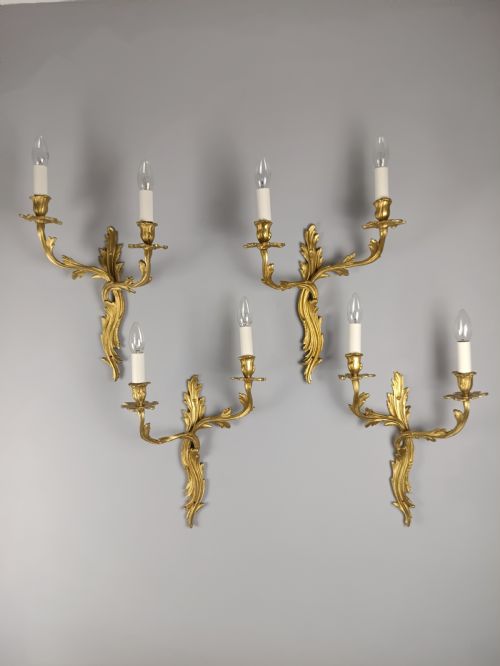
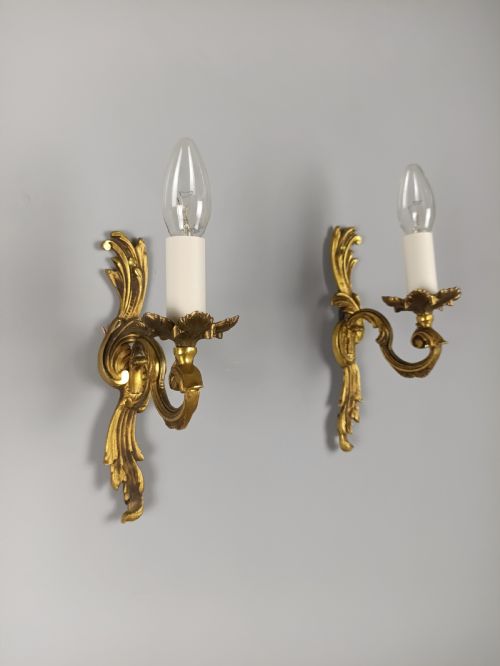
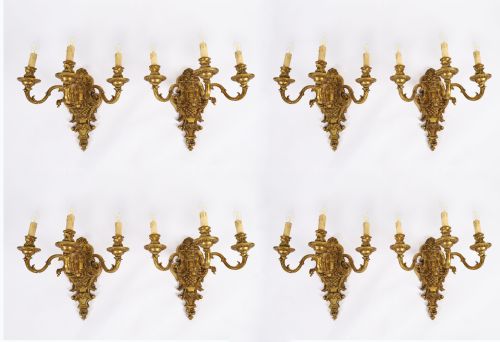
Buyers will most frequently encounter pairs and sets of twin-arm or multi-arm fixtures originating from France during the early twentieth century and the Victorian era. The selection incorporates varied configurations ranging from single-arm sconces to large sets of eight, often reflecting historical revival movements.
The assortment encompasses diverse stylistic influences including French Rococo, Louis XVI, Neoclassical, and Dutch Baroque designs. Many examples integrate decorative elements such as cherubs, porcelain portraits, and crystal accents alongside standard metal arms.
How they were made
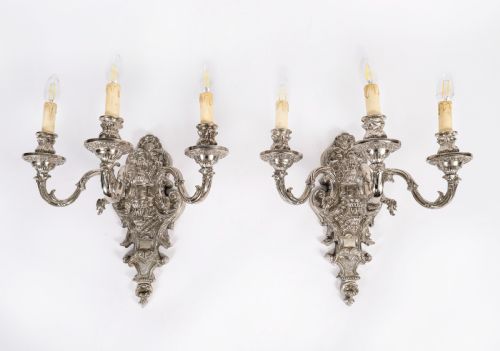
These fixtures rely heavily on cast metal foundations utilising bronze, brass, and ormolu. Artisans applied surface gilding, silver plating, or silver gilding to create lustrous metallic finishes over the underlying metal.
Manufacturing techniques involved traditional metal casting to form ornate backplates, drip pans, and branching arms. Details were chased and finished by hand, with specific examples incorporating applied porcelain plaques or crystal drops.
Listings feature items spanning the 19th century through 1930, predominantly utilising bronze, brass, gilt bronze, and ormolu.
What varies in quality
Quality in these brackets rests upon the crispness of the casting and the depth of the chased detail across the metalwork. Finer examples display sharp relief in ornamental motifs and botanical scrolls, whereas lesser pieces show softer contours from worn moulds.
The integrity of the surface finish dictates much of the visual character, separating uniform mercury gilding or heavy ormolu from thin modern platings. Additionally, the structural robustness of the arm joints and backplates determines how securely the fixture bears weight on the wall.
The Bronze Candle Brackets Glossary
- Ormolu
- Finely ground high-carat gold mercury-gilded onto a bronze object. This historic technique creates a warm, deep lustre that resists tarnish over centuries.
- Applique
- A wall-mounted light fitting secured directly to vertical surfaces. It functions primarily to project illumination outward into a room.
- Rococo Revival
- A nineteenth-century design movement favouring asymmetrical scrollwork, naturalistic shell motifs, and exuberant curves. It draws inspiration from earlier eighteenth-century French decorative arts.
- Drip pan
- A small circular plate situated beneath the candle nozzle to catch melting wax. In antique metalwork, this component forms an integral part of the arm assembly.
- Neoclassical
- A style rooted in classical antiquity, characterised by symmetry, straight lines, and architectural restraint. Common motifs include urns, swags, and acanthus leaves.
Bronze Candle Brackets: Frequently Asked Questions
How do I install antique wall lights?
Many period sconces arrive rewired or ready for installation by a qualified electrician, who will mount them securely to wall junction boxes.
Heavier cast bronze brackets require proper wall anchors behind the plaster to support their substantial weight safely.
Are these brackets wired for electricity?
A significant portion of the listed fixtures has been converted or rewired for modern electrical use while retaining their original aesthetic form.
Some examples remain configured for candles, requiring careful consideration if electrical illumination is preferred.
How do I date a bronze bracket?
Dating relies upon stylistic markers such as Rococo asymmetry or Louis XVI symmetry, combined with the manufacturing characteristics of the metal casting.
Reference to nineteenth-century and early twentieth-century periods helps establish a reliable chronological window for each piece.
How do I clean gilded bronze?
Maintenance requires only gentle dusting with a soft, dry cloth to prevent the accumulation of particles on the intricate chased surfaces.
Harsh chemical polishes must be avoided entirely, as they strip away delicate surface gilding and ormolu.