




Bronze Bird Statuette
A bronze bird statuette brings the natural world indoors, cast in metal and finished with patinas or enamel paint.
Bronze Bird Statuette
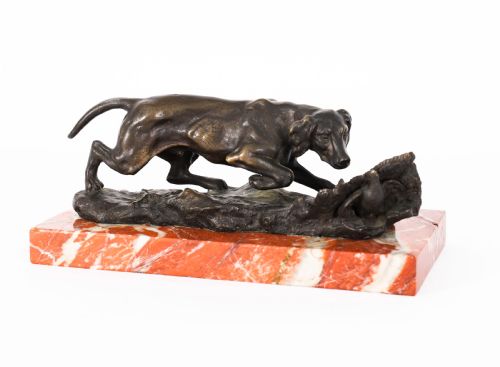
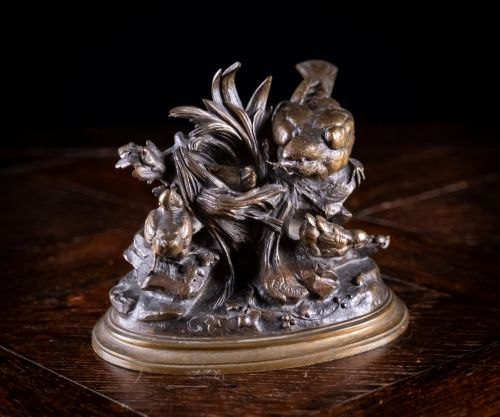
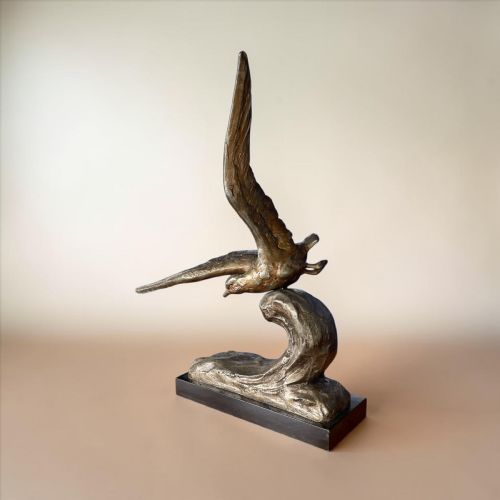
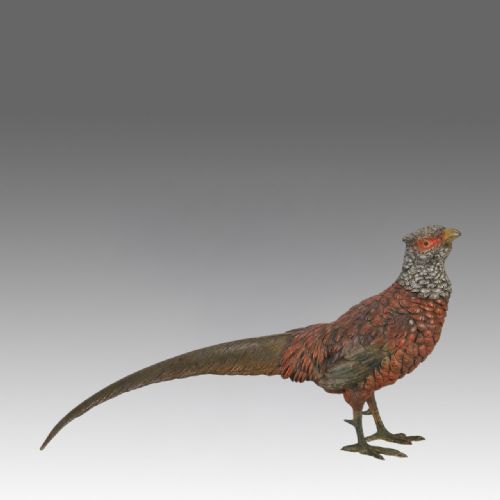
When you search for a bronze bird statuette, you are looking at small animalier sculptures and desk ornaments depicting birds from various periods. These pieces range from naturalistic studies of pheasants and kingfishers to stylised Art Deco albatrosses and pelicans.
You are most likely to meet twentieth-century Austrian cold-painted bronzes and nineteenth-century French animalier figures on this page. They appear mounted on marble plinths, perched on branches, or cast as standalone figures.
The subjects span songbirds, birds of prey, and waterfowl, reflecting the Victorian fascination with nature and later modernist abstraction. Each piece captures a distinct posture, whether a bird in flight, resting on a nest, or standing alert.
How they were made
These figures are produced using the lost-wax casting method or sand casting, capturing fine anatomical details in bronze. Artisans then apply patinas, parcel-gilt highlights, or polychrome enamel paint to the metal surface.
Cold-painted bronzes receive their colour through layers of paint applied after the casting process, rather than being fired in a kiln. Many pieces are combined with other materials, such as black marble plinths or painted wooden bases.
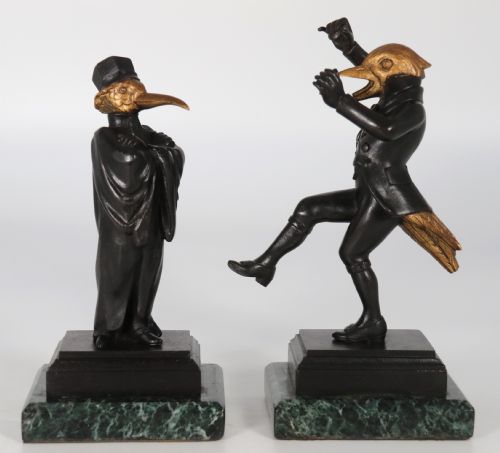
A theatrical bird wearing human characteristics might just judge your desk habits from its marble plinth.
What varies in quality
Quality in these sculptures rests upon the crispness of the initial cast and the sensitivity of the finishing work. Finer examples retain sharp feather texturing and expressive postures without losing definition in the softer details.
The preservation of original cold-painted surfaces or rich dark patinas heavily influences the character of a piece. Superior foundry work shows careful chasing and smoothing of the metal before any patination or mounting takes place.
Carl Kauba·Franz Bergman·Antoine Louis Barye·Barbedienne·Auguste Moreau·P. Marec·Ferdinand Pautrot
The Bronze Bird Statuette Glossary
- Animalier
- A nineteenth-century artistic movement focusing on the realistic portrayal of animals. Sculptors in this tradition studied anatomy closely to capture movement and behaviour.
- Cold-painted bronze
- A technique where bronze sculptures are painted with enamels or oils without high-temperature firing. This finish is delicate and requires careful handling to prevent flaking.
- Vienna bronze
- Small, highly detailed Austrian bronze sculptures produced from the late nineteenth into the early twentieth century. They often depict animals, figures, and birds in whimsical or realistic poses.
- Patina
- The chemical or natural surface coloration developed on bronze over time or applied by an artisan. A good dark patina enhances the sculptural contours of the bird.
Bronze Bird Statuette: Frequently Asked Questions
What is a cold painted bronze?
A cold painted bronze is a metal sculpture finished with paints applied directly to the cold surface rather than fired in a kiln. This method allows for vivid, multicoloured depictions of plumage on birds.
These painted finishes were especially popular in Austrian workshops during the late nineteenth and early twentieth centuries. Collectors prize examples where the original paint remains largely intact.
How do I clean a bronze bird?
Dust your bronze gently with a soft, dry brush to remove particles without disturbing the patina or paint. Avoid using water, soap, or chemical polishes, which can strip historic finishes.
For cold-painted pieces, moisture is particularly harmful as it can cause the enamel paint to lift. Keep them away from direct sunlight and humid environments.
Where were Vienna bronzes made?
Vienna bronzes were produced in workshops located in Vienna, Austria, during the late nineteenth and early twentieth centuries. These foundries specialised in small, characterful animal figures.
Artists such as Franz Bergman operated prominent foundries that exported these charming bird and animal statuettes internationally. Their output remains distinct for its humour and fine detail.
What is animalier art?
Animalier art is a nineteenth-century genre dedicated to the realistic representation of animals in sculpture and painting. Practitioners studied live specimens in menageries to understand their anatomy and movement.
Sculptors like Antoine-Louis Barye elevated animal subjects to serious fine art. Their bronze bird and beast statuettes captured authentic behaviour and natural textures.