





Bronze Big Cat Figurine
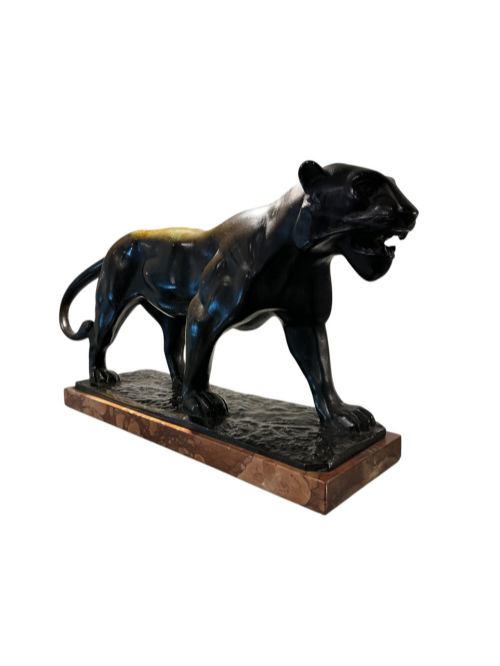
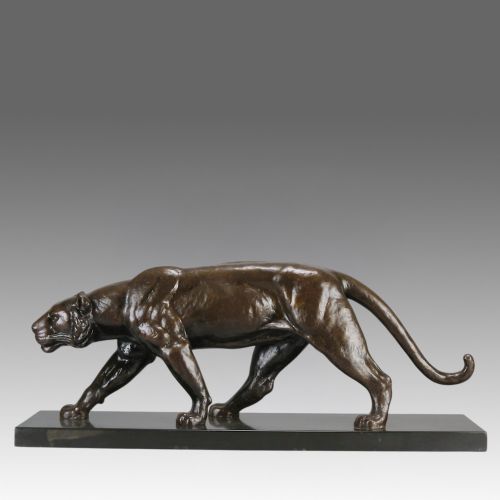
A bronze big cat figurine brings untamed power into a room, capturing the muscle and stealth of panthers, lions and tigers in cast metal.
Bronze Big Cat Figurine
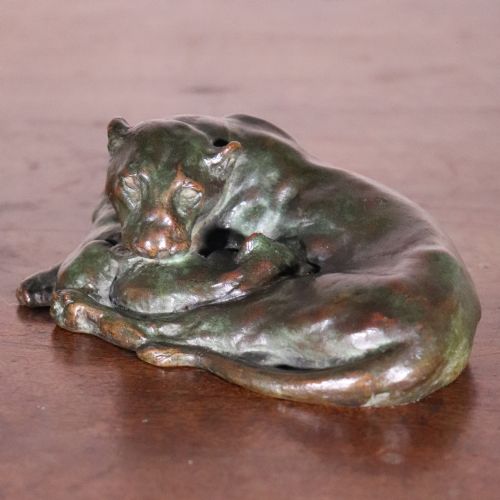
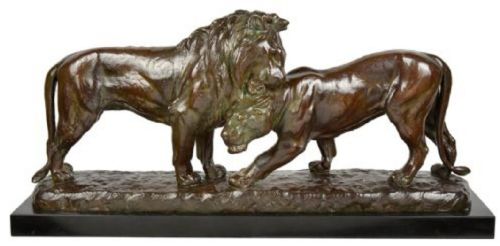
A bronze big cat figurine represents predators like panthers, lions, tigers and jaguars, captured in sculptural form across the nineteenth and twentieth centuries. These works stem from movements such as Animalier and Art Deco, reflecting a deep European fascination with wild anatomy and sleek lines.
The most common examples encountered here are Art Deco panthers cast in bronze or patinated metal, frequently mounted on marble or onyx bases. French makers and the Austrian Vienna School dominate the output, ranging from fierce stalking cats to resting beasts.
How they were made
Foundries utilised traditional casting methods to shape these animals, applying hot cast bronze or spelter into moulds before finishing the surface. Patination was carefully applied to create dark, brooding tones on the metal, while cold-painted examples received hand-applied polychrome colour.
Many of these figures were mounted onto heavy stone plinths, using marble or onyx to anchor the dynamic weight of the leaping or prowling predator. Signatures and foundry marks were often incised directly into the metal or the stone base during the final finishing stages.
Listings feature both naturalistic nineteenth-century Animalier studies and stylised twentieth-century Art Deco interpretations.
What varies in quality
The precision of the casting and the crispness of the musculature determine the merit of a piece, separating sharp anatomical studies from softer, blurred casts. Sculptures that retain their original patination or intact cold-painted surfaces command higher regard among collectors.
The quality of the base also signals distinction, where genuine veined marble or contrasting onyx complements the metalwork rather than appearing as a later replacement. Signed works by recognised Animalier sculptors or established foundries carry greater artistic authority.
Alexandre Ouline·Franz Bergman·Georges Gardet·Clovis Masson·Michel Decoux·Louis Riche·E. Drouot
The Bronze Big Cat Figurine Glossary
- Animalier
- A nineteenth-century artistic movement dedicated to the realistic portrayal of animals. Sculptors in this tradition focused closely on the natural behaviour and anatomy of beasts.
- Cold-painted bronze
- A technique where bronze figures were painted with cold oil paints rather than fired in a kiln. This method allowed for vibrant, detailed multicolour finishes on small sculptures.
- Patination
- The chemical treatment applied to the surface of bronze to alter its colour and create a protective finish. Dark brown, green, and black tones are typical results of this process.
- Spelter
- An alloy of zinc and lead often used as a cheaper alternative to bronze. It was commonly employed for large Art Deco sculptures mounted on marble bases.
Bronze Big Cat Figurine: Frequently Asked Questions
How do I identify Art Deco big cats?
Art Deco big cat figures usually feature stylised, streamlined bodies with sleek geometric lines, often mounted on long rectangular marble or onyx bases. The emphasis lies on modern elegance and dynamic movement rather than strict naturalism.
Look for the characteristic patination and styling popularised during the interwar period, which distinguishes these twentieth-century pieces from nineteenth-century Animalier bronzes.
What is the difference between bronze and spelter?
Bronze is a durable alloy of copper and tin that takes fine detail and holds a rich patination over centuries. Spelter is a softer, zinc-based metal that feels lighter and was frequently used as an affordable substitute for bronze.
When examining a heavy figurine, checking the underside or areas of wear can reveal the underlying metal colour beneath the dark surface finish.
How should I clean my bronze cat figurine?
Dust the sculpture gently with a soft, dry cloth to remove surface particles. Avoid using water, polishes or chemical cleaners, as these can strip away the original antique patination.
If the piece requires deeper care, consult a professional conservator to preserve the finish and historical integrity of the metalwork.
Where should I display a heavy marble-based sculpture?
Place the figurine on a sturdy, level surface such as a sideboard, desk or dedicated cabinet where it will not be easily knocked. Because many of these pieces combine heavy metal with dense stone bases, they require solid support.
Keep the sculpture away from direct sunlight and damp environments to protect both the patinated metal and the polished stone base.