



Bronze Art Deco Light
These bronze art deco light pieces combine striking metalwork with period design, bringing authentic twentieth-century illumination and character to a room.
Bronze Art Deco Light
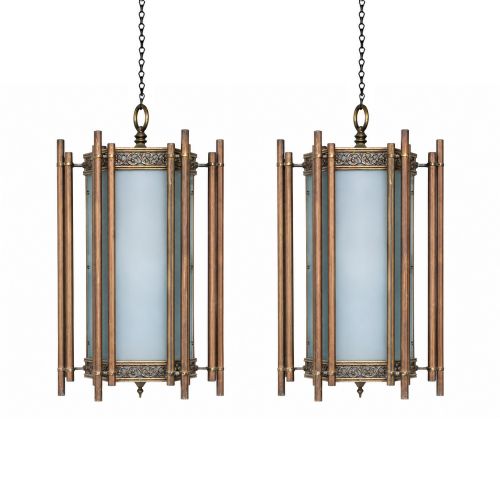
A bronze art deco light encompasses table lamps, desk lamps, wall lights, ceiling lights, and chandeliers spanning the early decades of the twentieth century. These pieces reflect the distinctive geometric and figurative aesthetics of the era, drawing upon influences ranging from French studios to American hanging lanterns.
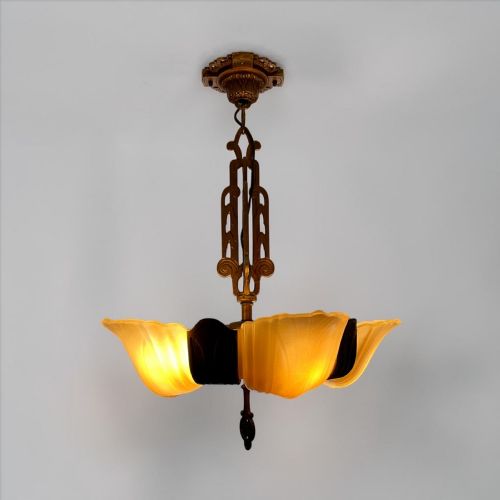
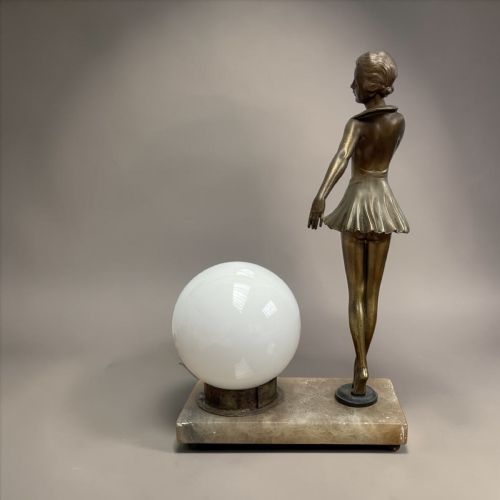
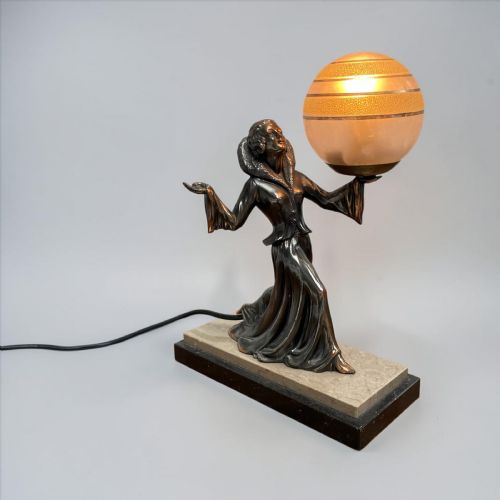
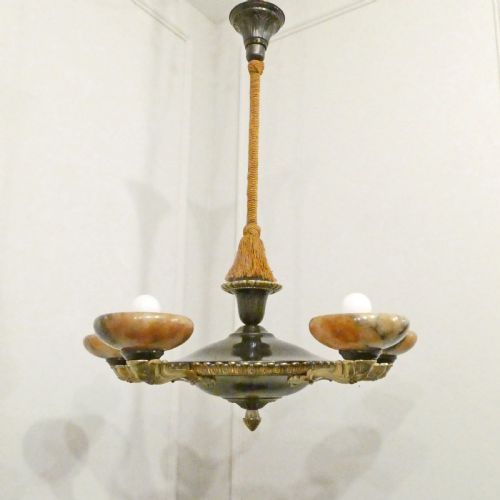
Table lamps and figural lady lamps form a major part of what you will encounter, alongside slip shade ceiling lights and bronze torcheres. The selection bridges functional illumination and sculptural art, utilising materials typical of the 1920s and 1930s design movements.
Pieces frequently incorporate motifs such as animals, dancers, and classical revivals executed in bronze, brass, and spelter. These works suit collectors seeking genuine period atmosphere rather than modern reproductions.
Materials and construction
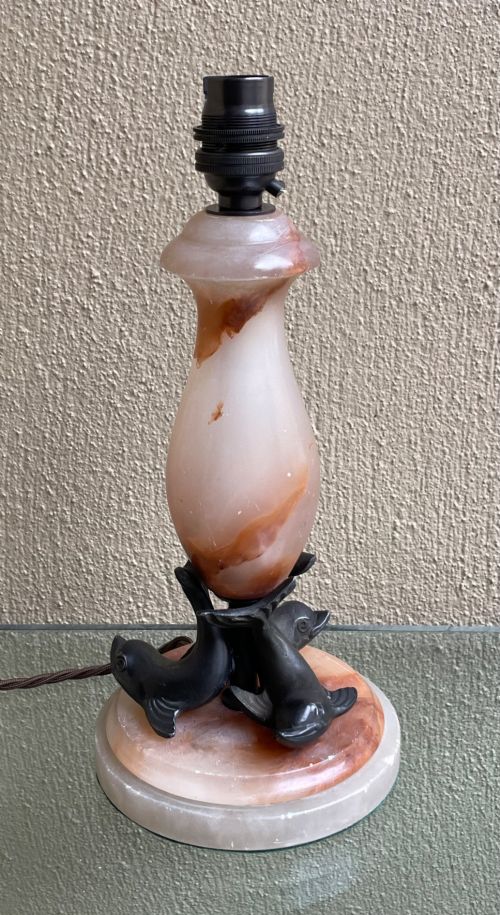
Makers utilised cast bronze, brass, and patinated metal alongside supportive bases of marble, alabaster, and onyx. These durable metals allowed for crisp casting of geometric patterns and intricate figural subjects.
Lighting components incorporated moulded glass, frosted glass, opalescent glass, and art glass shades to diffuse illumination softly. Combination pieces merged metal framing with carved stone and coloured glass panels.
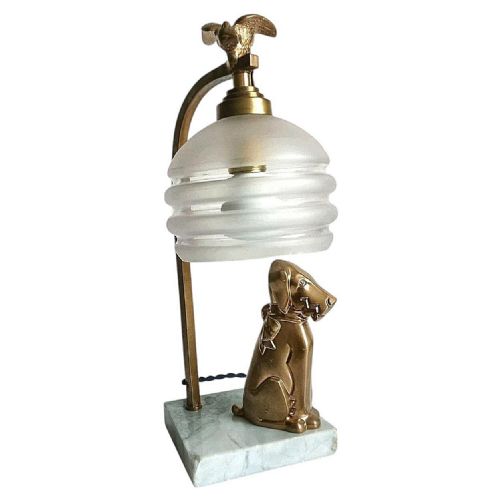
Dogs, parrots, greyhounds, and even accordions all found their way into functional lighting, proving the era took its illumination with a smile.
Assessing craftsmanship
Quality rests in the crispness of the metal casting and the integration of secondary materials like marble bases and moulded glass shades. Finer items display meticulous chiselling and balanced proportions that elevate them beyond standard production pieces.
The sophistication of the patination and the originality of the glass components dictate the standing of a light. Examples retaining their proper period shades and original cold-painted surfaces command greater appreciation among collectors.
Bruno Zach·P.Sega·Ignacio Gallo
The Bronze Art Deco Light Glossary
- Slip shade
- A moulded glass shade designed to slot directly into a metal frame or ceiling fixture. These elements define many American lights of the period.
- Spelter
- An alloy of zinc and lead utilised as a cost-effective alternative to bronze for figural castings. It often received a bronze-like patinated finish.
- Torchere
- A tall floor lamp designed to direct light upwards towards the ceiling. They provide ambient illumination through indirect glow.
- Cold painted
- A technique where paint is applied to a bronze or metal object without heat firing. This finish requires careful preservation over time.
- Pricket
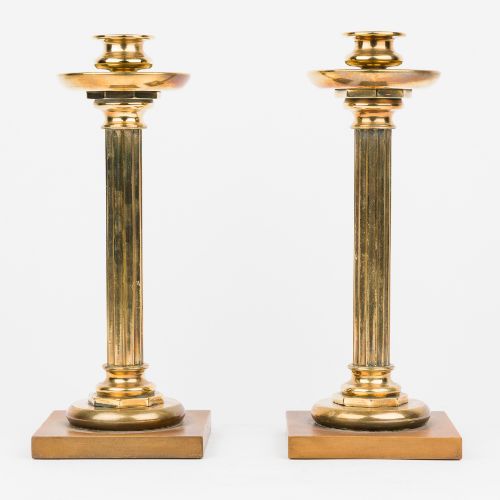
- A metal spike on a candlestick or light fitting designed to hold a candle securely in place. It appears on earlier ecclesiastical-influenced forms.
Bronze Art Deco Light: Frequently Asked Questions
How do I identify a genuine period light?
Examine the weight of the metal, the composition of the marble or onyx base, and the method of construction used for the shade fittings.
Period pieces display casting methods, patination, and wiring channels consistent with early twentieth-century manufacturing techniques rather than modern assembly.
Were these lights originally wired for electricity?
Many table lamps and ceiling fixtures were manufactured specifically for electrical illumination as domestic power became widespread during the 1920s and 1930s.
Candlesticks and prickets were originally meant for wax candles, though some were later adapted to carry electric fittings.
How should I clean bronze and patinated metal?
Dust the surface gently with a soft, dry cloth to remove everyday accumulation without disturbing the historical patina.
Avoid chemical polishes or abrasive cleaners, which strip away the aged surface finish and diminish the character of the metal.
What is the difference between spelter and bronze?
Bronze is a robust copper alloy that takes fine detail and patination well, whereas spelter is a softer zinc-lead alloy.
Spelter items feel lighter and require careful handling to prevent structural stress or damage to the detailed figural elements.