


1930s Figural Light
A 1930s figural light brings sculptural human form and period illumination into a room, offering both decorative presence and functional light.
1930s Figural Light
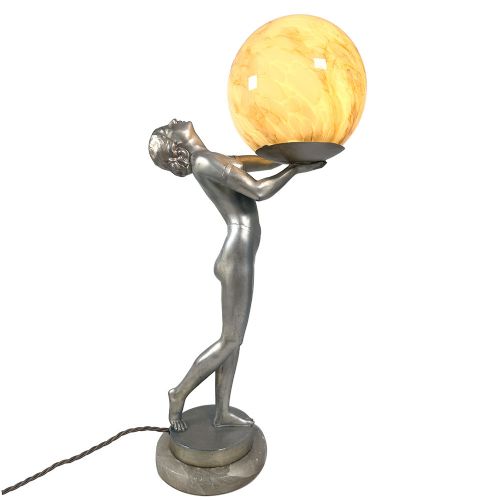
When you search for 1930s figural light, you are looking at illumination combined with sculptural figures, primarily table lamps and candelabra. The version you are most likely to meet on this page is the classic Art Deco lady lamp, capturing the aesthetic of the era.
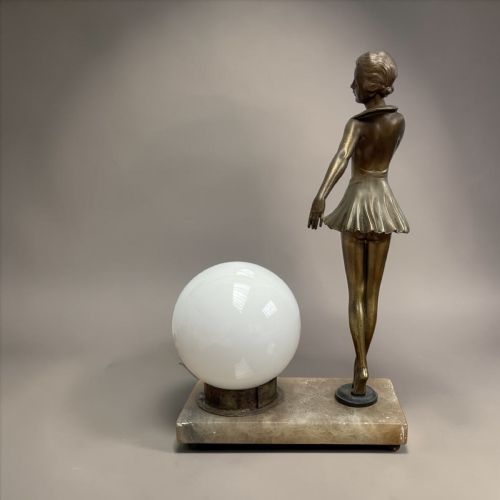
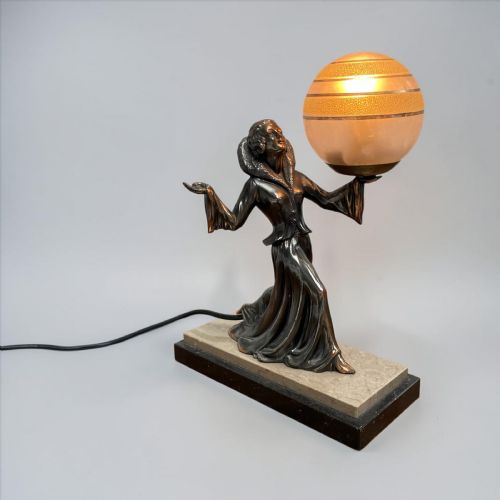
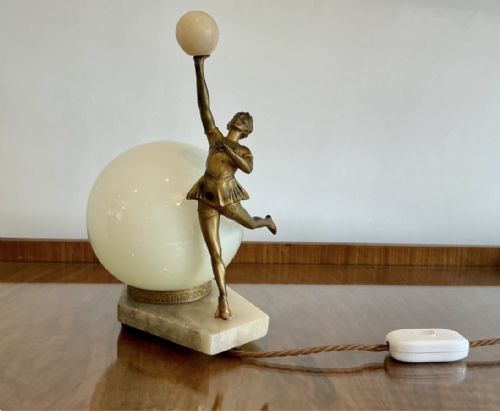
These pieces draw heavily from the Art Deco style, frequently depicting female figures, nudes, dancers, or athletic subjects like tennis players. They serve both as functional desk and table lighting and as prominent sculptural objects within an interior.
Origins span across England and France, reflecting distinct national manufacturing tastes during the 1920s, 1930s, and 1940s. Table lamps dominate the selection, whilst candelabra provide an alternative form of figural illumination.
How they were made
Manufacturers utilised a combination of metalwork and glass, casting spelter, bronze, brass, and chrome to form the figural bases and structures. Patinated metal finishes added depth to the sculptural details.
Glass components, including frosted and peach glass elements, were integrated to diffuse light effectively from the bulb. Marble bases frequently provided stability and weight to the heavier metal figures.
Materials documented across the available pieces include glass, marble, chrome, bronze, patinated metal, frosted glass, spelter, and fabric.
What varies in quality
The integration of materials dictates the overall substance of the object, with genuine marble bases and quality glass shades offering greater material presence. The fidelity of the Art Deco styling and the strength of the original finish remain central to the integrity of each piece.
P Sega·Walther and Sohne
The 1930s Figural Light Glossary
- Spelter
- A zinc alloy commonly utilised as a cost-effective substitute for bronze in the manufacturing of decorative figural bases. It takes patination and metallic paint finishes readily.
- Patinated metal
- Metal treated with chemical solutions or heat to produce a coloured surface layer or aged appearance. This finish protects the underlying material while enhancing the visual depth of the sculpture.
- Frosted glass
- Glass treated by acid-etching or sandblasting to create a textured, opaque surface. It diffuses light evenly across the room without harsh glare from the bulb.
- Art Deco
- The dominant design style of the interwar period characterised by stylised geometric forms, streamlined shapes, and depictions of modernity. It heavily influences the posture and clothing of figures from this era.
- Candelabra
- A branched candlestick or lamp holder designed to hold multiple light sources. In this context, it incorporates sculptural human figures into the supporting stem.
1930s Figural Light: Frequently Asked Questions
What is a figural light?
A figural light combines a functional lamp or candelabra with a sculptural human or animal form. These pieces function simultaneously as decorative art objects and sources of illumination.
Most examples from this category feature human subjects rendered in the prominent design styles of the interwar period.
How do I style a table lamp?
These lamps suit placement on sideboards, desks, or large console tables where their sculptural form remains visible. Ensure the scale of the lamp matches the surrounding furniture.
Position the piece away from heavy traffic areas to protect delicate glass shades and patinated metal surfaces from accidental knocks.
What materials are common?
Common materials include cast metals such as spelter, bronze, brass, and chrome. These are frequently paired with marble bases for added stability.
Glass components often feature frosted or peach-tinted finishes designed to soften the light emitted by the bulb.
Are these lamps period originals?
The listings on this page originate from the decades surrounding the interwar period, specifically capturing the design trends of the 1920s, 1930s, and 1940s. Craftsmanship and materials reflect the manufacturing methods of those decades.
Stylistic cues such as specific clothing, posture, and casting techniques help distinguish these period pieces from later reproductions.