

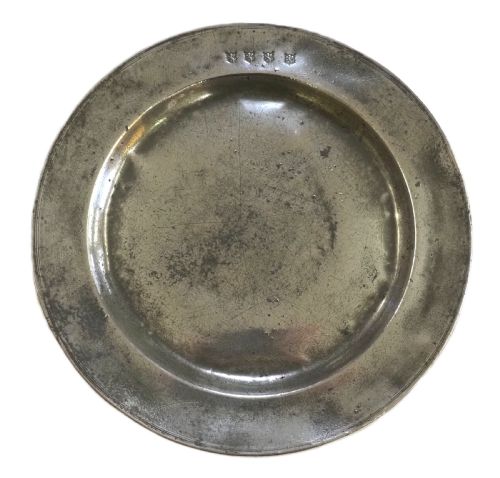


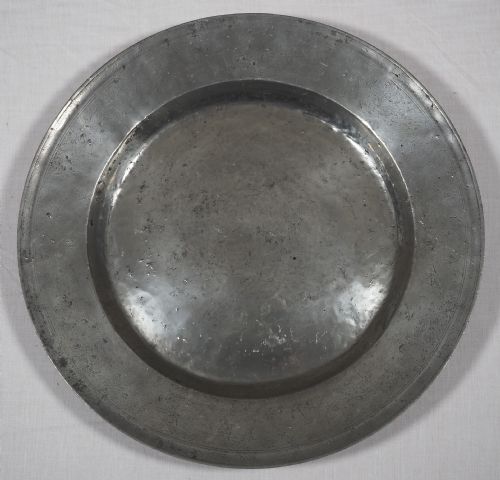

Broad Rim Plate
A broad rim plate is a substantial circular vessel cast in heavy metal, prized for its generous flat border and simple utility.
Broad Rim Plate
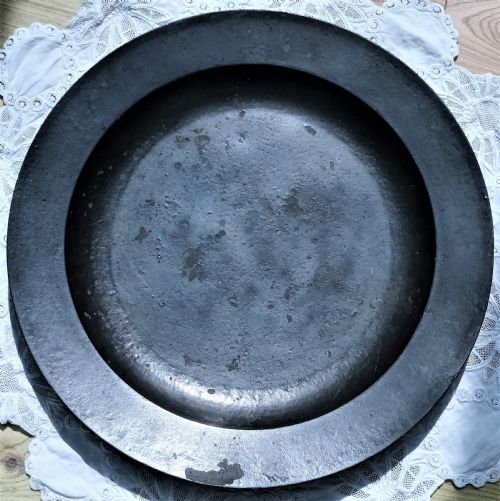
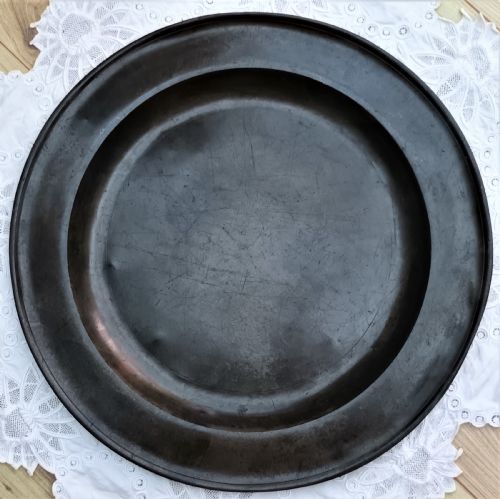
A broad rim plate provides a wide, flat border surrounding a shallow central well, designed for formal dining and display in seventeenth and eighteenth-century households. These vessels range from domestic dishes to large chargers spanning over twenty inches across.
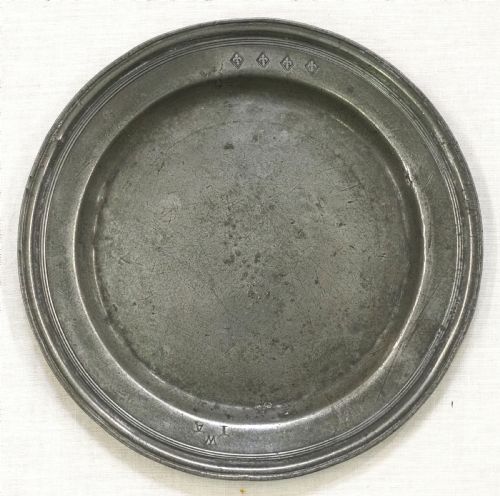
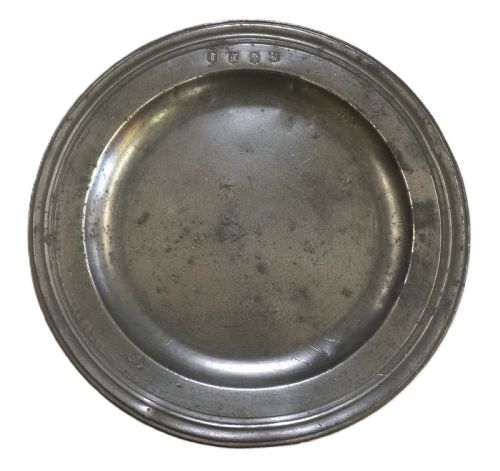
The broad rim plate appears here primarily in English pewter from the Stuart, Charles II, William and Mary, and Georgian periods. Makers forged these pieces with distinctive rim treatments, including incised lines and multiple reedings that mark their evolution over decades.
How they were made
Makers cast these pieces in pewter, a durable alloy of tin combined with lead or copper, which allowed them to shape heavy metal plates with wide, flat surfaces. The molten alloy poured into moulds before artisans smoothed and finished the metal by hand.
Many examples show evidence of extensive hammering across the surface to harden the metal and strengthen the broad rim. Master pewterers then struck their touchmarks into the back or front of the plate to record their workshop.
Broad Rim Plate Retail Price Guide 2026
Typical asking prices for broad rim plate among the pieces listed under this phrase on Sellingantiques today, from the lower quarter to the upper quarter. They describe what is for sale here now, not the wider market.
Several seventeenth-century chargers preserve personal family crests, turning plain dining pewter into centuries-old heraldic heirlooms.
What varies in quality
Quality rests in the crispness of the cast mouldings and the degree of hand-hammering visible across the metal body. Plates featuring intact maker touchmarks and scarce rim variations command greater attention from collectors.
The thickness and weight of the pewter determine the durability and survival of the broad rim over centuries of use. Substantial chargers retain their structural integrity better than thinner domestic plates of the same era.
John Duncomb·Samuel Smith·John Trapp II·John Tubb·Robert Moulins II·Lawrence Dyer·Thomas Haward·Thomas Powell·Edward Leapidge I
The Broad Rim Plate Glossary
- Broad rim
- The wide, flat border encircling the central well of a charger or plate. This expansive surface often bears maker touchmarks or family crests.
- Charger
- A large decorative or serving plate placed on a table or dresser. These heavy vessels represent the largest scale of pewter plates.
- Reeded rim
- A border decorated with parallel raised bands or moulding lines. Triple reeded plates feature three distinct ridges along the rim.
- Touchmark
- An identifying stamp struck into pewter by the maker to certify standard composition and workshop origin. These marks help identify seventeenth and eighteenth-century pewterers.
- Incised rim
- A border decorated with fine engraved lines cut into the surface of the metal. This technique creates subtle linear patterns distinct from raised reedings.
Broad Rim Plate: Frequently Asked Questions
What is a broad rim plate used for?
These large metal vessels served as formal dining chargers or display pieces on seventeenth and eighteenth-century sideboards. Their wide flat borders helped catch food spills and framed the central well.
Today they function primarily as decorative objects for wall hanging or display on dressers. Their generous metallic surfaces reflect light and showcase early English craftsmanship.
How do I date a pewter broad rim plate?
Dating relies on stylistic clues like rim decoration, width proportions, and maker touchmarks struck into the metal. Seventeenth-century examples often feature broader rims and specific reeding patterns.
Records of touchmarks help attribute pieces to specific decades between sixteen-sedative and seventeen-twenty. Examining the weight and hammering technique also aids in establishing the period.
Are these plates made of pure tin?
Historic pewter consists of an alloy where tin forms the primary base, combined with varying proportions of lead or copper to give the metal strength. This specific mixture allowed pewterers to cast wide, stable plates that resisted bending.
Over time, this historic metal develops a dark, matte surface patina that reflects its age and handling. The composition varies slightly between seventeenth-century workshops and later Georgian foundries.
How should I care for antique pewter?
Antique pewter requires minimal intervention to preserve the stable dark oxide patina accumulated over centuries. Dusting with a soft cloth keeps the surface clean without removing historic character.
Harsh metal polishes and abrasive cleaners should be avoided because they strip away the soft historic skin of the metal. Keeping the pieces in stable indoor conditions prevents further oxidation.