





Broad Rim Pewter
Broad rim pewter chargers and plates are substantial English vessels from the seventeenth and eighteenth centuries, prized for their deep borders and historic touchmarks.
Broad Rim Pewter
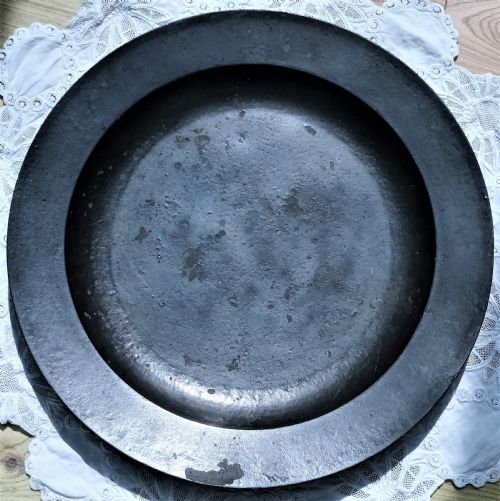
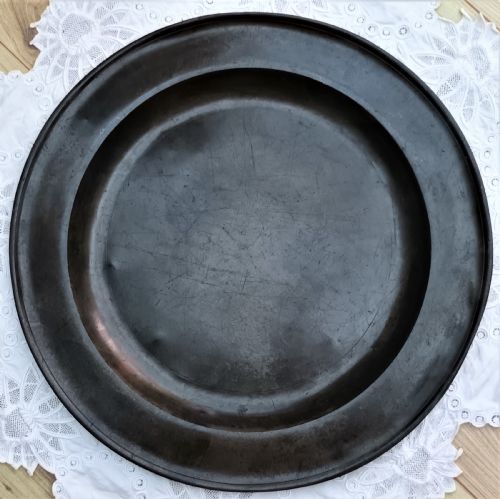
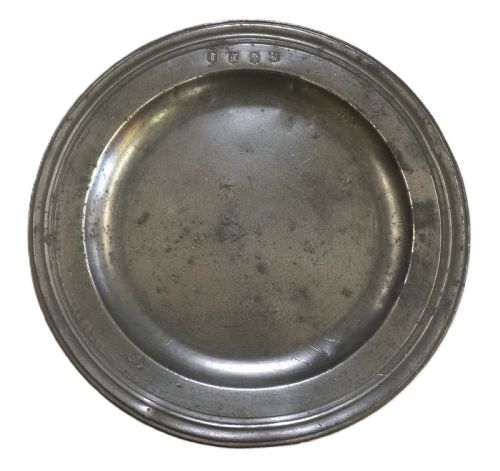
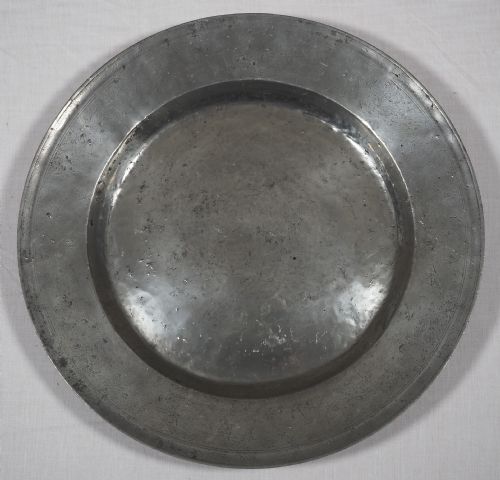
Broad rim pewter comprises plates, dishes, and large chargers produced across the seventeenth and eighteenth centuries in England. These flatware forms served dining and display functions in substantial households, characterised by their notably wide horizontal rims framing a central well.
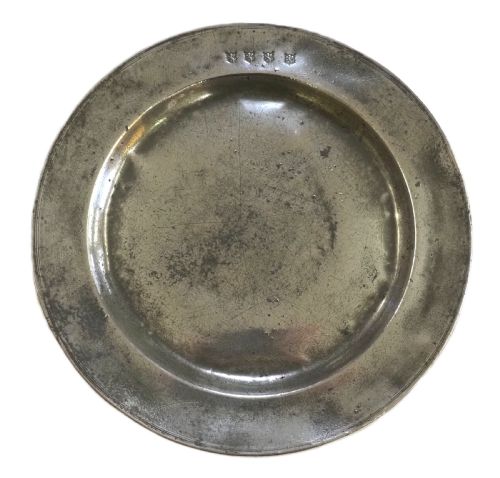
The versions most commonly met on this page date from the Stuart, Charles II, and William and Mary eras through to the Georgian period. They appear primarily as chargers and plates, frequently bearing maker touches or family crests upon the metal.
How they were made
These items are fashioned from pewter, an alloy composed predominantly of tin with additions of lead, copper, or bismuth. Makers cast the metal into flat discs before hammering the surface to achieve the desired rigidity and form.
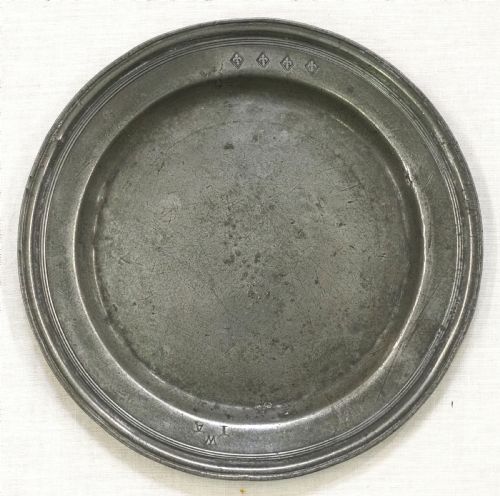
Detailing on the broad rim often includes multiple reeded edges, incised lines, or entire surfaces that are hammered all over by hand. Makers marked their output with touchmarks impressed into the soft metal to denote standard and origin.
Broad Rim Pewter Retail Price Guide 2026
Typical asking prices for broad rim pewter among the pieces listed under this phrase on Sellingantiques today, from the lower quarter to the upper quarter. They describe what is for sale here now, not the wider market.
Some seventeenth-century plates carry the Skrymshire family crest, reminding us that even dinnerware needed a coat of arms to keep the peace.
What varies in quality
Quality in broad rim pewter rests upon the weight of the metal and the crispness of the original casting and hammering. Thicker plates retain their structural integrity better over the centuries, keeping the broad rim flat and true.
The presence of clear touchmarks, scarcity of rim decoration such as incised lines, and provenance in the form of engraved family crests elevate the standing of a piece. The breadth of the rim relative to the central well also dictates visual proportion and desirability.
John Duncomb·Samuel Smith·John Trapp II·John Tubb·Robert Moulins II·Lawrence Dyer·Thomas Haward·Thomas Powell·Edward Leapidge I
The Broad Rim Pewter Glossary
- Charger
- A large ornamental or serving plate, typically exceeding sixteen inches in diameter. These substantial vessels formed the centrepiece of historic dining tables.
- Touchmark
- An official stamp pressed into the pewter by the maker to certify quality and workshop origin. These marks are vital for identifying seventeenth and eighteenth-century makers.
- Reeded rim
- A border decorated with parallel raised bands or rings running around the circumference. Multiple reeding adds formal complexity to the broad rim.
- Incised rim
- A border ornamented with fine lines cut directly into the metal surface. This decorative technique appears on late seventeenth-century English plates.
Broad Rim Pewter: Frequently Asked Questions
How were broad rim pewter chargers used?
These large vessels served both practical dining functions and display purposes in wealthy seventeenth and eighteenth-century households. They held meat courses at table or stood upright on sideboards to show off the metal.
The wide rim prevented food from spilling and provided a surface for engraved family crests and initials. As dining fashions changed, they transitioned entirely into decorative display items.
How do I identify seventeenth-century pewter?
Seventeenth-century examples often feature very wide flat rims, sometimes decorated with multiple reeded lines or incised borders. Examining the back of the rim frequently reveals maker touchmarks.
The weight is generally substantial, reflecting the thick casting required before later standardisation. Hammer marks across the surface also point toward earlier hand-production methods.
What is a touchmark on pewter?
A touchmark is a small stamp impressed into the metal by the pewterer to indicate their identity and adherence to guild standards. These marks act as a signature for the maker.
Finding a clear touchmark allows collectors to consult trade records and date the piece more accurately. Many makers registered their marks with the Worshipful Company of Pewterers.
How do I care for antique pewter?
Antique pewter requires minimal intervention and should be kept dry to prevent corrosion. Dusting with a soft cloth is usually sufficient for maintenance.
Harsh metal polishes strip away the aged surface and historic patina built up over centuries. Allowing the metal to retain its dull, dark grey finish preserves its character.