
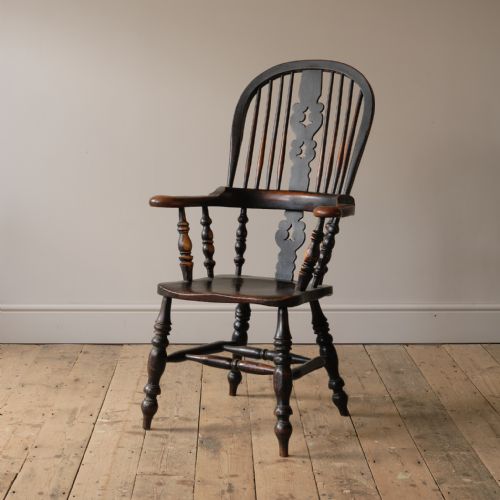
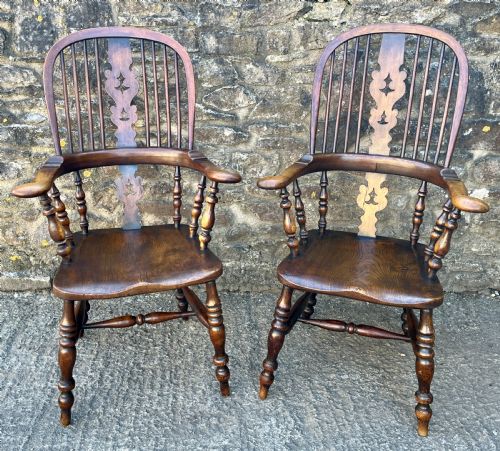


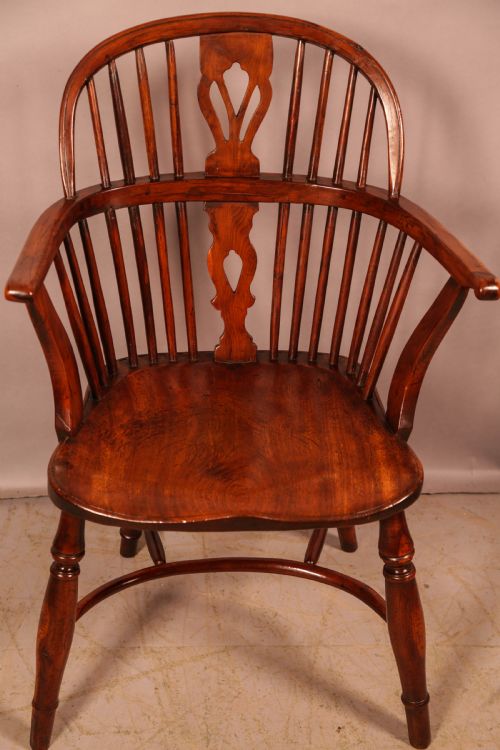


Broad Arm Windsor Chair
A broad arm windsor chair offers a generous resting place for the arm, built from sturdy woods like yew and elm during the nineteenth century.
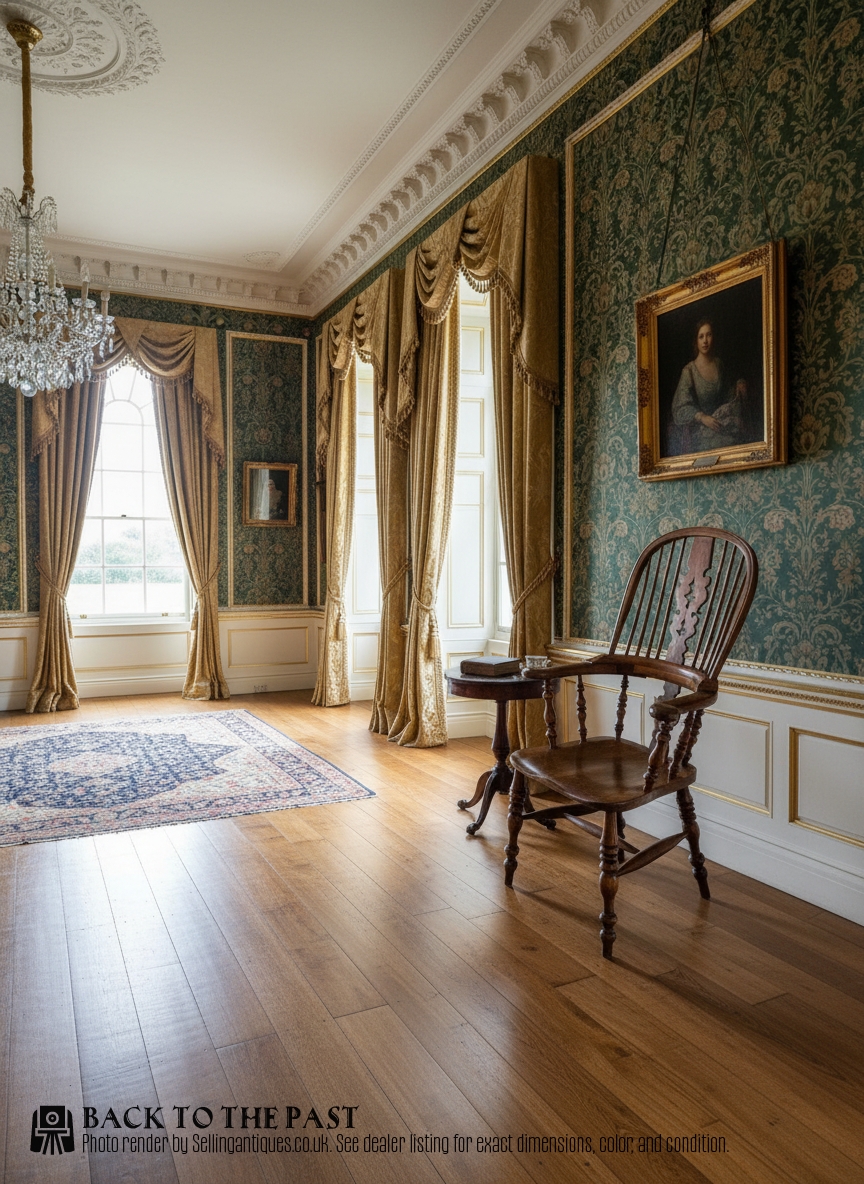
Broad Arm Windsor Chair
A broad arm windsor chair combines traditional country seating with an expanded flat wooden armrest designed for writing or comfort. These pieces emerge predominantly from the nineteenth century, spanning the Victorian and Edwardian eras.
Most examples seen here stem from English vernacular traditions, including notable regional variations from Yorkshire. The form relies on a solid timber seat into which the legs and back spindles are wedged and secured.
Makers shaped these armchairs using local hardwoods to serve functional roles in farmhouses and domestic interiors. Collectors encounter variations featuring low backs, high backs, and hoop backs alongside the signature wide arm.
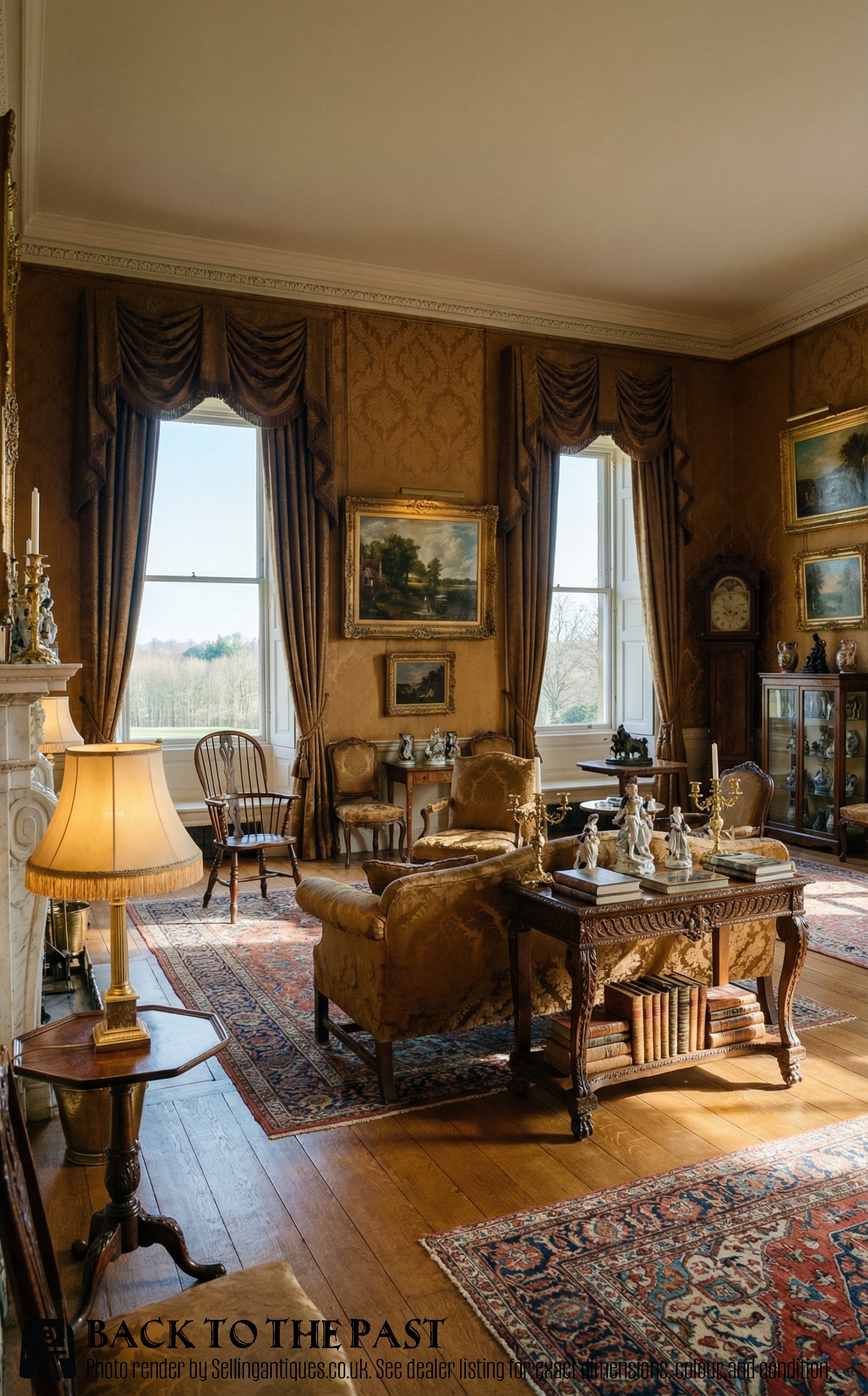
Materials and Construction
The construction typically pairs a dense elm seat with contrasting timbers such as ash for the bent parts and spindles, or utilises yew wood throughout. Craftsmen turned legs and stretchers on a lathe while steaming and bending wood to form the characteristic bow back and armrests.
Seats were deeply saddled by hand using an adze and scorp to ensure ergonomic comfort before the undercarriage and superstructure were driven into bored holes and wedged tight.
Broad Arm Windsor Chair Retail Price Guide 2026
Typical asking prices for broad arm windsor chair among the pieces listed under this phrase on Sellingantiques today, from the lower quarter to the upper quarter. They describe what is for sale here now, not the wider market.
Assessing Quality and Character
Quality rests heavily on the choice of timber, with richly figured yew wood commanding greater regard than plain ash or beech. The width and proportion of the broad arm paddle, alongside the grace of the spindle turnings, dictate the aesthetic success of the chair.
Structural integrity depends on the tightness of the original joints and the survival of the thick saddle seat without excessive splitting or historic repairs.
Allsop Worksop·Worksop Made
The Broad Arm Windsor Chair Glossary
- Broad arm
- An extended, flattened wooden armrest built into the side of a Windsor chair to provide a writing surface or extra rest. This feature defines the specific typology.
- Spindle
- A slender, turned wooden rod that forms the vertical supports of the chair back. These are wedged securely into the seat and top rail.
- Saddle seat
- A wooden seat base carved into a concave, contoured shape resembling a saddle for improved comfort. Elm is frequently chosen for this component due to its resistance to splitting.
- Bow back
- A continuous bentwood rail that forms the upper back and arm support of the armchair. Steam bending allows the timber to curve without snapping.
- Stretcher
- A horizontal wooden rod connecting the legs of the chair to provide rigidity and strength. They are often arranged in an H-pattern.
Broad Arm Windsor Chair: Frequently Asked Questions
What is a broad arm windsor chair?
A broad arm windsor chair is a traditional wooden armchair featuring an enlarged, flat armrest designed for writing or resting. These sturdy seats developed distinct regional styles across English workshops during the nineteenth century.
They combine a solid carved timber seat with steam-bent spindles and legs secured by wedged joints. The wide arm serves as the primary distinguishing characteristic of the form.
How do I date a windsor chair?
Dating relies on examining the timber species, construction methods, tool marks, and overall wear patterns visible on the seat and undercarriage. Nineteenth-century examples often display hand-turned spindles and regional design traits unique to places like Yorkshire.
Changes in wood preparation and stylistic shifts from Georgian country forms to Victorian production help narrow the manufacturing window. Comparing structural details against documented regional pieces clarifies the timeline.
Which woods were used for these chairs?
Craftsmen utilised native British hardwoods available locally, pairing different timbers for specific structural properties within the same frame. Elm frequently forms the heavy seat because its interlocking grain resists splitting.
Ash, beech, oak, and highly prized yew wood were selected for the bent bows, turned legs, and delicate back spindles. Yew wood examples are particularly sought after for their striking natural grain patterns.
How should I care for a antique chair?
Antique wooden chairs require stable indoor humidity levels away from direct heat sources and strong sunlight to prevent the timber from drying out. Applying a traditional beeswax polish helps nourish the historic surface and maintain the natural lustre of the wood.
Avoid placing excessive weight on the broad arm, as the cantilevered design experiences stress at the joint connecting to the seat. Regular gentle dusting preserves the patina built up over generations of use.