


British Sporting Landscape
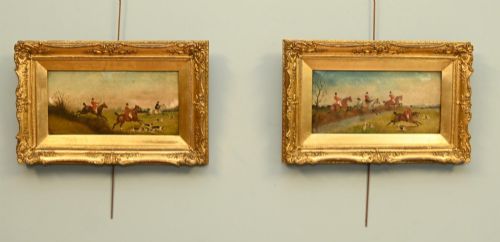
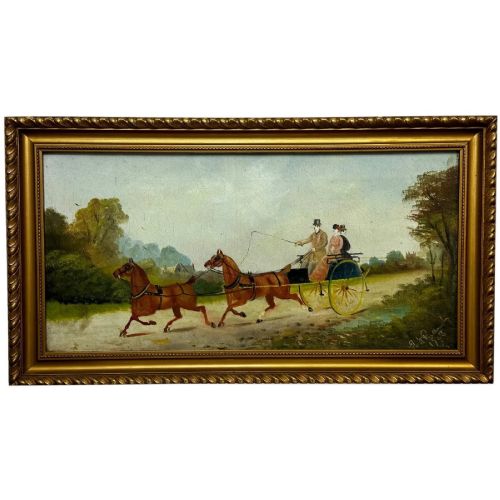
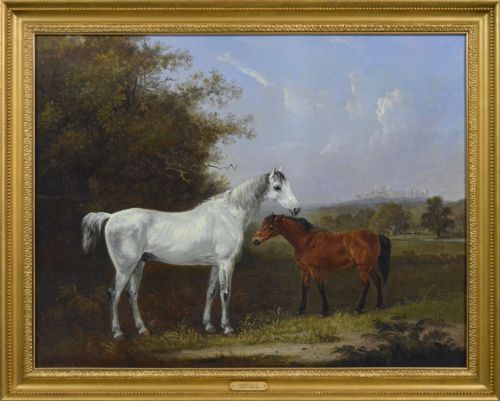
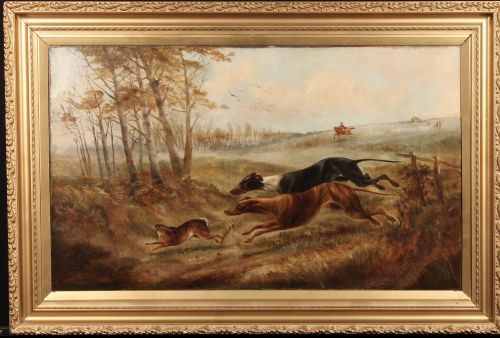
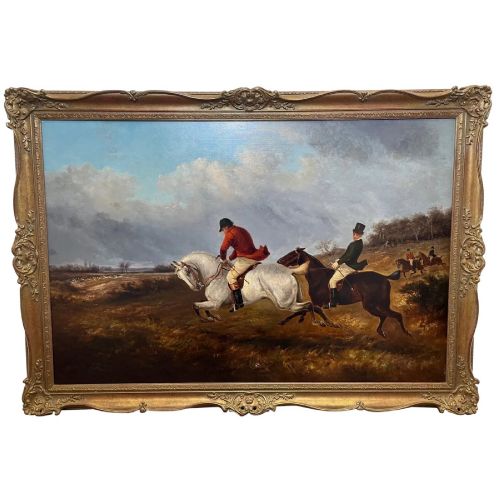
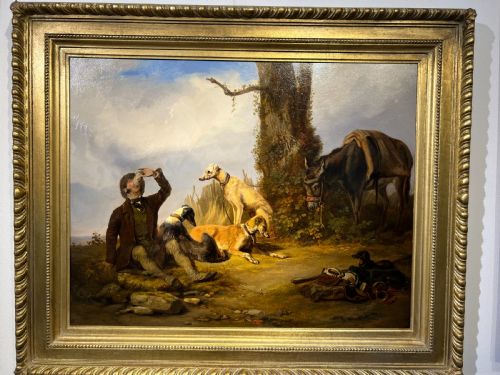
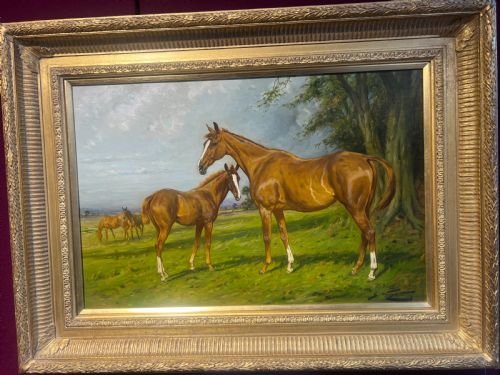
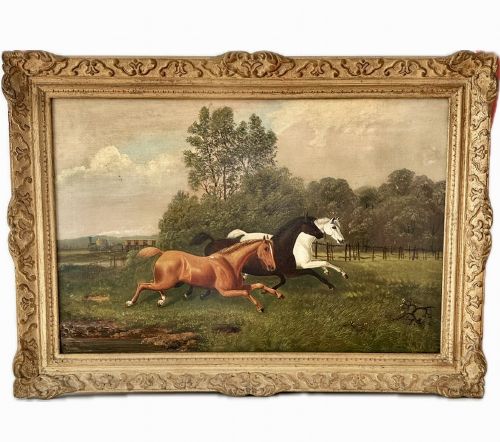
A british sporting landscape captures horses, hounds and rural pursuits across nineteenth and early twentieth century canvases.
British Sporting Landscape
A british sporting landscape brings together traditional countryside scenes, equestrian portraits and hunting watercolours from the Victorian and Edwardian eras. Buyers look for these works to anchor a country house interior with authentic rural history and animal portraiture.
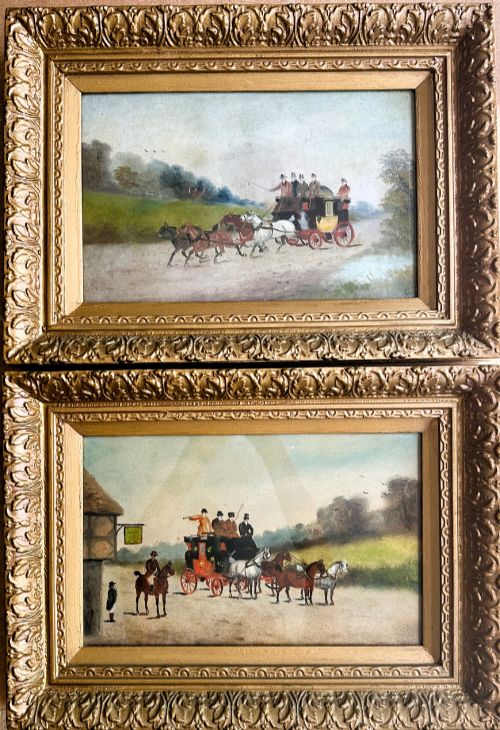
The most common examples on this page are oil paintings on canvas depicting hounds, horses and coaching scenes within sweeping rural vistas. These works range from large nineteenth century canvases to smaller Edwardian watercolours created by established sporting artists.
Materials and Techniques
Painters utilised oil on canvas and watercolour on paper, building up compositions with layered pigments to capture the texture of horse coats and rural vegetation. Canvases are frequently housed within traditional gold leaf and giltwood frames that complement the rich tones of the imagery.
Artists relied on precise observational skill to render animal anatomy and atmospheric country weather accurately. Brushwork balances tight detail in the subjects with looser, atmospheric handling in the surrounding landscapes and skies.
Several canvases manage to squeeze steam locomotives, galloping hounds and stagecoaches into the same rural view.
Evaluating Quality
Quality rests on the vitality of the animal drawing and the atmospheric depth of the surrounding countryside. Master hands capture the tension of a hunt or the musculature of a horse with a convincing energy that lesser brushwork misses.
The harmony between the primary subject and the landscape background dictates the success of the composition. Stronger works integrate horses and hounds naturally into the terrain rather than placing static figures against a generic backdrop.
Sir Edwin Henry Landseer·George Wright·John Emms·John Ferneley Senior·William Barraud·Philip Henry Rideout·James Pollard
The British Sporting Landscape Glossary
- Oil on Canvas
- A traditional painting medium where coloured pigments suspended in oil are applied to a stretched woven fabric support. This technique allows for rich colour blending and lasting durability.
- Giltwood
- Wood carved and covered with a thin layer of gold leaf or metallic gilt. It provides traditional framing for nineteenth century fine art.
- Watercolour
- A painting method where water-soluble pigments are applied to paper. It produces translucent washes suited to delicate countryside scenes.
- Equestrian
- Pertaining to horses and horse riding. In art, this describes works centred on horses, riders and racing or hunting subjects.
- Sporting Art
- A genre of painting dedicated to rural sports, including hunting, racing, shooting and coaching. It flourished in Britain throughout the nineteenth and early twentieth centuries.
British Sporting Landscape: Frequently Asked Questions
What subjects appear in these paintings?
These works typically feature horses, hunt packs, coaching scenes and dogs within rural environments. Artists recorded the daily realities of country sports and agricultural life.
Subjects range from detailed portraits of prize animals to wide views of hunts moving across open fields and winter landscapes.
How do I date a sporting painting?
Dating relies on clothing styles, architectural details, transport methods and framing materials visible in the work. Nineteenth century pieces often show heavy giltwood frames and distinct Victorian attire.
Signatures, inscriptions on the reverse and recorded artist active dates help narrow the period further.
Where should I hang these artworks?
These pieces suit traditional study rooms, libraries and dining spaces where rural and equestrian themes complement existing period furniture. Direct sunlight should be avoided to protect oil pigments and paper watercolours.
Wall placement should account for the weight of larger gilt frames and ensure proper eye level viewing.
How do oils and watercolours differ?
Oil paintings utilise heavy canvas supports and rich pigment layers that offer deep textures and robust durability. They present a substantial presence on the wall.
Watercolours employ paper supports under glass, delivering lighter, more translucent depictions of countryside light and weather.