
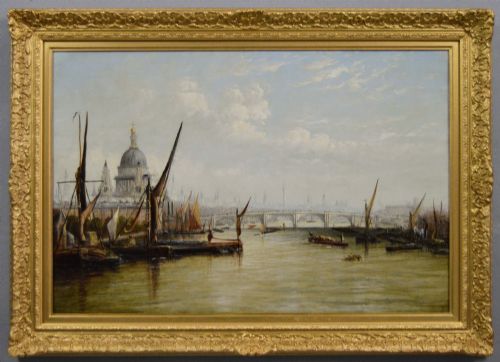
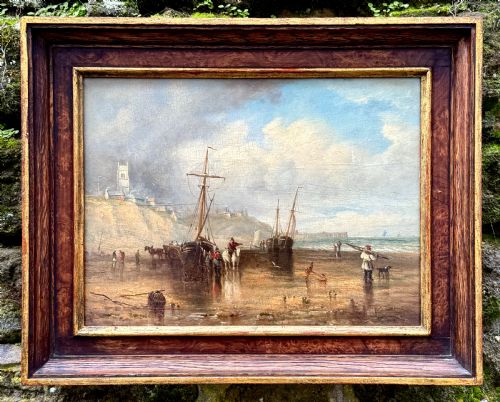


British School Marine Oil
British school marine oil paintings capture coastal life and open waters on canvas, offering buyers a genuine window into maritime history.
British School Marine Oil
When you search for british school marine oil, you are looking at works that depict coastal scenes, harbours, and open seas from various periods.
The pieces on this page include Victorian marine works, mid-century impressionism, and regional depictions from groups like the Newlyn school.
You will most commonly meet 19th-century canvases featuring stormy seas, fishing boats, and specific coastal locations around the British Isles.
Materials and Technique
These works are painted in oil on canvas or card, utilising oil paint applied to create texture and depth in the depiction of water and sky.
Frames often incorporate wood with gesso and gold leaf finishes to house the paintings securely.
Listings feature canvases spanning from the Victorian era through to mid-century impressionism.
Assessing Quality in Marine Oils
The distinction between works rests on the handling of light, movement in the water, and the precision of the maritime vessels depicted.
Signed works by recorded artists command greater attention than anonymous examples from the wider British school.
Francis Moltino·Thomas Creswick·William Lambert Bell·William Shayer·Alec Caruthers Gould·Walter Williams·Edmund John Niemann
The British School Marine Oil Glossary
- Marine oil
- An oil painting focused primarily on the sea, ships, or coastal views. These works range from calm harbour scenes to dramatic storm depictions.
- Canvas
- A closely woven fabric used as a support surface for oil painting. It is typically stretched over a wooden frame before work begins.
- Gesso
- A plaster-like mixture applied to wood frames as a base for gilding. It provides a smooth surface for the application of gold leaf.
- Newlyn school
- An art colony based in Cornwall during the late 19th and early 20th centuries. Painters in this group focused on naturalistic scenes of local life and coastal subjects.
British School Marine Oil: Frequently Asked Questions
What is a british school marine oil?
It is an oil painting created by a British artist depicting maritime subjects, coastal views, or ships at sea. These works date across the 19th and 20th centuries.
They record the changing relationship between Britain and the sea, ranging from working fishing boats to naval vessels and dramatic coastal storms.
How were these paintings displayed?
Most of these works are housed in traditional wooden frames, often enhanced with gesso and gold leaf to complement the tones of the canvas within.
Historically, they hung in domestic drawing rooms and maritime offices, reflecting the owner's connection to trade, the navy, or coastal holidays.
How do I identify the period?
Period identification relies on the style of painting, the clothing of figures if present, the framing methods, and the type of canvas or support used.
Nineteenth-century works often show detailed realism, while mid-century examples lean towards impressionistic brushwork and broader interpretations of light.
Where were these scenes painted?
Artists painted at various coastal locations around Britain, including Cornish harbours like Mevagissey and St Ives, the Thames, and the Medway.
Many painters travelled directly to the coast to capture the working life of ports and the shifting conditions of the sea in person.