
British Rural Scene Artwork
British rural scene artwork captures the quiet rhythm of the countryside through watercolours, oils and etchings spanning multiple centuries.
British Rural Scene Artwork
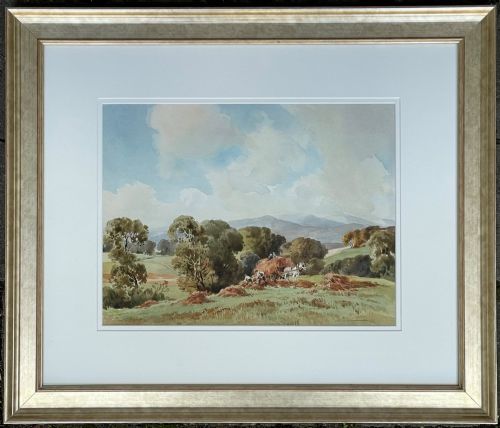
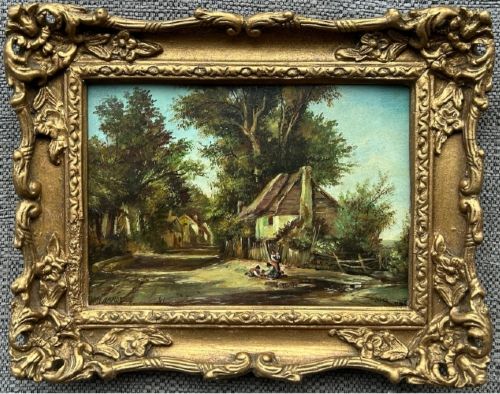
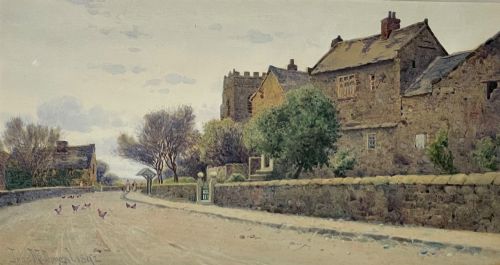
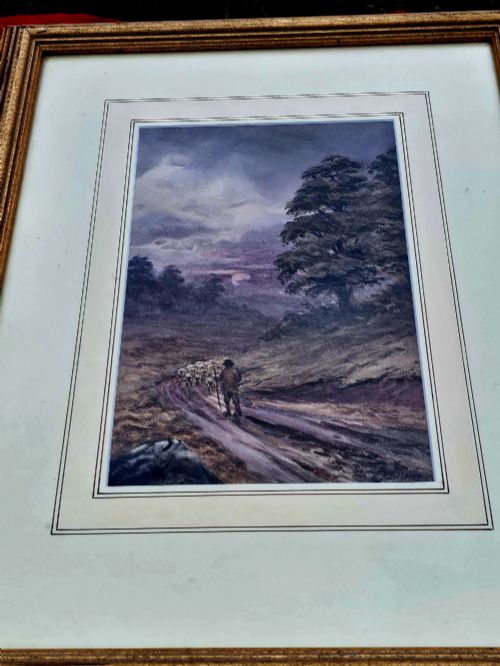
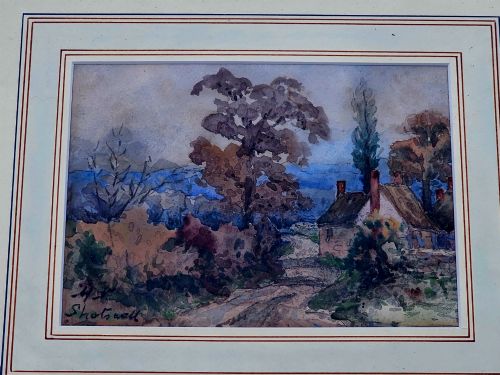
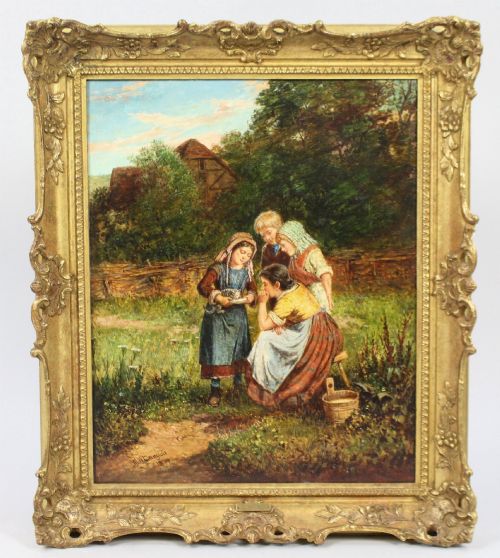
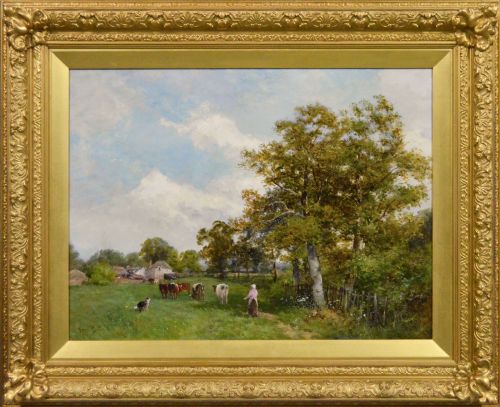
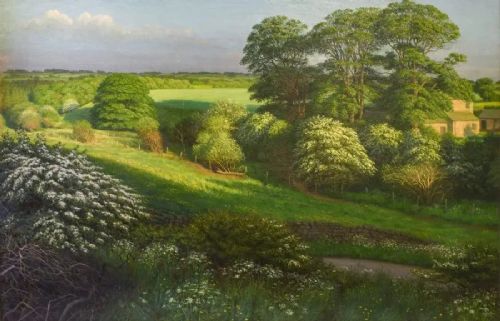
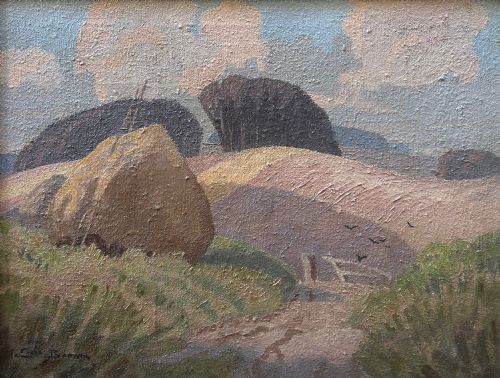
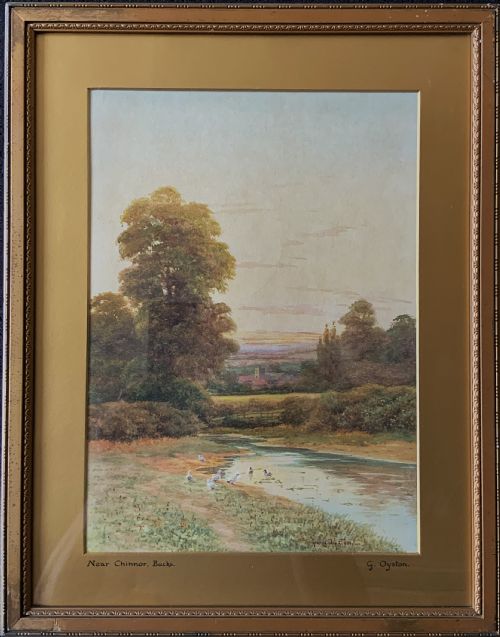
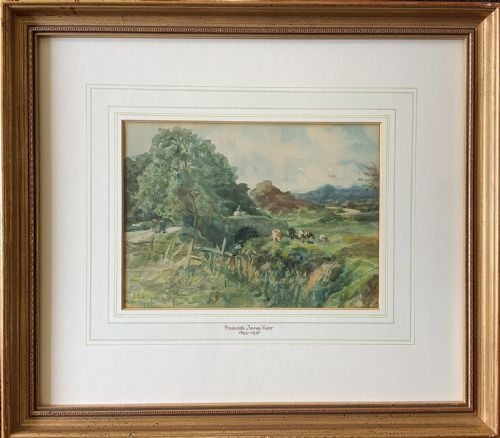
When you search for british rural scene artwork, you encounter depictions of agricultural life, cottages, rivers and farmland rendered by painters and watercolourists. These pieces capture the changing seasons and traditional labour through the eyes of artists working from the nineteenth century into the mid-twentieth century.
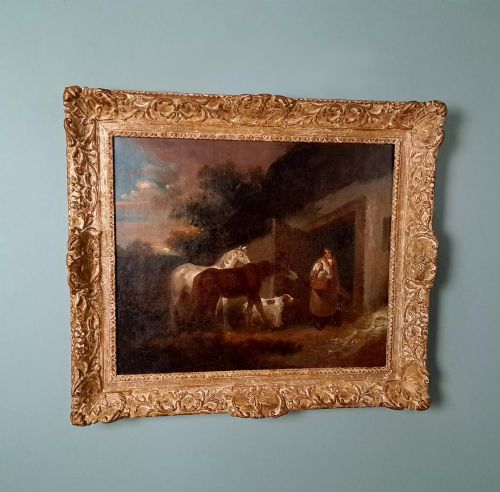
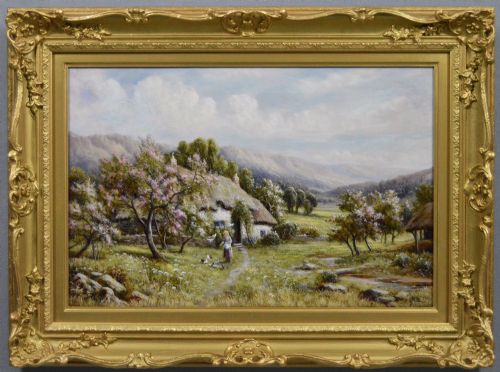
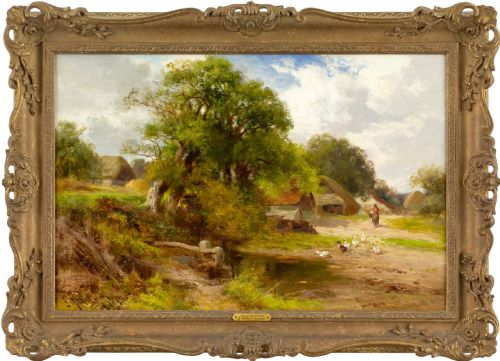
The versions most common on this page are nineteenth-century watercolours and early twentieth-century oil paintings on canvas or panel. Many feature specific named locations across England, ranging from Yorkshire and the Cotswolds to Sussex and the Home Counties, alongside figures working the land with cattle, sheep and cart-horses.
Materials and techniques
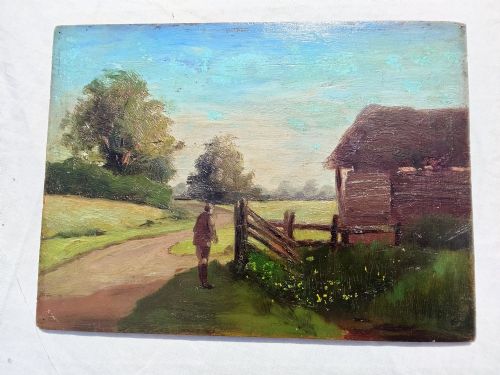
Artists relied on oil paint on canvas, wooden panel or board, alongside delicate watercolour applications on paper. These were framed primarily in gilt wood or traditional wooden surrounds that often complement the palette of the scene.
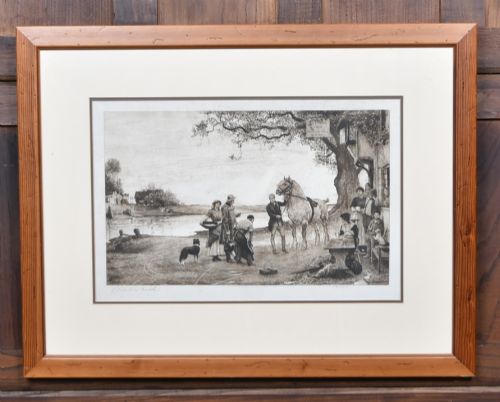
Techniques range from tight Victorian detail to looser British Impressionist brushwork and early twentieth-century tonal harmonies. Etchings on paper also appear, utilising finely worked ink lines to define cottage walls, lanes and distant hills.
Primary materials recorded include oil on canvas, watercolour on paper, wooden boards, and gilt wood framing.
Judging quality
Quality rests upon the confidence of the brushwork, the handling of natural light and the anatomical correctness of figures and farm animals. Superior examples demonstrate a clear understanding of atmospheric perspective that draws the viewer into the landscape.
A weaker painting often relies on formulaic foliage and stiff compositions without depth, whereas a strong piece by a listed hand reveals assured draughtsmanship and subtle colour harmonies that anchor the rural scene in a specific time and place.
Percy Lancaster·William Howard Hardy·William Joseph Shayer Senior·John McDougal·Mark William Langlois·David Bates·Robert John Hammond·Robert W. Macbeth·John Horace Hooper·Raymond Booth·Eric Brown·George Oyston·Frederick James Kerr·Edgar Hunt·John Bond·William Greaves·Frederick Hines·Herbert Royle·Ernest Higgins Rigg·Owen Bowen·Ernest Pile Bucknall·Frederick James Knowles·Colin H Greenwood·Henry Bailey·John Atkinson
The British Rural Scene Artwork Glossary
- Watercolour
- A painting method where fine pigment is suspended in water-soluble binders on paper. It allows for translucent washes and delicate detail.
- Oil on Canvas
- Pigments mixed with drying oils applied to a stretched woven fabric support. This medium permits rich textures and deep colour saturation.
- Gilt Wood
- Timber frames or decorative elements coated in gold leaf or metallic gilt powder. These frequently house traditional landscape paintings.
- English School
- A designation for works produced by British artists sharing stylistic traits of a particular period without implying a formal academy membership.
British Rural Scene Artwork: Frequently Asked Questions
What subjects appear in these works?
These pieces depict agricultural life, including haymaking, herding sheep and cattle, thatched cottages and rural rivers. Figures frequently engage in traditional farm labour across various English counties.
The compositions reflect pastoral routines, capturing quiet moments by streams, woodland edges and harvested fields throughout the nineteenth and early twentieth centuries.
How do I identify the period of a painting?
Dating relies on stylistic clues, framing materials, artist signatures and occasional inscriptions on the reverse of panels or stretchers. Victorian works often show tighter detail, while early twentieth-century pieces lean towards impressionistic brushwork.
Examining the backing boards, canvas types and framing styles provides additional chronological context for unsigned works.
Are these works original or prints?
The selection consists primarily of original hand-painted watercolours and oil paintings, alongside period etchings and occasional limited edition lithographs. Each listing specifies the exact medium used by the artist.
Original brushstrokes and paper textures distinguish unique paintings from mass-produced reproductions.
How should I frame and display them?
Watercolours require framing behind glass with acid-free mounts to protect the paper from humidity and direct sunlight. Oil paintings on canvas or panel benefit from stable indoor environments away from extreme temperature shifts.
Traditional wooden and gilt frames complement the historic character of these rural landscapes.