






Rustic Farm Landscape Picture
A rustic farm landscape picture captures the timeless daily toil and quiet rural calm of the countryside.
Rustic Farm Landscape Picture
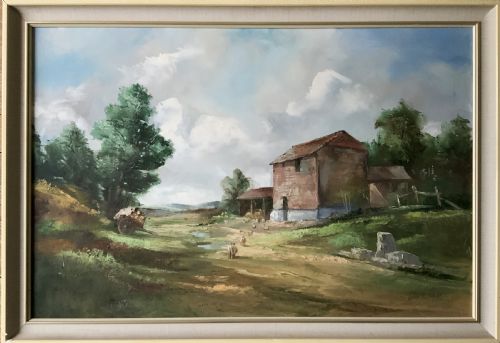
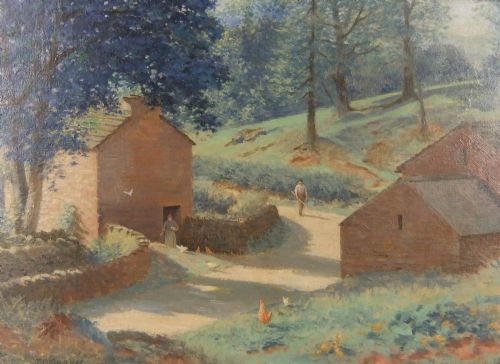
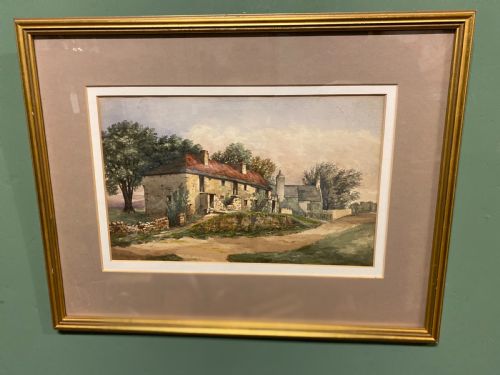
A rustic farm landscape picture represents a rural scene of agricultural life, featuring subjects such as farmyards, harvest time, barns, and cart sheds. These artworks capture the enduring character of the countryside through depictions of farmworkers' cottages, rolling hills, and windmills.
The pieces available on this page primarily date from the nineteenth century through to the mid-twentieth century, spanning periods like the nineteen-twenties and nineteen-thirties. You will most frequently encounter works executed as watercolours on paper or oil paintings on canvas and board.
Makers and artists working within these styles range from named British painters to naive school practitioners and continental examples. The stylistic approach shifts between traditional British school techniques, British impressionism, realism, and naive art.
How they were made
These works rely on traditional media such as oil paint and watercolour applied to paper, canvas, or wood panels. Artists utilised these materials to build texture and tone, capturing the specific atmospheric light of rural settings.
Framing typically involves wood and glass to protect works on paper like watercolours, while oil paintings on canvas remain stretched over wooden supports. The handling of the medium ranges from precise realist detail to looser impressionistic brushwork.
Listings feature works spanning the nineteenth century through the nineteen-sixties, created in oil and watercolour on paper, canvas, and wood.
What varies in quality
Quality in a rustic farm landscape picture depends upon the surety of the brushwork and the artist's command of light and proportion. Stronger examples demonstrate confident handling of the medium, whether in the fluid washes of a watercolour or the layered impasto of an oil painting.
The depth of composition and the faithful observation of rural architecture and agricultural labour distinguish the more accomplished works. Lesser examples may rely on formulaic repetition without capturing the specific atmosphere of the depicted location.
John Atkinson·George Hamilton Constantine·Jack R Mould·T.B. Garvie·John Falconar Slater·Nora Munro Summers·Fred C. Jones
The Rustic Farm Landscape Picture Glossary
- Watercolour
- A paint consisting of pigment suspended in a water-based solution, typically applied to paper to create luminous transparent washes.
- Oil painting
- The process of painting with pigments that are bound with a medium of drying oil, allowing for rich textures and deep colour blending.
- Naive art
- Visual art created by a person without formal training, often characterised by a childlike simplicity in perspective and detail.
- Impressionism
- A style of painting that focuses on capturing the immediate visual impression of a scene, paying particular attention to the shift of light.
Rustic Farm Landscape Picture: Frequently Asked Questions
What defines a rustic farm landscape picture?
These works focus primarily on agricultural subjects, including farmyards, barns, harvest scenes, and rural cottages. They reflect the pastoral traditions of the nineteenth and twentieth centuries.
Artists aimed to record the vanishing rhythms of country life, using watercolours or oils to depict fields, livestock, and farm buildings.
How do I care for an antique oil painting?
Keep oil paintings away from direct sunlight and rapid fluctuations in temperature or humidity. This prevents the canvas from sagging and the paint from cracking over time.
Dust the surface gently with a soft, dry brush and avoid using water or chemical cleaners on the paint layer.
How should I display a vintage watercolour?
Watercolours are sensitive to light and should be hung on walls that do not receive direct sunlight. Proper framing behind glass with a neutral mount board protects the paper from moisture and dust.
Ensure the mount keeps the glass from touching the surface of the painting directly.
How can I tell the period of a painting?
Dating relies on stylistic clues, framing materials, and the physical support such as the type of canvas, board, or paper used. Signatures and inscriptions on the reverse often provide direct links to the artist and date.
Comparing the technique to known periods like British Impressionism or Art Deco helps narrow down the decade of creation.