
British Rural Landscape Artwork
British rural landscape artwork captures the quiet fields, country lanes and farming life of past centuries.
British Rural Landscape Artwork
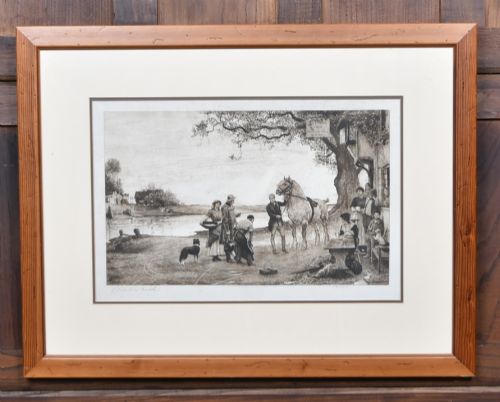
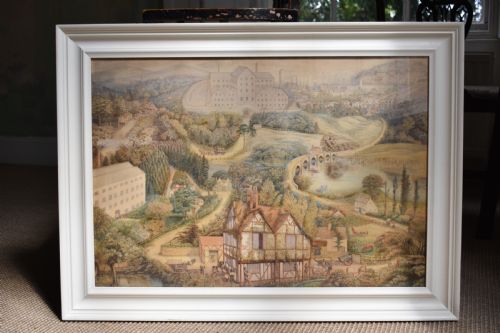
British rural landscape artwork encompasses original oil paintings, watercolours, etchings and lithographs depicting the countryside. These works record farming scenes, village paths, coastal regions and river valleys across the British Isles from the nineteenth and twentieth centuries.
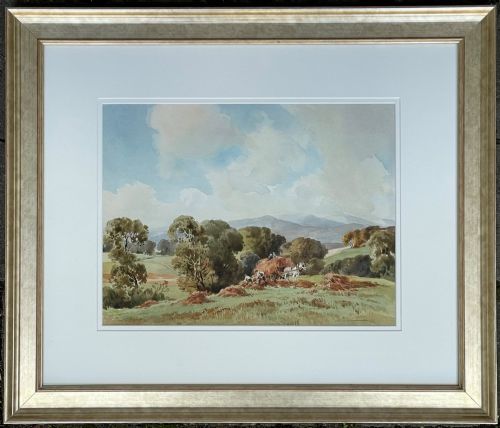
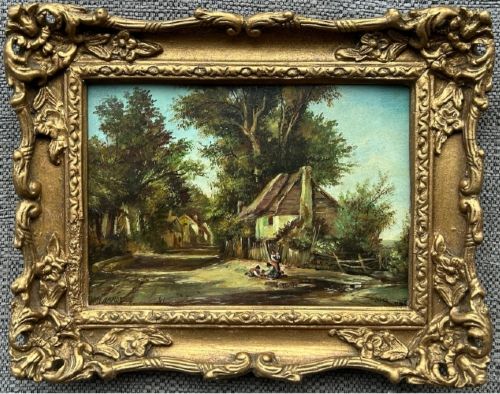
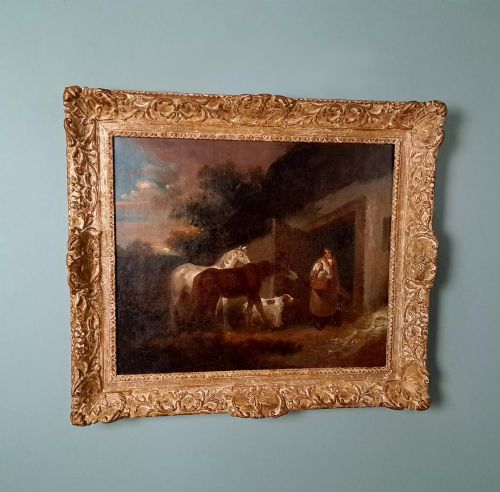
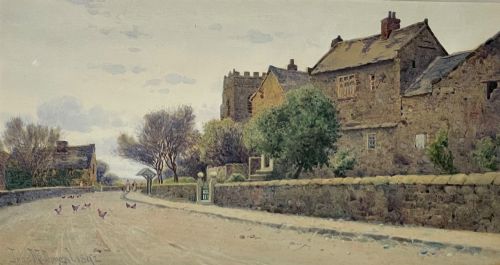
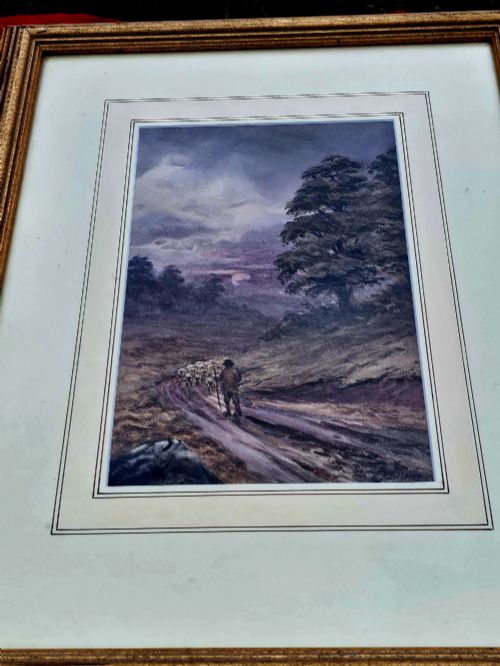
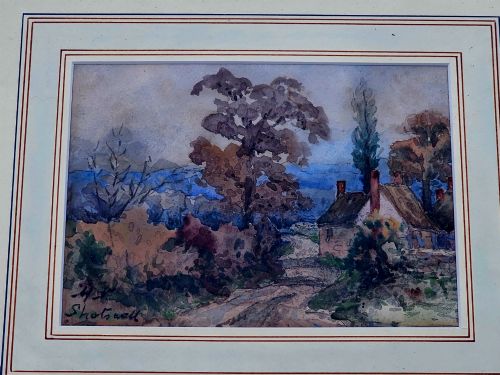
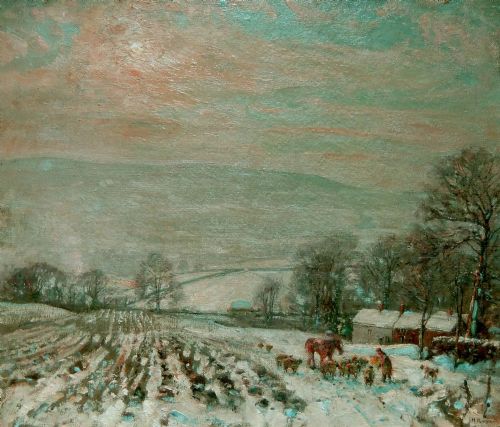
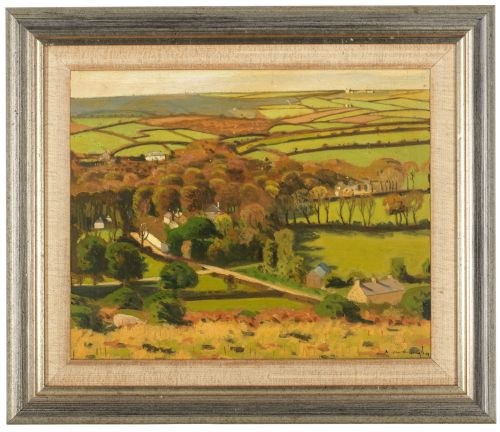
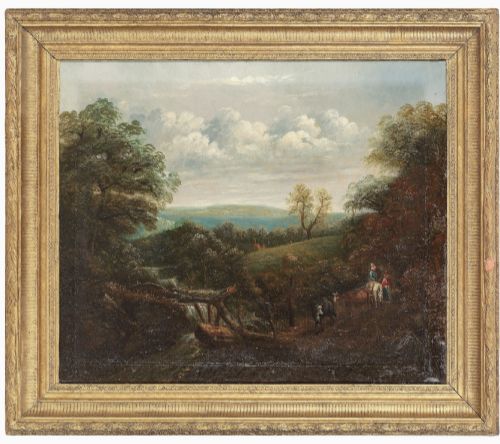
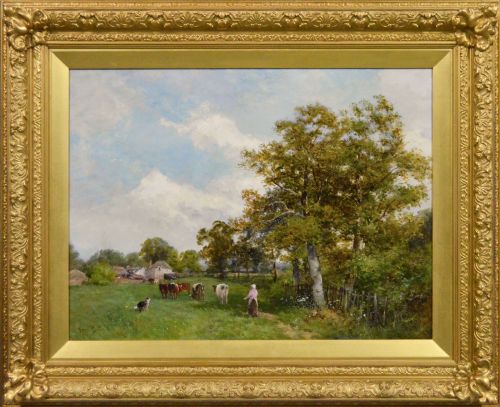
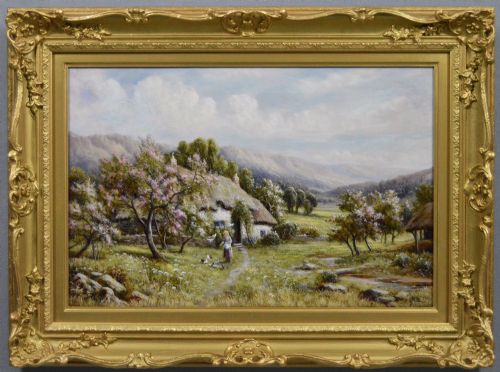
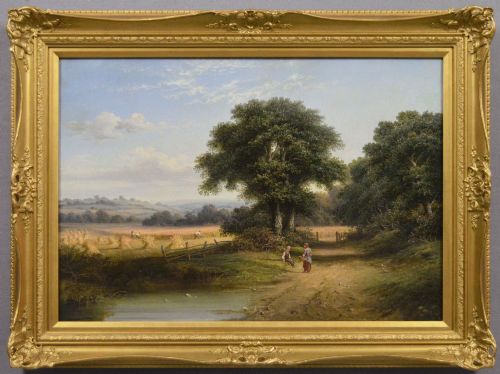
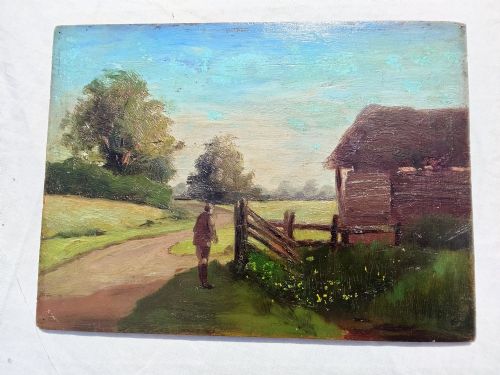
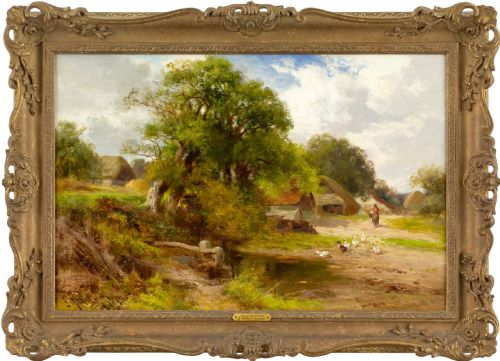
The version a buyer is most likely to meet on this page is a framed nineteenth or early twentieth-century watercolour or oil painting on canvas and panel. Many feature pastoral motifs such as figures herding cattle, harvesting crops or resting near cottages.
Works range from detailed depictions by regional artists to broader studies by members of schools like the Norwich School or British Impressionism. Subjects span specific named locations in Yorkshire, Cornwall, Sussex and Wales alongside anonymous rural idylls.
How they were made
Artists painted primarily with oil paint on stretched canvas or wooden board, and watercolour on paper, frequently framing the finished pieces in gilt wood. Etchings and lithographs provide printed interpretations of these rural subjects using inked plates and stones.
The handling of materials involves layered oil colours to build depth in skies and foliage, or translucent washes of watercolour to capture changing light over fields. Support materials like wooden panels and heavy paper stock dictated the scale and texture of each composition.
Listings feature paper, wood, canvas and glass supports.
What varies in quality
The standard of a piece rests upon the artist's command of light, atmospheric perspective and natural proportion within the landscape. Superior works demonstrate confident brushwork and a careful balance between the figures, animals and surrounding terrain.
Condition of the medium and the paper or canvas plays a role, alongside the retention of original framing materials such as period gilt wood. Pieces with clear provenance, signature inscriptions and identified geographic locations command greater attention from collectors.
Percy Lancaster·William Howard Hardy·William Joseph Shayer Senior·John McDougal·EJ Letheren·Herbert Royle·Robert Morson Hughes·David Bates·Robert John Hammond·Walter Heath Williams·Robert W Macbeth·John Horace Hooper·Raymond Booth·Eric Brown·Ernest Higgins Rigg·George Oyston·Frederick James Kerr·John Bond·William Greaves·Frederick Hines·Herbert Dicksee·Edgar Woollatt·Oswald Garside·Harry Freckleton·Henry Charles Fox
The British Rural Landscape Artwork Glossary
- Watercolour
- A painting method where fine pigment is suspended in a water-based, transparent solution applied to paper. This technique allows for luminous effects particularly suited to shifting skies and rural watercourses.
- Oil on Canvas
- Pigment mixed with drying oil applied to a woven fabric stretched across a wooden frame. It provides rich colour saturation and textured brushwork.
- Etching
- A printmaking process where lines are incised into a metal plate with acid before ink is applied and pressed onto paper. This method produces fine, detailed line work often seen in printed rural scenes.
- Panel
- A flat piece of wood used as a rigid support for oil painting instead of canvas. Artists frequently utilised wooden boards for smaller outdoor studies.
- Pastoral
- A genre of art focused on rural life, agriculture and idealized country scenes. These compositions typically feature shepherds, farm animals and rustic cottages.
British Rural Landscape Artwork: Frequently Asked Questions
What periods do these artworks cover?
The listings span from the late eighteenth century through the Victorian and Edwardian eras into the mid-twentieth century. Most examples date from the nineteenth century up to the 1960s.
Creators worked during distinct stylistic periods including British Impressionism and the Norwich School, reflecting changing approaches to painting the countryside.
How should I care for a watercolour?
Watercolours on paper require protection from direct sunlight to prevent fading of the pigments. Framing behind glass with acid-free mounts safeguards the paper from moisture and atmospheric damage.
Displaying these works in rooms with stable humidity levels ensures the paper and historic frame remain preserved for years.
Are these paintings original works?
The selection includes unique hand-painted oil canvases, wood panel paintings and watercolours created directly by the artists named. Signed pieces and studio sales provide clear attribution to individual painters.
Limited edition prints and period etchings also appear, created as original printmaking editions rather than modern reproductions.
How can I identify the location depicted?
Many artists inscribed titles, dates and specific geographic locations on the reverse of the canvas, on the framing or directly within the watercolour composition. Regions frequently recorded include Yorkshire, Cornwall, Sussex and various Welsh valleys.
Archival details and artist signatures help connect the painted scenery to exact rural coordinates and local history.