







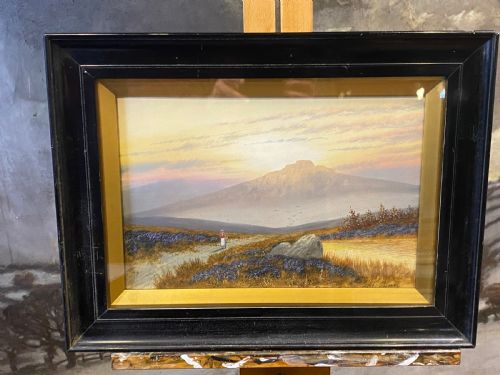
British Moorland Painting
These British moorland painting works capture vast upland sweeps and wild terrain, offering atmospheric views of Devon, Yorkshire, and Scottish landscapes.
British Moorland Painting
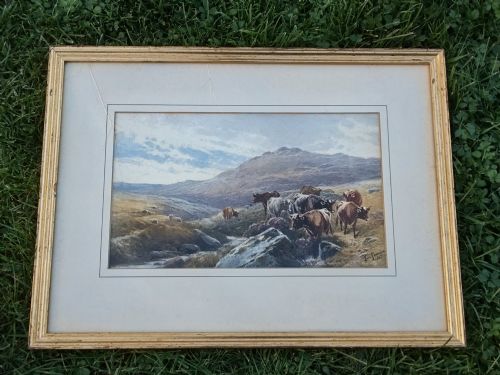
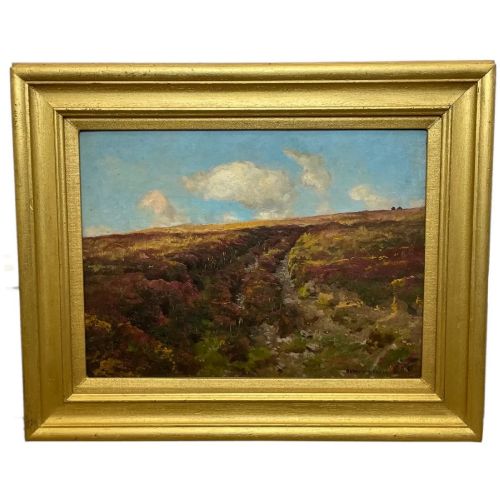
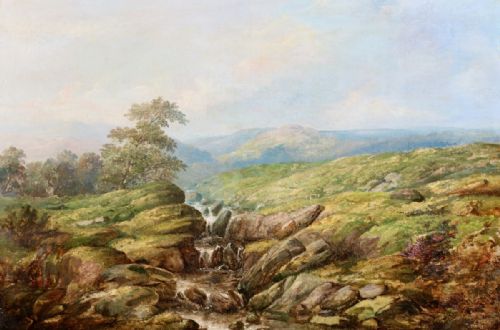
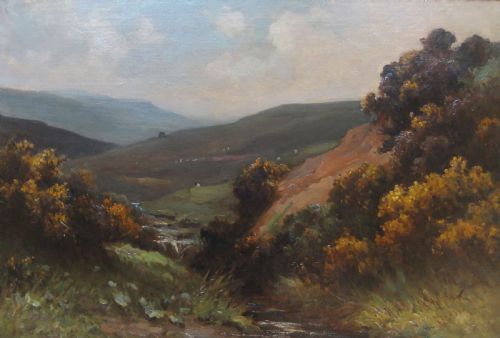
A British moorland painting typically portrays expansive upland regions like Dartmoor, Exmoor, and Yorkshire through the specific lens of regional topography. These works document remote terrain, often incorporating local livestock such as sheep, cattle, or wild ponies into the natural landscape.
The selections span from the late Victorian period through the Edwardian era into the mid-twentieth century. Works range from intimate watercolours to substantial oil paintings on canvas or wood panel.
Materials and technique
Artists working in this genre utilised both watercolour pigment on paper and oil paint on canvas or wood panel to capture changing atmospheric conditions. Pastels and gouache occasionally appear, providing dense colour application for extensive upland scenes.
Gilt framing frequently accompanies these works, serving to enclose the painted landscape while reflecting period framing traditions of the nineteenth and twentieth centuries.
British Moorland Painting Retail Price Guide 2026
Typical asking prices for british moorland painting among the pieces listed under this phrase on Sellingantiques today, from the lower quarter to the upper quarter. They describe what is for sale here now, not the wider market.
Listings span from the Victorian era through the Edwardian period and into the 1960s, documenting a century of landscape interpretation.
Evaluating quality and handling
Quality rests upon the artist's ability to render the specific light and weather of upland terrain rather than a generic backdrop. Handled with skill, brushwork or watercolour washes convey open space and atmospheric depth effectively.
The integration of human figures or animals, such as droving sheep or ponies, demonstrates compositional control and anatomical precision. Stronger examples command attention through confident mark-making and balanced scale.
Tom Campbell·Arthur Wardle·Joseph Knight·Charles Walter Simpson·Owen Bowen·James Orrock·Edmund Morris Wimperis·Ernest Higgins Rigg·Frederick Richard Lee·Charles James Adams·Rowland Henry Hill
The British Moorland Painting Glossary
- Watercolour pigment
- A water-soluble colorant applied to paper to create translucent washes and fine illustrative detail.
- Wood panel
- A rigid wooden support used by artists as an alternative to stretched canvas for oil paintings.
- Gilt frame
- A decorative wooden framing structure covered with a thin layer of gold leaf or metallic gilt finish.
- Gouache
- An opaque water-based medium that allows for solid colour blocks and bright highlights on paper supports.
British Moorland Painting: Frequently Asked Questions
What subjects appear in these paintings?
These works depict upland scenes, country paths, and expansive regional landscapes across Britain. Common motifs include grazing sheep, cattle, and ponies set against open skies and rolling terrain.
Specific locations such as Dartmoor, Exmoor, and Yorkshire feature prominently, recorded by artists working on site or from direct observation.
How do I date a moorland painting?
Dating relies upon stylistic markers, framing methods, and the recorded active periods of the artists. Victorian and Edwardian works often display specific tonal palettes and traditional framing styles.
Signatures, inscriptions on the reverse, and the chosen medium of paper or canvas help anchor the work within its historical decade.
Are these paintings usually framed?
Many examples retain their period frames, which often incorporate gilt finishes suited to nineteenth and twentieth-century display. These frames protect the edges of the canvas or paper supports.
Original framing adds historical context, though some watercolours and canvases may be reframed later to suit contemporary interiors.
How should I care for a watercolour?
Watercolours on paper require protection from direct sunlight to prevent fading of the pigments over time. Glazing with appropriate glass helps shield the delicate surface from moisture and atmospheric dust.
Stable indoor humidity levels ensure the paper and backing materials remain preserved without warping or foxing.