




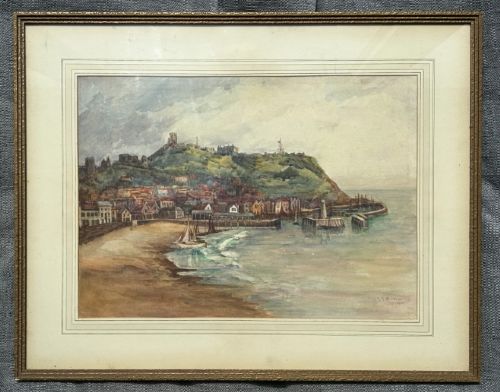


British Coastal Watercolour Artwork
British coastal watercolour artwork captures the character of fishing harbours, sandy bays and tidal rivers from the nineteenth and twentieth centuries.
British Coastal Watercolour Artwork
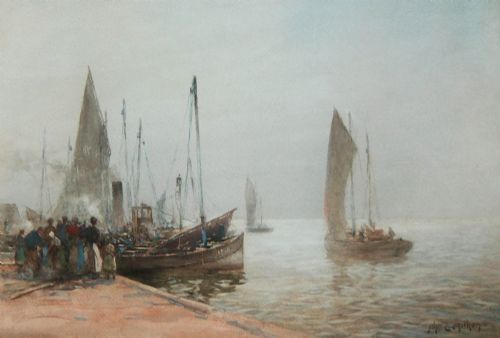
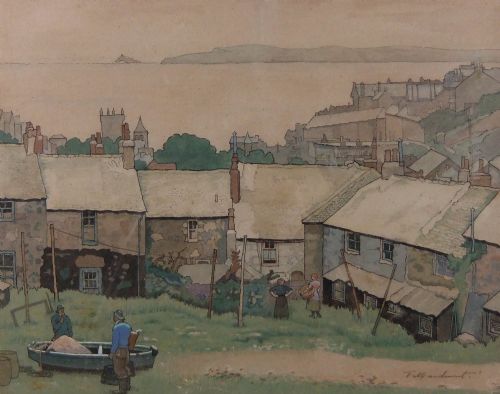
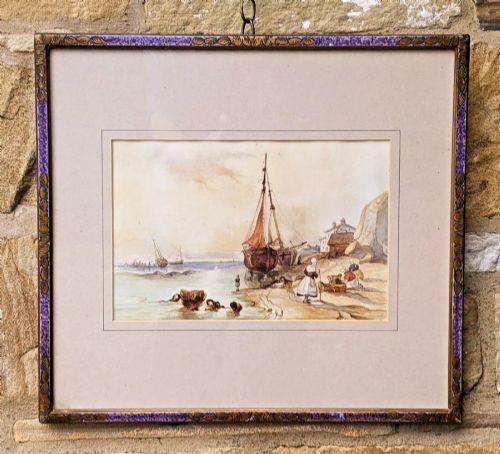
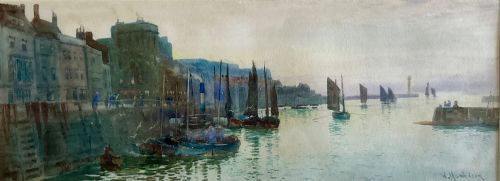
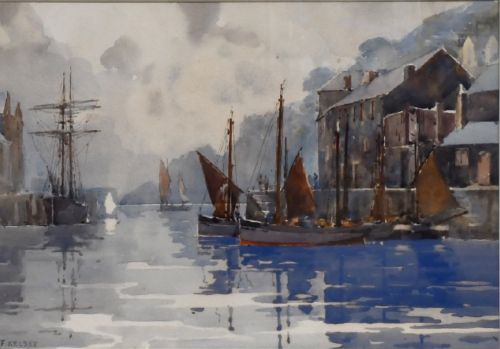
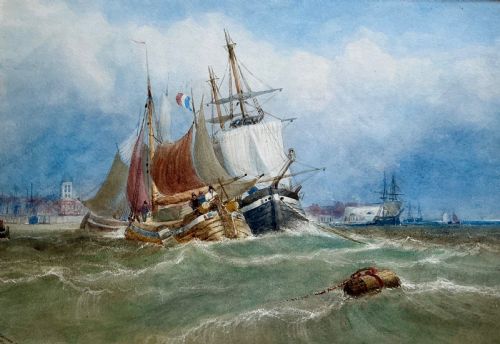
British coastal watercolour artwork comprises maritime scenes, harbour views and seascape paintings rendered on paper. These works document the shores of Yorkshire, Cornwall, Norfolk and Scotland through the eyes of regional artists and marine painters.
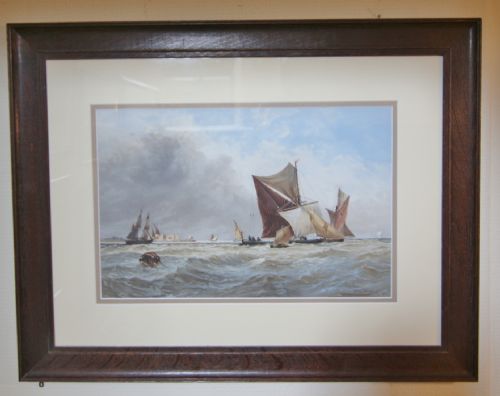
The selections available here range from Victorian depictions of working fishing boats to mid-century coastal landscapes. Most examples appear framed behind glass in wood mouldings, preserving the delicate pigment and paper surfaces from atmospheric moisture.
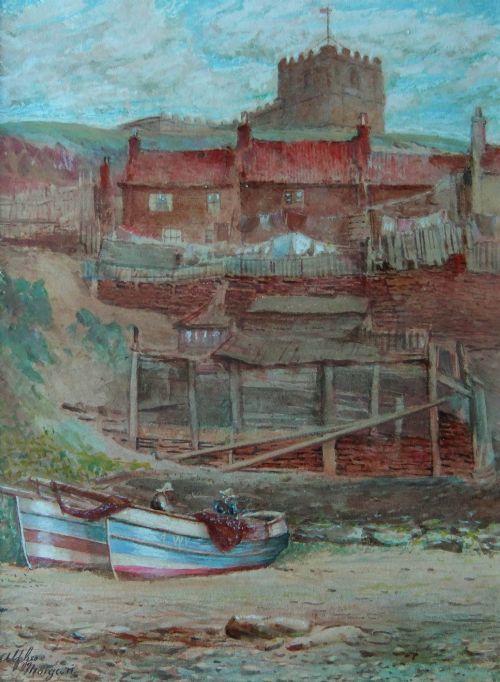
Subjects frequently focus on daily maritime life, featuring harbour walls, sailing vessels, sandy beaches and cliffside villages. Collectors encounter pieces created during the height of British marine art traditions alongside later impressionist interpretations.
How they were made
Watercolour pigment and ink are applied to paper supports using fine brushes to capture translucent washes of sea and sky. Artists often employed graphite underdrawing to structure harbours, cliffs and rigging before layering fluid colour.
Framed presentation typically involves paper mounted within timber frames under glass to protect the absorbent medium from dust and humidity. Many Victorian and Edwardian examples retain their original backing papers and framing elements.
Several artists braved stormy northern tides to paint cobles bobbing in Yorkshire surf.
What varies in quality
Quality rests upon the artist's handling of light, atmosphere and spatial depth within a confined medium. Superior examples convey movement in water and weather in the sky with confident brushwork rather than laboured detail.
Condition plays a primary role, as prolonged exposure to sunlight fades delicate pigments on paper. Works that retain their original tonal saturation and paper stability command greater appreciation among collectors.
James Orrock·Thomas Bush Hardy·William Lee Hankey·Edward Seago·Sir William Russell Flint
The British Coastal Watercolour Artwork Glossary
- Watercolour
- A paint consisting of pigment suspended in a water-soluble vehicle, applied to paper to create translucent washes of colour.
- Seascape
- A painting depicting the sea, coastal views, shipping or marine activities.
- Marine art
- Artistic representation of ships, maritime scenes and coastal environments.
- Gouache
- An opaque watercolour paint often utilised alongside transparent washes to add highlights and body to a composition.
British Coastal Watercolour Artwork: Frequently Asked Questions
How should I hang coastal watercolours?
Position watercolours away from direct sunlight to prevent the pigments from fading over time. Direct exposure to bright windows can permanently alter the subtle blues and greys typical of marine scenes.
Ensure rooms maintain stable humidity levels to protect both the paper support and the timber frame. Professional framing with acid-free backing materials further shields the artwork from environmental degradation.
What subjects appear in these watercolours?
Artists frequently recorded working fishing ports, bustling harbours, sandy bays and estuaries along the British coastline. Common motifs include sailing vessels at anchor, fishing boats landing their catch, and rugged cliffs.
Many works document specific locations in Yorkshire, Cornwall, Norfolk and Scotland during the Victorian and Edwardian eras. These topographical details provide a record of maritime communities and coastal architecture from the past.
How do I identify the period of a watercolour?
Dating relies upon stylistic markers, framing methods, and signatures or inscriptions left by the artist. Victorian pieces often exhibit detailed narrative elements and heavier gilt wood frames.
Later twentieth-century works frequently adopt looser impressionist brushwork and simpler framing styles. Examining any labels, inscriptions or dates on the reverse of the paper or frame provides further chronological evidence.
Are these works original paintings?
The listings feature original hand-painted works created directly by artists on paper supports. Each piece represents a unique application of watercolour pigment rather than a mechanical reproduction or print.
Signatures, brushstroke textures and variations in pigment density confirm the hand-painted nature of these historical artworks. Collectors acquire them as individual examples of British artistic heritage.