
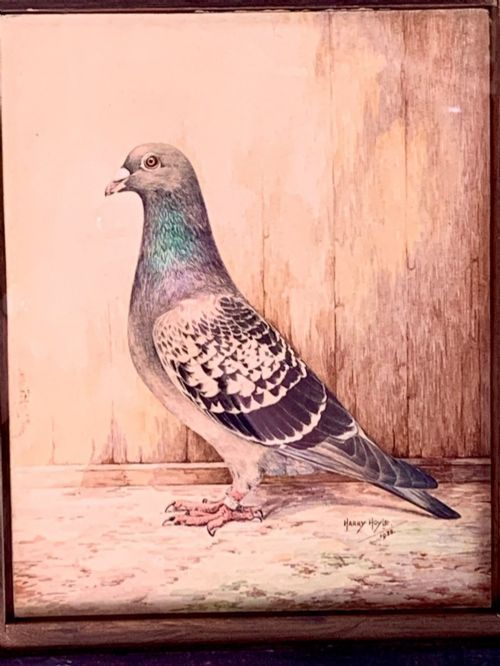
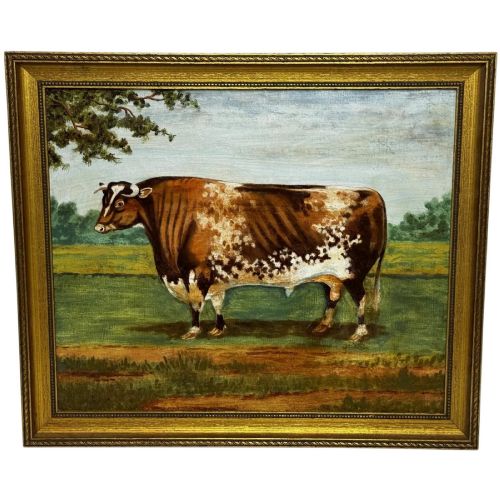
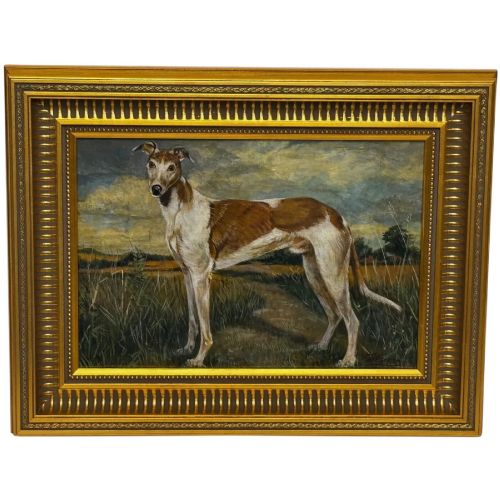
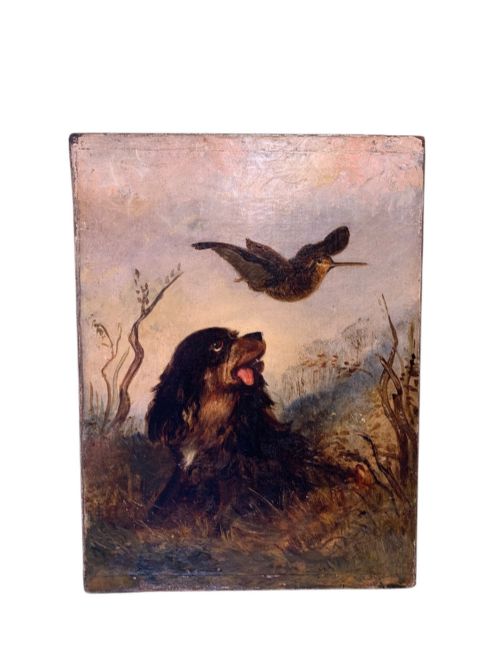




British Animal Portrait Painting
A british animal portrait painting captures the distinct character of valued livestock, prized hounds, and family companions with traditional realism.
British Animal Portrait Painting
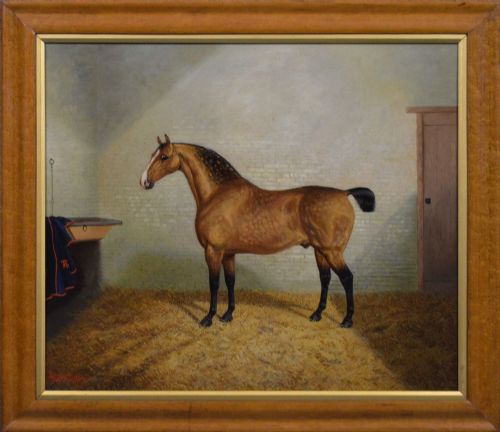
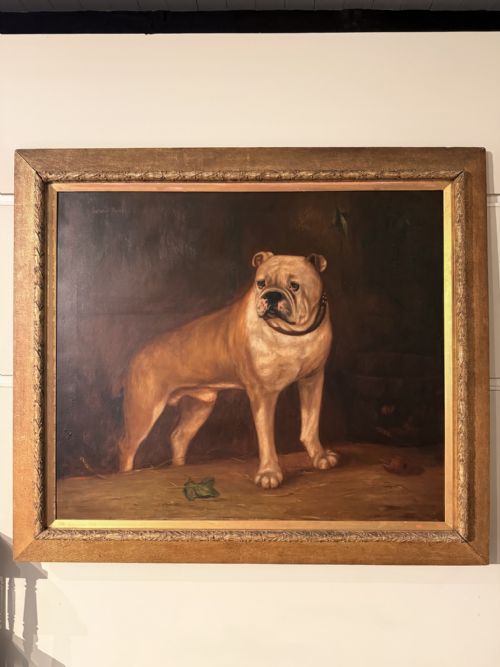
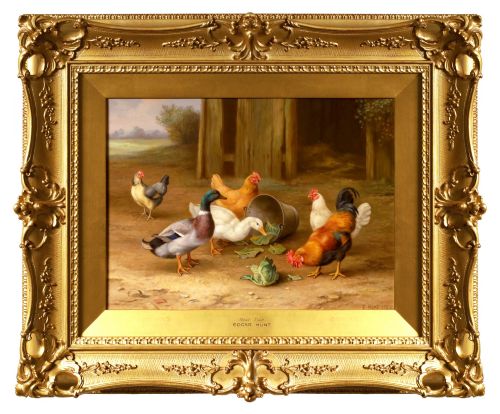
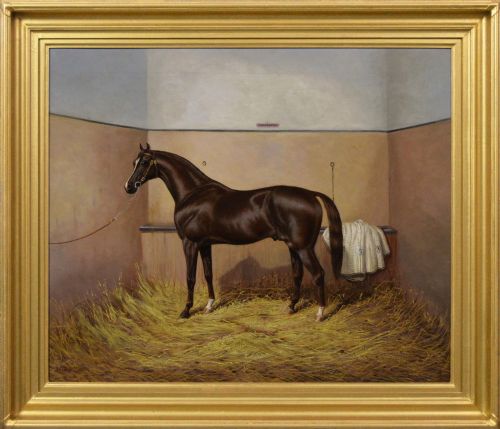
A british animal portrait painting focuses squarely on individual beasts, from working terriers and spaniels to champion bulls and racehorses, rendered with careful attention to their specific traits. These works emerge largely from the nineteenth century through the mid twentieth century, encompassing Victorian pastoral scenes, sporting art, and realistic depictions set within domestic interiors, farmyards, or open landscapes.
The subjects on this page reflect a strong historical fascination with prized animals, capturing the pride of ownership and the skill of specialised painters who recorded prized livestock and beloved pets alike. Most pieces appear as oil paintings on canvas or board, accompanied by select watercolours, framed in traditional gilt or wood surrounds that complement their period origins.
How They Were Made
Painters relied principally on oil paint applied to canvas or wood panels, building up rich textures for coats, hides, and natural surroundings through layered brushwork. Many works integrate gold leaf or giltwood frames that enhance the visual depth of the central subject.
Watercolour on paper also appears among these selections, offering a lighter medium utilised for detailed studies of dogs and pigeons. These techniques reflect standard academic training and workshop practices of the Victorian and Edwardian eras.
Several canvases capture sharp-eyed terriers caught in the middle of chasing rats through dusty barns.
What Varies in Quality
The distinction between ordinary and exceptional works rests upon anatomical precision, the expressiveness rendered in the animal's eyes, and the handling of light across fur or feather. Superior examples demonstrate a deep understanding of the subject's structure and movement rather than relying on stiff formulae.
Composition and background detail further separate the tiers, as finer pieces integrate convincing landscape or interior settings that ground the animal naturally. The preservation of the original canvas, pigment stability, and the authenticity of the period frame also contribute to the overall standing of a piece.
Albert Clark·John Emms·Arthur Wardle·William Henry Mander·William Barraud·John Trivett Nettleship·Samuel Spode·Claude Cardon·Fred Yates·Mabel Gear·Florence Mabel Hollams·Philip Eustace Stretton·Samuel John Carter·Charles Jones
The British Animal Portrait Painting Glossary
- Oil on Canvas
- A traditional painting medium where pigments suspended in oil are applied to a woven fabric surface stretched across a wooden frame. This combination allows for rich blending and enduring depth of colour.
- Giltwood
- Wood carved and surfaced with a thin layer of gold leaf or metallic powder. It provides a reflective, ornate border common in period framing.
- Sporting Art
- A genre depicting field sports, hunting dogs, horses, and livestock, often commissioned by landowners or breeders to document valued animals. It requires accurate knowledge of animal anatomy and sporting traditions.
- Victorian Realism
- An artistic approach aiming to represent subjects truthfully and accurately without artificiality. In animal painting, this translates to precise rendering of texture, expression, and environment.
British Animal Portrait Painting: Frequently Asked Questions
What animals appear in these paintings?
The subjects span a wide variety of domestic and working creatures, prominently featuring dogs such as collies, spaniels, terriers, and hounds. Livestock including shorthorn bulls, sheep, and horses also frequently take centre stage.
Many of these animals were specific prize winners or favored companions, recorded with individual likenesses rather than as generic types.
How were these paintings used?
Owners originally commissioned or acquired these portraits to celebrate prized livestock, successful hunting packs, or cherished pets. They hung in country houses, estate offices, and family drawing rooms to signal status and affection for animals.
Today, they serve as decorative focal points in domestic interiors, bringing historical character and traditional charm to wall spaces.
How do I live with an oil painting?
These works require stable indoor environments away from direct sunlight and extreme humidity fluctuations to protect the canvas and oil pigments. Hanging them on interior walls ensures the surface remains free from excessive environmental stress.
Routine maintenance involves gentle dusting of the frame and canvas surface using a soft, dry brush without chemical cleaners.
How can I tell the periods apart?
Nineteenth-century and Victorian pieces often emphasise dramatic realism or pastoral sentiment, featuring darker, richer palettes and ornate gilt frames. Edwardian and later twentieth-century works sometimes adopt lighter tones, looser brushwork, or simpler framing styles.
Examining the canvas backing, stretcher bars, and framing materials provides additional clues regarding the chronological origin of an artwork.