



![Pen and Ink Sketch - Female Nudes by William Edward Frost [1810-1877]](https://www.sellingantiques.co.uk/photosnew/dealer_kendallhouse/dealer_kendallhouse_full_1758970795762-8493507346.jpg)


British Academic Art
British academic art brings together formal portraiture, historical subjects and figure studies grounded in rigorous nineteenth and twentieth century academy training.
British Academic Art
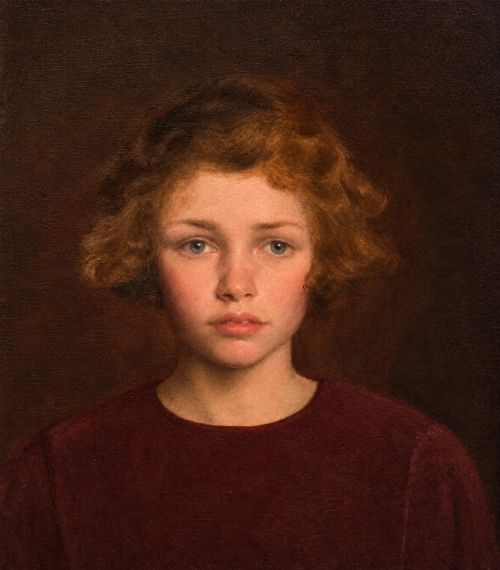
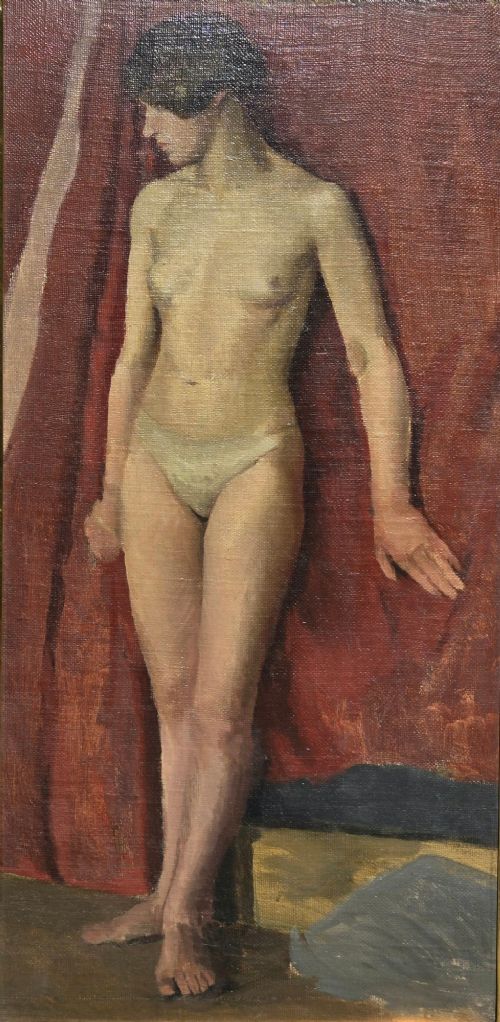
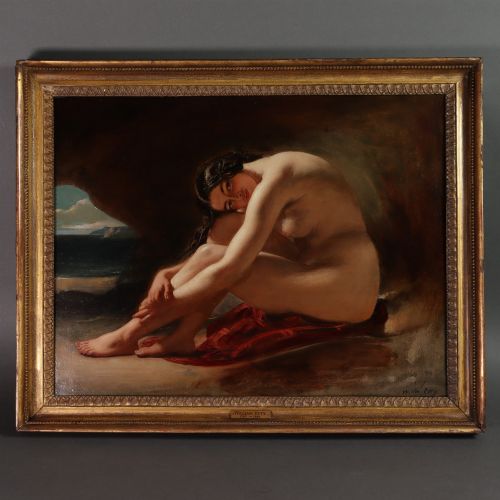
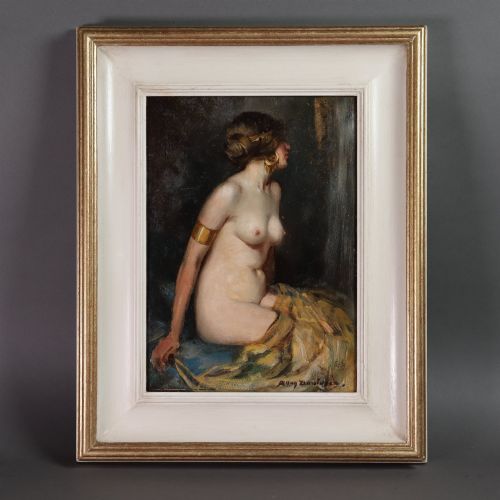
British academic art encompasses oil paintings, drawings and framed artwork produced across the nineteenth and twentieth centuries. These works reflect the formal standards taught through institutions such as the Royal Academy and South Kensington Art School, ranging from historical genre scenes to carefully observed figure studies.
The buyer meets portraits of notable figures, sitters and gentlemen alongside studio nudes and still life compositions. Execution spans periods from the regency and Victorian eras through to Edwardian academic realism and modern British movements.
How they were made
Works in this field rely primarily on oil paint applied to canvas, wood panels or boards, alongside pen and ink sketches on paper. Support materials are frequently housed in gilt wood frames that complement the traditional subjects.
Techniques demonstrate structured draftsmanship and tonal control characteristic of academy training, where preparatory drawings often precede finished oil paintings.
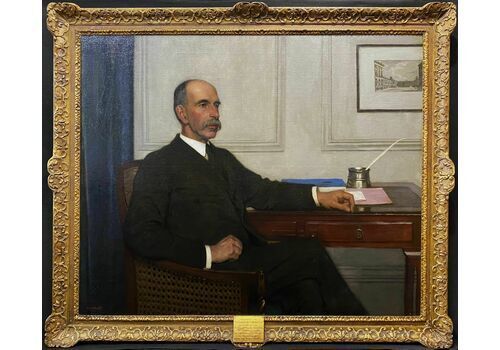
Sir Henry Wickham smuggled rubber seeds out of the Amazon, changing global trade before posing for his canvas portrait.
What varies in quality
Quality rests in the precision of anatomical rendering, brushwork control and the psychological depth captured in portrait subjects. Works by recognised academy members or exhibited pieces display a superior command of light and form.
The sophistication of the composition and the preservation of the original canvas, panel or paper surface differentiate standard studio exercises from major historical portraits.
Harold Knight RA·Augustus John·William Etty·Allan Douglas Davidson·Lance Calkin·Alfred Holst Tourrier·James Clark·William Edward Frost·William Robert Dickinson·George Hayter·Arthur Spooner·Reginald G. Eves·John Macallan Swan·Henry William Pickersgill·Sir Samuel Luke Fildes·Rudolph Lehmann·Cowan Dobson·Frank Thomas Copnall·Ernest Borough Johnson·William Dring·George Richmond·Edward Penny·Adrian Bury·Frank Samuel Eastman
The British Academic Art Glossary
- Academic art
- Painting and sculpture produced under the influence of European academies of art, emphasising rigorous drawing standards and historical or classical themes. This style dominated official nineteenth-century exhibitions.
- Oil on canvas
- Pigments bound in a drying oil applied to a stretched woven fabric support. This medium allowed artists to build rich layers of colour and texture.
- Genre painting
- The pictorial representation of scenes from everyday life, typically involving ordinary people engaged in common activities. These works often carry subtle narrative or moral undertones.
- Panel painting
- A painting executed on a flat wooden surface rather than canvas. Wooden panels provide a rigid support that was particularly common in earlier works.
- Study
- A preparatory drawing or painting made in the process of planning a finished artwork. These pieces capture direct observation and immediate technical experimentation.
British Academic Art: Frequently Asked Questions
What is british academic art?
British academic art refers to paintings and drawings created under the formal training and exhibition standards of institutions like the Royal Academy. These works prioritize traditional techniques, anatomical accuracy and structured composition.
The category includes historical portraits, figure studies and genre scenes produced from the eighteenth through to the twentieth centuries by established practitioners and academy members.
How were these portraits used?
Portraits of notable figures, geologists, physicians and public servants were commissioned to commemorate professional achievements and social standing. They often hung in institutional halls, private offices or family libraries.
Smaller studies and sketches served as preparatory works for larger academy submissions or as private records of studio models and academic exercises.
How do I display oil paintings?
Oil paintings on canvas or panel require stable indoor environments away from direct sunlight and excessive humidity fluctuations. Proper wall placement protects the pigment and the underlying support structure.
Framing in period-appropriate gilt wood assists in supporting the edges of the canvas or panel while complementing the traditional aesthetic of the artwork.
How do I tell periods apart?
Periods are identified through stylistic shifts, costume details, sitter documentation and the specific materials utilised in the support and framing. Victorian works often display rich narrative detail, whereas Edwardian and later pieces show evolving realist tendencies.
Signatures, exhibition labels on the reverse and recorded biographical dates of the artists help anchor each piece within its precise historical decade.