




Victorian Charcoal Study
A victorian charcoal study captures the rigorous draftsmanship and dramatic monochrome tone of nineteenth-century life drawing and portraiture.
Victorian Charcoal Study
A victorian charcoal study encompasses original academic life drawings, portraits, and classical copies rendered on paper. These works capture the rigorous training methods of nineteenth-century art academies through disciplined draftsmanship.
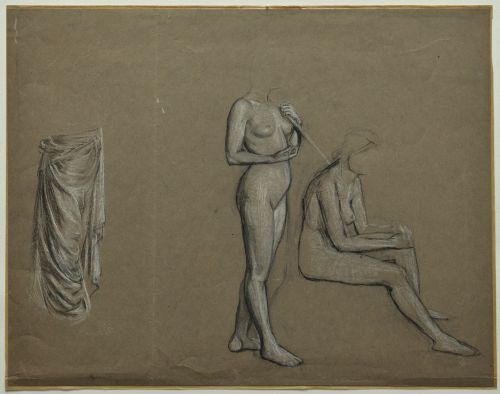
The pieces on this page lean heavily into academic realism, neoclassical subjects, and portraiture. Buyers frequently encounter framed drawings executed in charcoal, chalk, and graphite on toned paper.
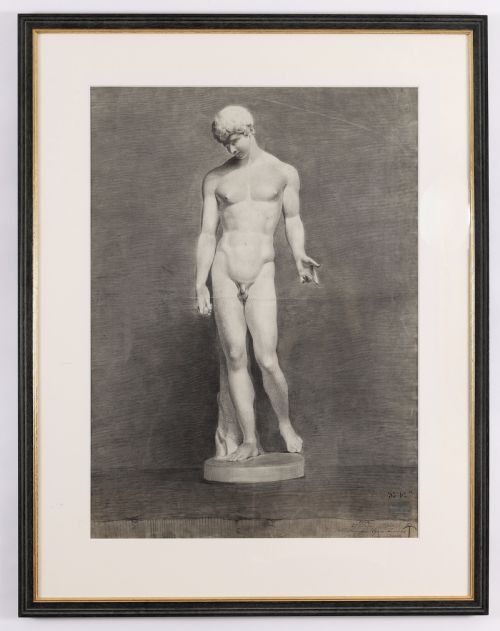
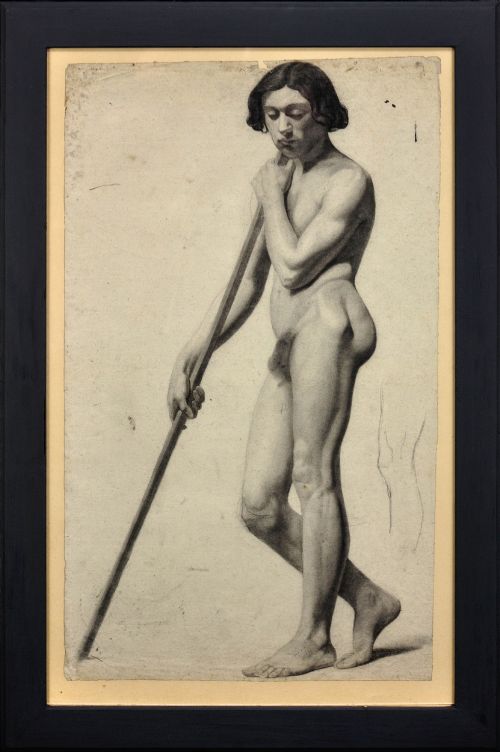
Origins span British and European schools, capturing subjects from classical sculpture like the Capitoline Antinous to male nudes and notable historical portraits. Each drawing serves as a direct window into nineteenth-century studio practice.
Materials and technique
Artists worked primarily with charcoal, chalk, and graphite applied to paper or toned paper to build deep shadows and sharp highlights. This combination allowed draftsmen to model three-dimensional form with striking contrast.
Many of these works are housed in period wooden frames, occasionally highlighted with gilt. The physical support relies on traditional paper stocks that have preserved these delicate monochrome mediums over centuries.
Victorian Charcoal Study Retail Price Guide 2026
Typical asking prices for victorian charcoal study among the pieces listed under this phrase on Sellingantiques today, from the lower quarter to the upper quarter. They describe what is for sale here now, not the wider market.
Some nineteenth-century models held difficult poses for hours while art students furiously rubbed charcoal into toned paper.
Assessing quality and execution
Quality rests entirely on the sureness of the hand and the anatomical precision evident in the drawing. Stronger examples display confident handling of light and shadow that brings volume and presence to the subject.
The depth of academic training separates routine classroom exercises from masterworks by named artists. Condition also plays a role, particularly the preservation of the delicate charcoal medium against the paper surface.
William Blake Richmond·Henry Arthur Roberts·Sir Edwin Landseer·John Macallan Swan·Theobald Chartran·George Richmond
The Victorian Charcoal Study Glossary
- Academic Realism
- A style of painting and drawing produced under the influence of European academies of art. It emphasises precise anatomical accuracy and classical proportions.
- Toned Paper
- Paper that possesses a light colour or neutral tint rather than pure white. This base allows artists to work up both highlights in chalk and shadows in charcoal.
- Life Study
- A drawing or painting executed directly from a live nude or clothed model. These works formed the backbone of nineteenth-century artistic training.
- Graphite
- A form of crystalline carbon used as a drawing material. It yields crisp, metallic grey lines distinct from the velvety black of charcoal.
Victorian Charcoal Study: Frequently Asked Questions
What is a victorian charcoal study?
A victorian charcoal study is an original monochrome artwork on paper created during the nineteenth century. These pieces typically record academic training, classical sculpture, or portraiture.
Artists utilised charcoal and chalk to explore form, light, and shadow with intense focus. They represent a direct link to the rigorous drawing methods of historical European art schools.
How were these drawings used?
Nineteenth-century artists produced these studies as preparatory exercises for larger oil paintings or as finished instructional pieces in academies. They served to hone the draftsman's understanding of human anatomy and classical proportion.
Over time, collectors valued them as independent works of art that reveal the intimate working process of the creator. They hung in private studios, libraries, and drawing rooms.
How should I frame and display a drawing on paper?
Works on paper require conservation framing to protect them from environmental degradation. Use acid-free mounts and UV-filtering glass to prevent the charcoal and paper from fading.
Display your drawing away from direct sunlight and damp conditions. Proper framing ensures the delicate carbon mediums remain stable for decades.
How do I distinguish academic studies from portraits?
Academic studies usually focus on anonymous models or classical statues to explore anatomy and lighting. They emphasise muscle structure, posture, and tonal graduation.
Portraits, conversely, record the specific likeness of a named individual, often accompanied by biographical details. Both share the same nineteenth-century monochrome techniques but serve different documentary purposes.