



Bristol Delft
Bristol delft combines tin-glazed earthenware and cobalt pigment to produce chargers, plates and posset pots that collectors prize for their rich eighteenth-century domestic history.
Bristol Delft
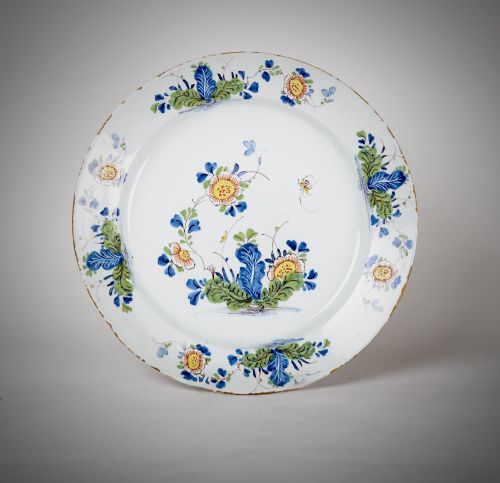
Bristol delft encompasses tin-glazed earthenware plates, saucers, chargers and posset pots originating primarily from the eighteenth century. These pieces record the domestic tableware of Georgian England through distinct blue and white or polychrome decoration.
The objects on this page span forms such as large decorative chargers, saucer dishes, and plates. Buyers frequently encounter eighteenth-century plates and chargers alongside earlier seventeenth-century faience variants.
Makers produced these ceramics using earthenware bodies coated in tin glaze and painted with cobalt pigment. The resulting surface carries the characteristic palette and glaze variations of historic English delftware.
How they were made
Potters shaped local clay into plates, chargers, and posset pots before applying a tin glaze that dried to an opaque white surface. This glaze provided the ground upon which painters applied cobalt pigment and other colours.
Painters worked directly onto the absorbent unfired glaze using cobalt oxide and polychrome pigments. This technique demanded swift precision, as any brush hesitation immediately absorbed permanently into the porous tin surface.
Bristol Delft Retail Price Guide 2026
Typical asking prices for bristol delft among the pieces listed under this phrase on Sellingantiques today, from the lower quarter to the upper quarter. They describe what is for sale here now, not the wider market.
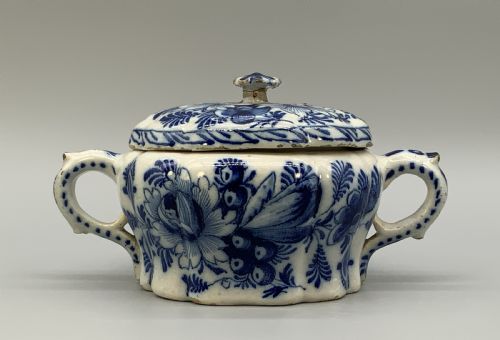
Early posset pot drinkers faced multiple handles and spouts, ensuring that passing spiced curdled milk around a crowded seventeenth-century room remained a team sport.
What varies in quality
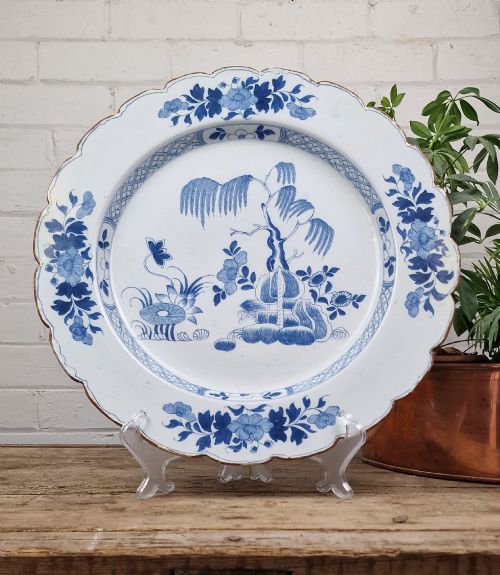
The distinction between standard domestic ware and finer pieces rests on the confidence and execution of the brushwork. Early Chinese-inspired chinoiserie motifs or intricate floral patterns demonstrate greater artistic control than simpler repetitive borders.
Glaze consistency and pigment stability determine the visual depth of a charger or plate. Smoother tin surfaces with minimal crawling or pooling preserve the clarity of the cobalt pigment and define the better survivals.
The Bristol Delft Glossary
- Tin-Glazed Earthenware
- Earthenware pottery covered with a tin oxide glaze that fires to an opaque white finish. This material serves as the essential canvas for English delft decoration.
- Charger
- A large decorative plate traditionally used for display or serving during formal meals. These wide earthenware surfaces frequently display ambitious painted scenes.
- Cobalt Pigment
- A metallic oxide colourant that turns deep blue during the high-temperature kiln firing. It remains the primary pigment used across eighteenth-century English delftware.
- Faience
- European tin-glazed earthenware produced in imitation of imported Chinese porcelain. The term links English delftware to broader continental ceramic traditions.
Bristol Delft: Frequently Asked Questions
What is bristol delft?
Bristol delft refers to tin-glazed earthenware plates, chargers, and posset pots made in England during the seventeenth and eighteenth centuries. These items feature painted cobalt or polychrome decoration on an opaque white glaze.
Potters created these pieces for domestic use and display, capturing period styles from simple floral designs to Georgian chinoiserie. Surviving examples include large decorative chargers and smaller saucer dishes.
How were posset pots used?
Posset pots held posset, a traditional hot drink made from curdled milk mixed with ale or wine and spiced with herbs. Wealthy households passed these covered vessels around during celebrations and important family gatherings.
The multiple handles and spouts allowed guests to share the drink easily while admiring the painted earthenware body and floral faience decoration.
How do I care for tin glaze?
Keep tin-glazed earthenware away from modern dishwashers and harsh cleaning agents to protect the delicate historic glaze surface. Wash these pieces gently by hand in lukewarm water using mild soap when necessary.
Display chargers and plates on stable plate hangers or secure stands to prevent accidental slips. Avoid exposing them to rapid temperature changes that can stress old earthenware bodies.
How do I date these ceramics?
Dating relies on examining the ceramic body, glaze characteristics, and painting styles visible on the piece. Seventeenth-century examples often feature heavier earthenware bodies and distinct floral faience layouts.
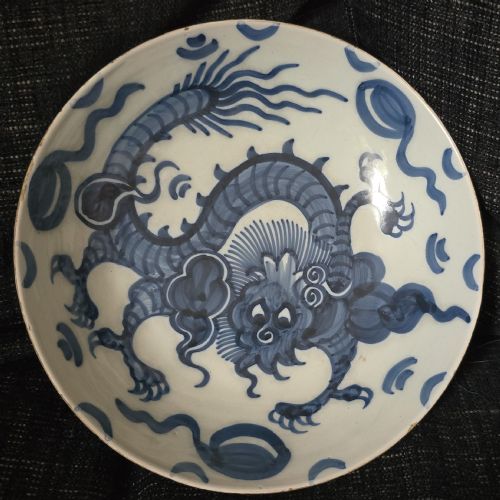
Eighteenth-century items frequently adopt lighter Georgian forms, including blue and white dragon motifs and refined polychrome charger designs. Comparing glaze thickness and pigment tones helps place pieces within this timeline.