
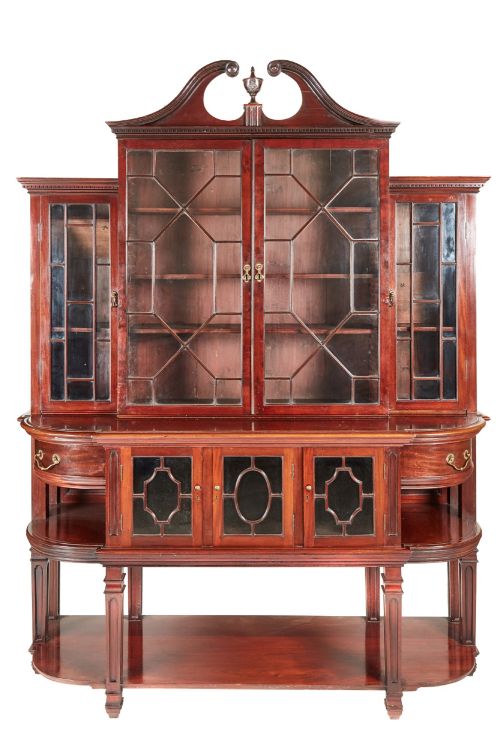
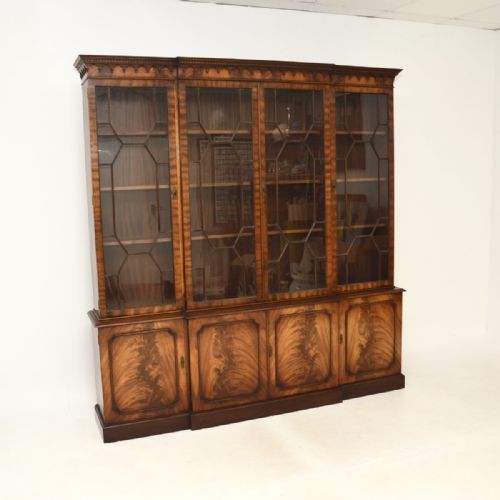
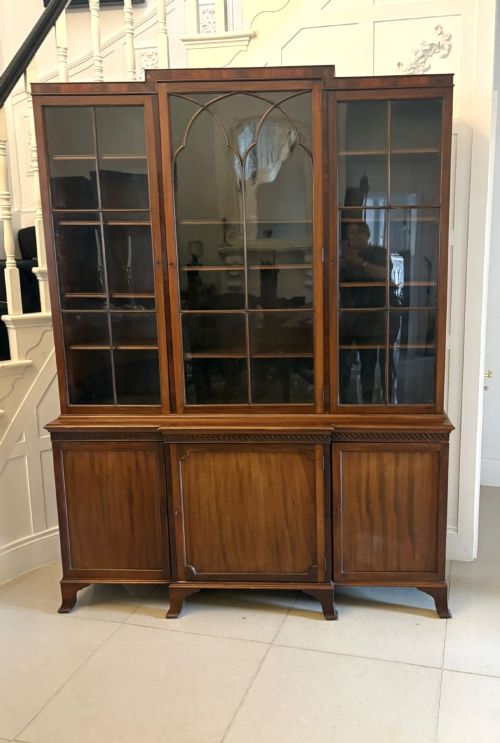

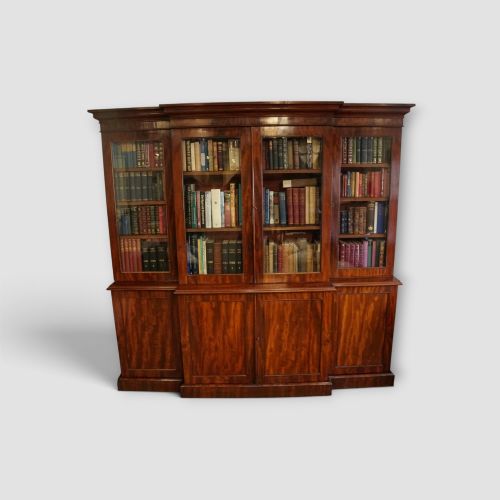
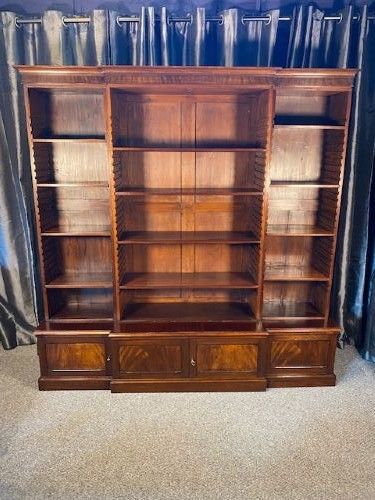
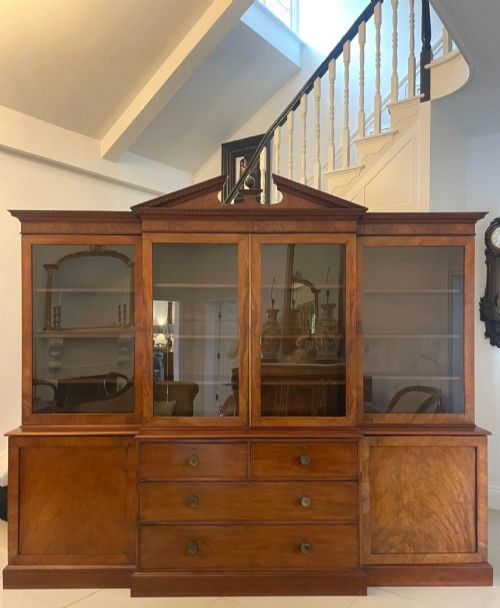
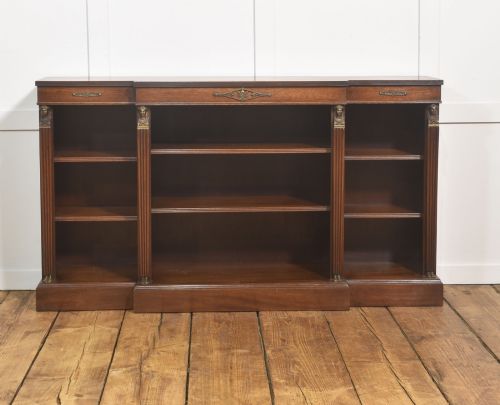
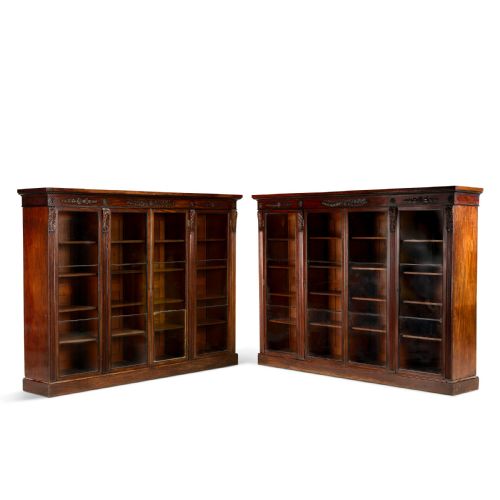
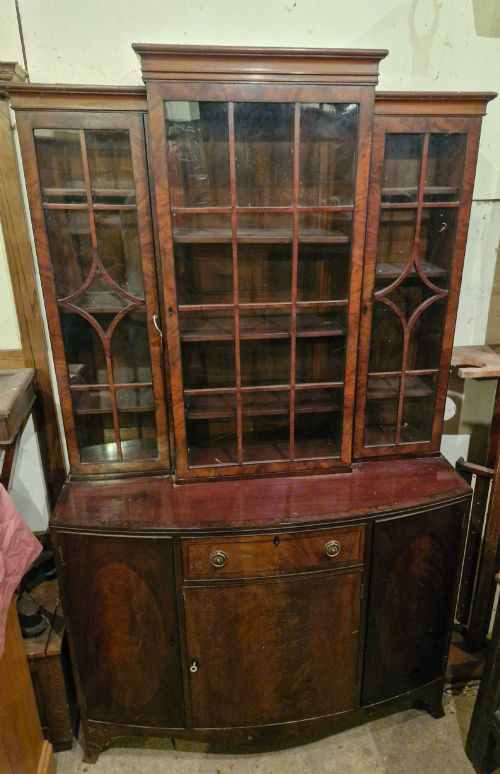
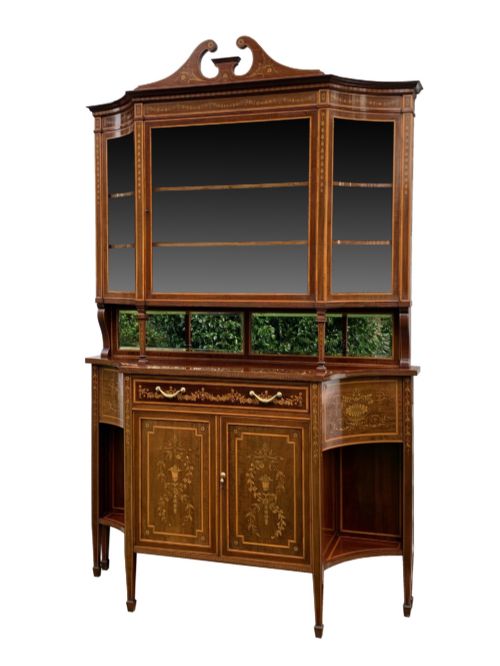
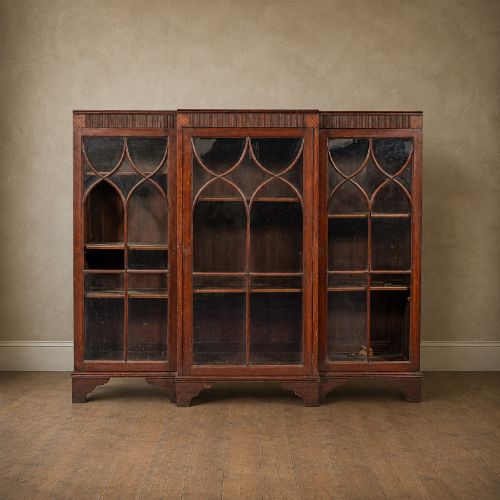
Breakfront Mahogany Display Cabinet
A breakfront mahogany display cabinet commands a room with its projecting central section and rich timber grain.
Breakfront Mahogany Display Cabinet
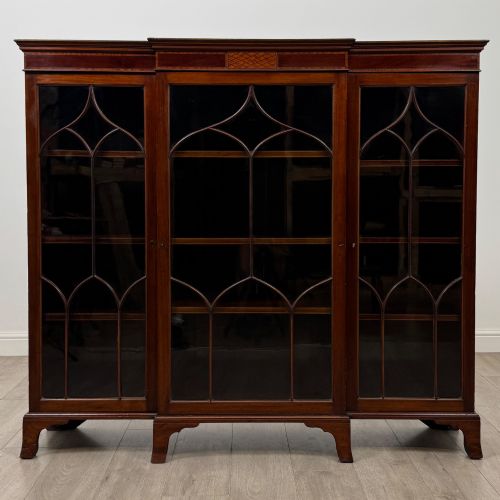
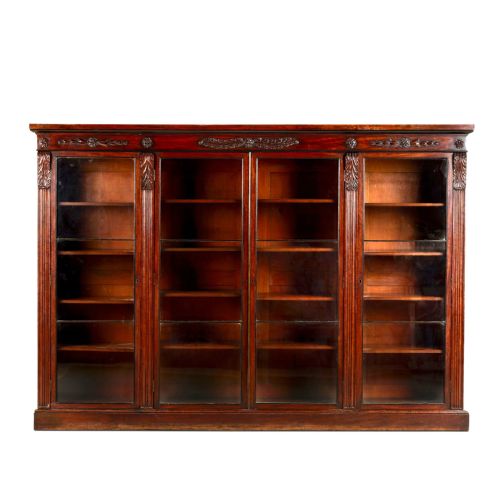
A breakfront mahogany display cabinet is a substantial piece of furniture designed to house and exhibit books, porcelain or curated collections behind glazed doors. The defining feature is the tiered facade, where the central section projects forward from the flanking wings, creating depth and architectural presence. When searching this phrase, buyers encounter large library bookcases and refined display cabinets spanning the Georgian, Regency, Victorian and Edwardian periods.
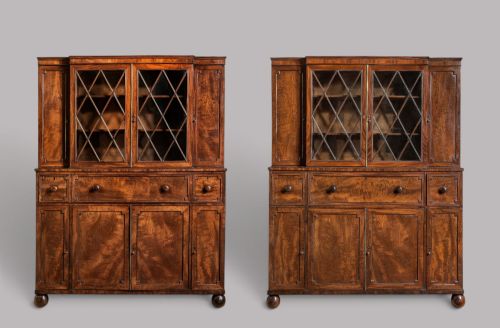
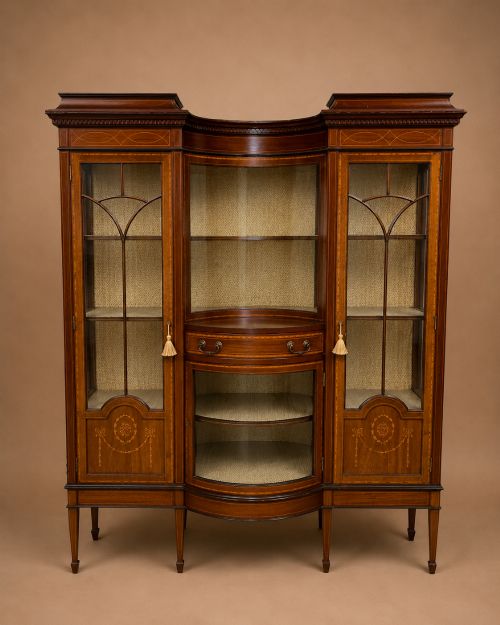
The versions most commonly met on this page date from the nineteenth and early twentieth centuries, reflecting the enduring popularity of mahogany in formal domestic interiors. Examples range from imposing floor-to-ceiling library bookcases with astragal glazing bars to lighter Edwardian display cabinets featuring satinwood inlay and Sheraton Revival styling. Alongside standard glazed bookcases, the listings include credenzas, open shelving variants and lower dwarf cabinets.
Makers and workshops of note from the evidence include Jas Shoolbred, Edwards and Roberts, and pieces attributed or in the manner of Gillows. The stylistic vocabulary spans simple classical lines, Gothic Revival influences and elaborate marquetry. These cabinets serve their original purpose of protection and display just as effectively in a modern home as they did in a Victorian drawing room or Edwardian library.
How they were made
Cabinet makers utilised solid mahogany and flame mahogany veneers applied to secondary structural timbers such as oak, building carcasses designed to endure decades of heavy domestic use. The timber was frequently selected for its deep reddish-brown tone and figured grain, occasionally enhanced by contrasting satinwood banding or delicate marquetry inlay. Glass panels were individually glazed and secured with wooden glazing bars, whilst brass mounts and hardware provided functional and decorative accents.
Construction techniques combined robust joinery with sophisticated decorative arts, particularly in the Edwardian and Victorian periods when inlay and ormolu mounts were employed. Large breakfront bookcases were typically constructed in multiple sections to facilitate transport and installation in grand rooms. The surfaces were hand-finished with polishes that highlighted the natural depth and lustre of the mahogany grain.
Several cabinets show clear Gothic influence, proving that Victorian librarians occasionally fancied reading their novels inside a cathedral.
What varies in quality
Quality in a breakfront mahogany display cabinet is determined by the selection of timber and the precision of the cabinet work. Superior pieces utilise highly figured flame mahogany veneers with matched grain patterns across the doors and drawers, whereas lesser examples rely on plain timber or uniform stock. The complexity of the joinery, from fine astragal glazing bars to intricate satinwood inlay, separates standard production furniture from master workshops.
The architectural proportions and the integrity of the original hardware also dictate the standing of a piece. Cabinets retaining original brass fittings, hand-drawn glass panes and well-executed architectural cornices demonstrate superior craftsmanship. The presence of documented workshop attribution or robust secondary framing further distinguishes exceptional examples from standard period furniture.
Jas Shoolbred·Gillows·Edwards and Roberts
The Breakfront Mahogany Display Cabinet Glossary
- Breakfront
- A cabinet design where the central section projects forward from the flanking wings, creating a stepped facade. This architectural arrangement adds visual depth and shadow to large library bookcases and display furniture.
- Astragal
- A moulding profile used to divide glass panes within a door frame. In period bookcases, delicate wooden astragal bars form geometric patterns such as gothic arches or intersecting circles.
- Flame mahogany
- A veneer cut from the fork of the mahogany tree where the branch meets the trunk. This technique produces a distinctive, highly figured flame-like pattern prized by cabinet makers.
- Marquetry
- The art of applying decorative pieces of veneer to a structure to form intricate pictorial or geometric designs. Craftsmen often combined satinwood and darker timbers to create contrast on cabinet doors.
- Sheraton Revival
- A late nineteenth and early twentieth century design movement inspired by the neoclassical furniture of George Sheraton. These pieces typically feature lighter proportions, satinwood inlay and refined classical motifs.
Breakfront Mahogany Display Cabinet: Frequently Asked Questions
How do I date a mahogany cabinet?
Dating relies on observing the timber choice, construction methods, hardware and decorative style. Georgian and Regency pieces tend to show heavier architectural proportions and simpler classical lines.
Victorian and Edwardian examples often introduce richer veneers, satinwood banding, elaborate glazing patterns and distinct revival styles such as Gothic or Sheraton.
Were these cabinets meant for books?
Many breakfront pieces were built specifically as library bookcases to house leather-bound volumes behind protective glass doors. Others were designed as display cabinets for porcelain, silver and curiosities.
Large nineteenth-century examples often combine shelving for books with enclosed lower cupboards for storage.
How do I fit a large bookcase into a modern home?
Many grand breakfront bookcases are constructed in modular sections, separating into upper glazed display units and lower cupboards or base plinths. This modular design assists with transport and placement in rooms with standard ceiling heights.
Measuring ceiling clearance and floor space carefully ensures the projecting central section sits harmoniously within the room layout.
What is the difference between George III and Victorian styles?
George III furniture typically displays restrained classical elegance, precise proportions and understated mahogany veneers. Victorian pieces often embrace heavier proportions, dramatic flame mahogany and revivalist influences like Gothic arches.
Later Victorian and Edwardian iterations frequently incorporate lighter satinwood inlay and refined decorative details.