






Brass Vienna Regulator Clock
A brass vienna regulator clock is a precise timekeeper designed to hang upon a wall, bringing nineteenth-century engineering and warm wood tones into a room.
Brass Vienna Regulator Clock
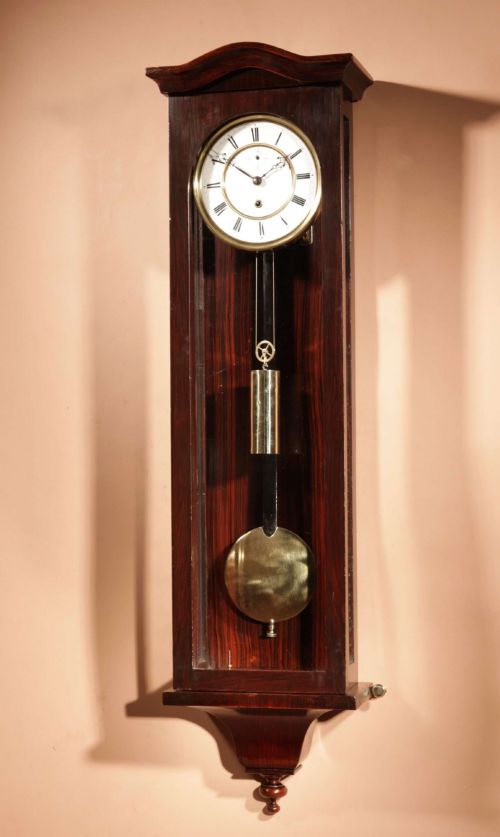
A brass vienna regulator clock represents a tradition of accurate timekeeping originating in Austria and Germany during the nineteenth century. When searching for this phrase, buyers encounter wall-hung clocks encased primarily in walnut, mahogany, oak, or ebonised wood, often styled in the Biedermeier or Victorian manner. These pieces span from the mid-nineteenth century up to nineteen hundred, encompassing both single-weight timepieces and complex multi-weight striking movements.
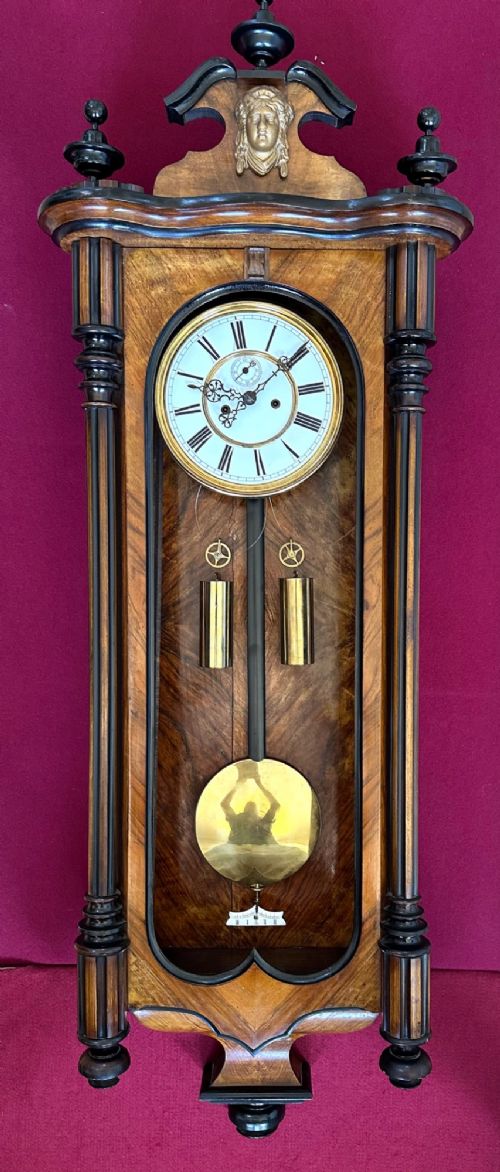
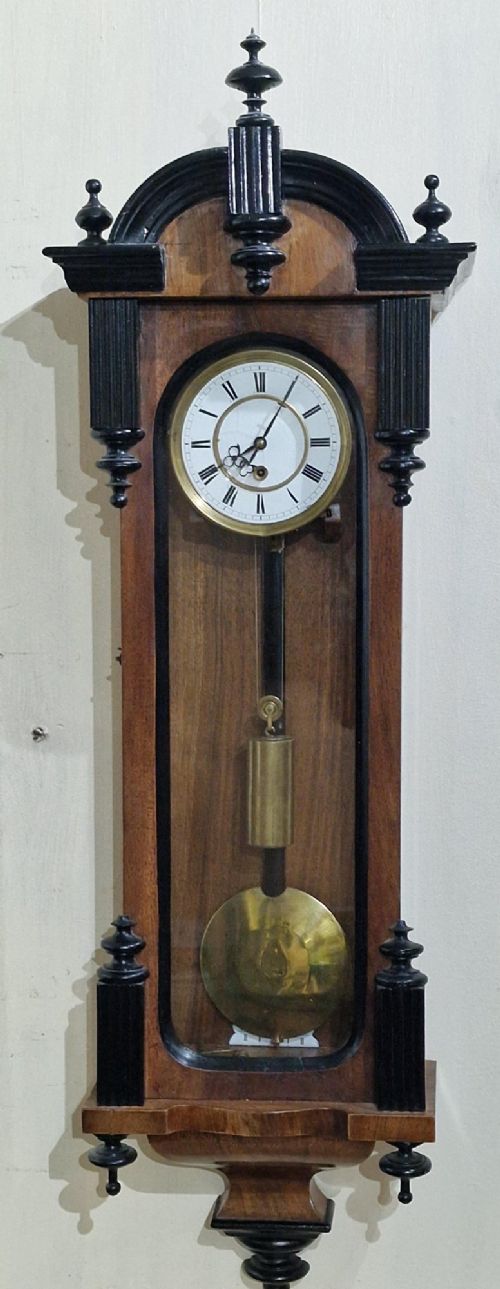
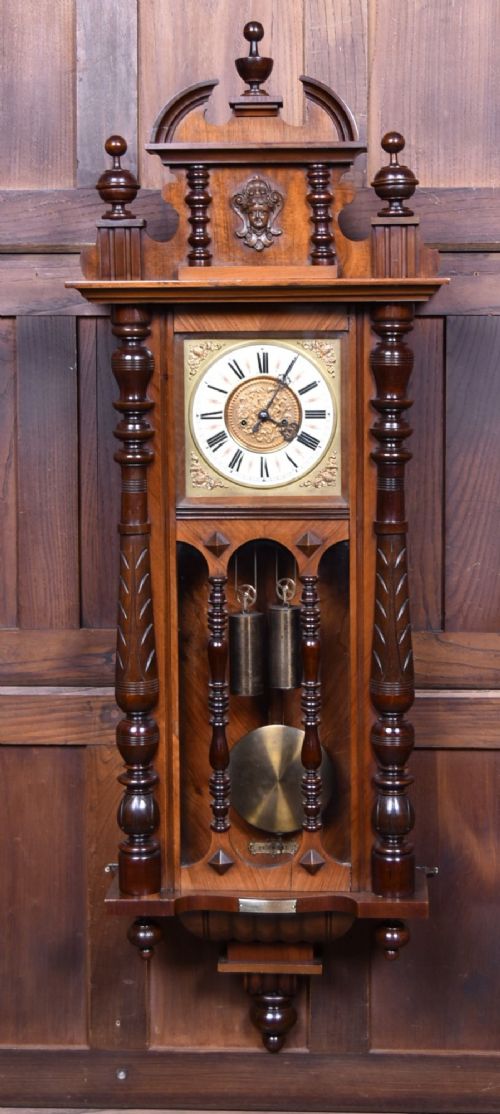
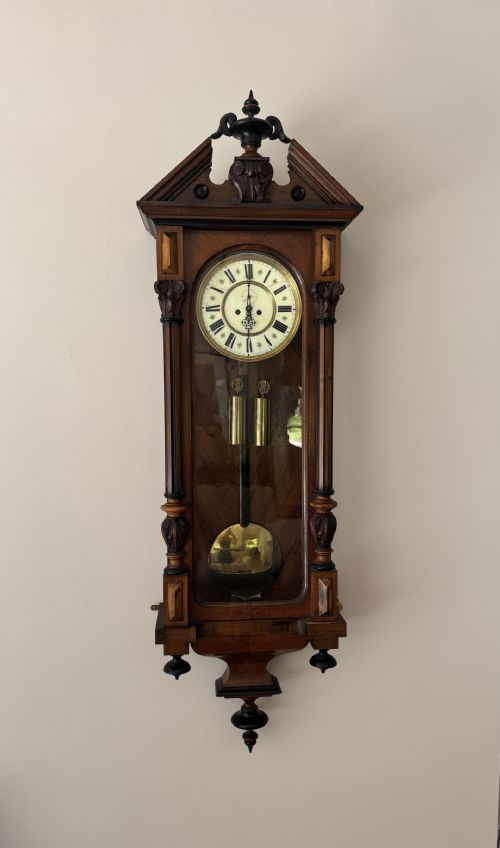
The version most commonly met on this page is the Victorian walnut double weight wall clock, typically dated around eighteen sixty or eighteen eighty. These instruments feature glazed doors that reveal the swinging pendulum and hanging brass weights alongside enamelled dials. Miniature and month-duration formats also appear, showing the stylistic breadth from restrained Biedermeier simplicity to heavily carved Late Victorian decoration.
How they were made
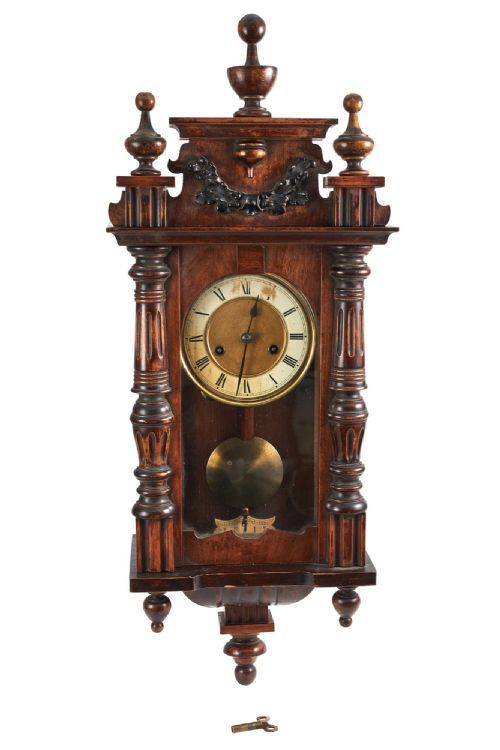
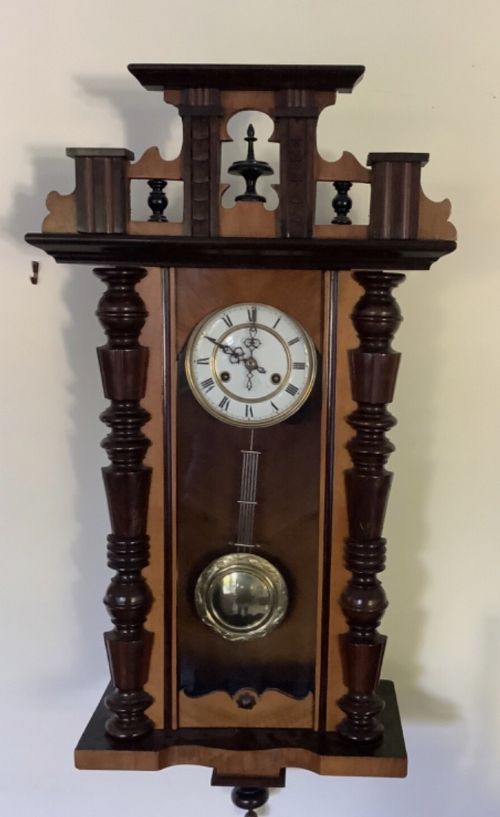
The construction relies on timber cases built from walnut, oak, mahogany, or ebonised wood, frequently enhanced with fine carved detailing or clean, architectural lines. Glazed panels protect the dial and movement while allowing a clear view of the brass pendulum and weights operating within. Enamel is utilised for the clock faces, providing a crisp, legible background for the numeric markers.
Mechanical components incorporate brass for gears, pendulums, and weights, engineered to deliver eight-day striking functions or grand sonnerie capabilities. Workshops in regions such as the Black Forest and Austria employed skilled cabinetmakers and horologists to house these intricate movements in sturdy, polished wooden enclosures.
Walnut is the predominant timber seen across these nineteenth-century listings, frequently paired with brass and enamel.
What varies in quality
The distinction between tiers rests upon the sophistication of the movement and the execution of the cabinetry. Master workshops produced double and triple weight mechanisms offering extended running durations or complex striking sequences, contrasted against simpler single-weight timepieces.
Cabinet work similarly separates standard examples from exceptional ones, with finely carved walnut cases displaying superior joinery and proportional balance compared to plain or heavily restored housing.
AG Lenzkirch·Gustav Becker·Johann Baptist Beha
The Brass Vienna Regulator Clock Glossary
- Vienna Regulator
- A high-precision pendulum clock developed in nineteenth-century Austria, celebrated for accurate timekeeping and visible weights.
- Grande Sonnerie
- A striking mechanism that chimes the hours and quarters automatically, found in more complex nineteenth-century wall clocks.
- Biedermeier
- A Central European style spanning the mid-nineteenth century, characterised by utilitarian comfort, clean lines, and minimal ornamentation.
- Double Weight
- A movement driven by two suspended brass weights, typically powering both the going train and the striking train.
- Ebonised Wood
- Timber treated with a dark finish to imitate ebony, frequently utilised in nineteenth-century clock cases for dramatic contrast.
Brass Vienna Regulator Clock: Frequently Asked Questions
How do I wind a brass vienna regulator clock?
Winding involves using a matching key to hoist the brass weights back to the top of the case, taking care not to over-wind the movement.
Most models require this attention every eight days, though month-duration variants extend this interval significantly.
Where should I hang a wall clock?
Select an interior wall free from dampness, excessive vibrations, and direct sunlight to protect the wooden case and delicate enamel dial.
A sturdy fixing anchored securely into masonry or timber studs is essential to support the weight of the timber enclosure and heavy brass components.
What is a double weight movement?
A double weight movement uses two hanging brass weights to power separate functions within the clock mechanism, typically one for timekeeping and one for striking.
This setup allows the clock to operate continuously for eight days before requiring the weights to be manually pulled upward.
How do I tell Biedermeier and Victorian styles apart?
Biedermeier clock cases prioritise clean, uncluttered architectural lines and smooth walnut veneers reflecting a mid-nineteenth-century aesthetic.
Victorian examples often feature richer carvings, applied mouldings, and darker or ebonised wood finishes developed later in the nineteenth century.
What does grand sonnerie mean?
Grand sonnerie describes an advanced striking train that sounds both the hours and the passing quarters automatically on bells or gongs.
This complication requires three weights to supply sufficient power for the extended musical output.