


Brass Vestibule Light
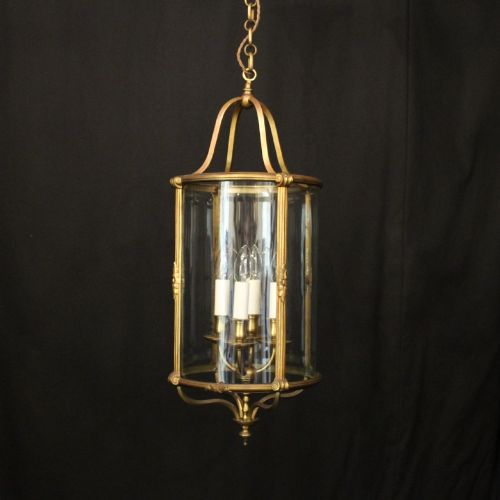
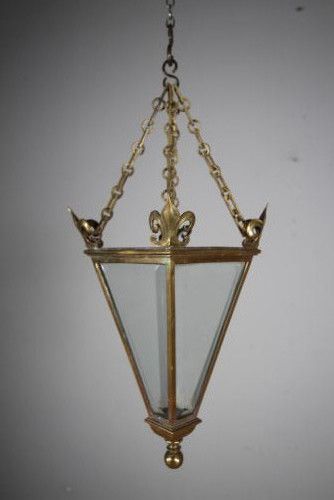
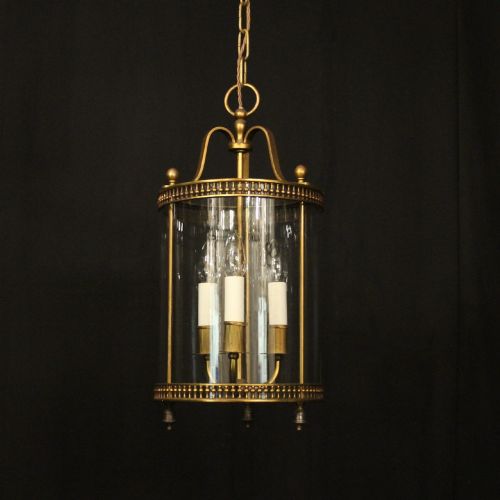
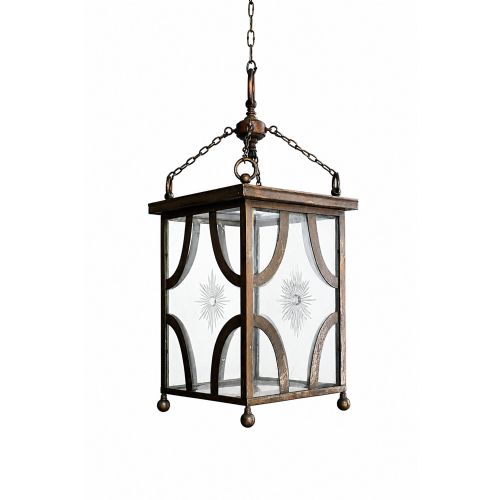
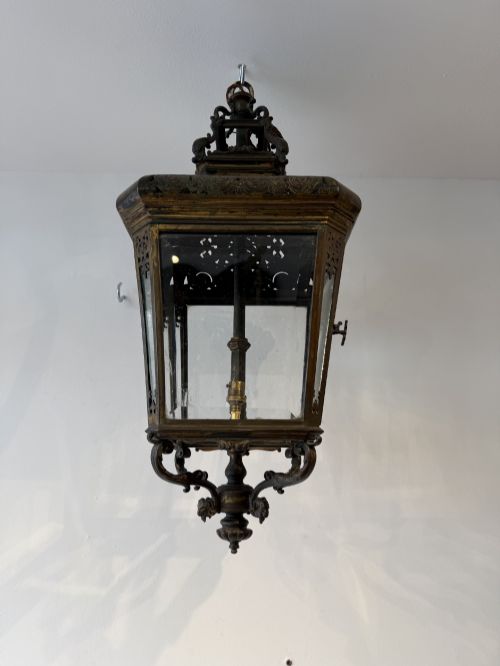
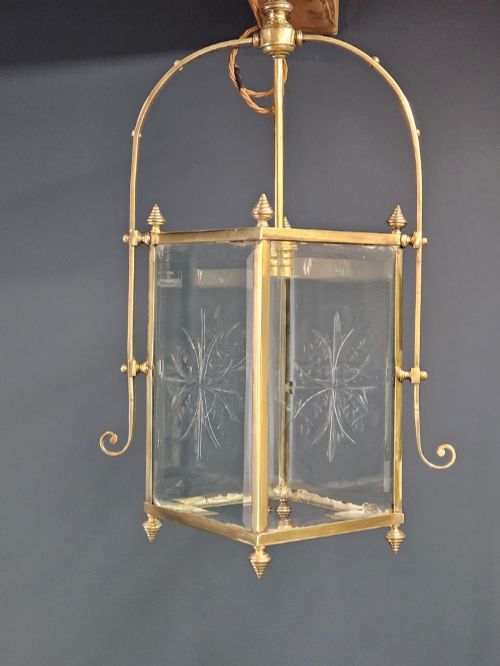
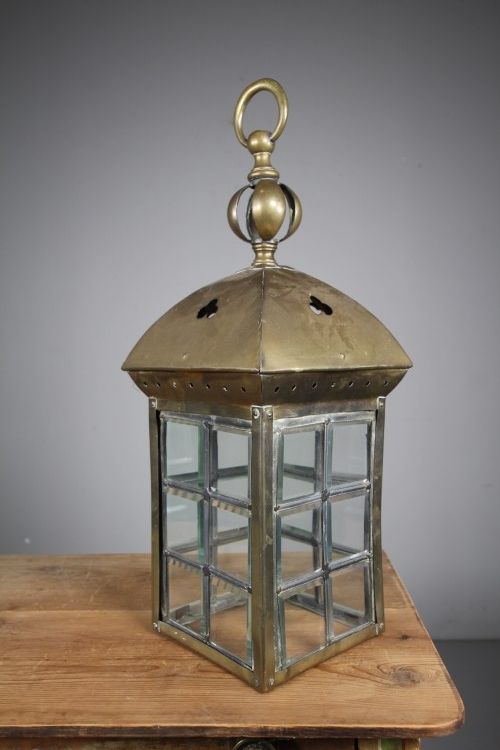
A brass vestibule light commands an entrance hall, casting warm illumination through bevelled glass panes held in heavy metal frames.
Brass Vestibule Light
A brass vestibule light brings functional brilliance to entryways, hallways, and stairwells where robust illumination is required. These hanging fixtures appear predominantly in French and English designs spanning the nineteenth century through the nineteen-thirties.
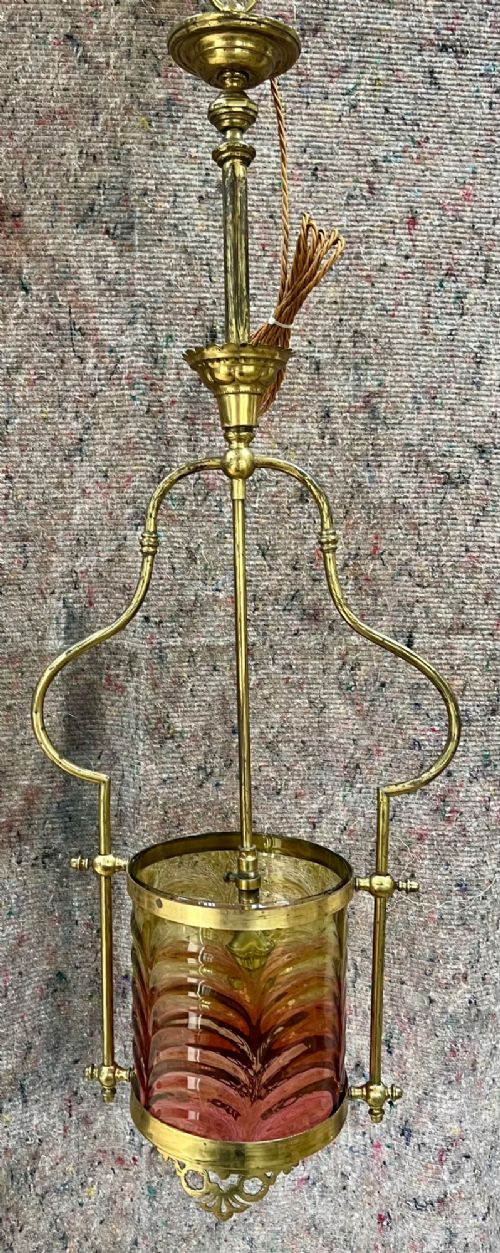
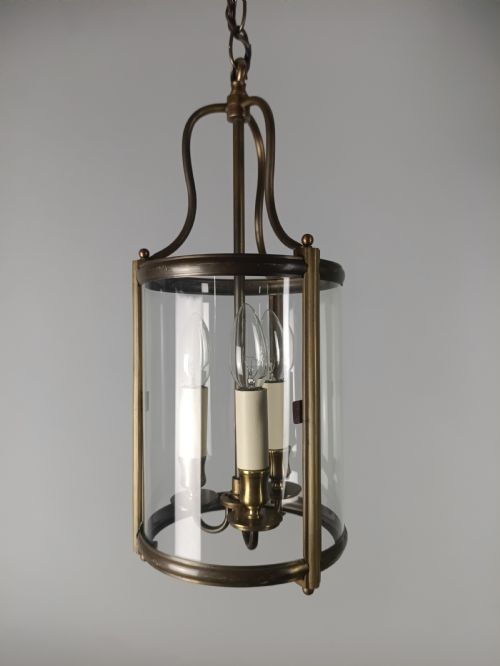
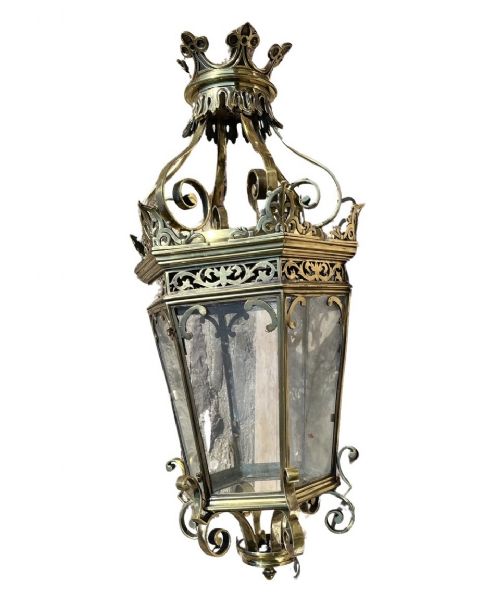
The pieces on this page take the form of hall lanterns, ceiling lights, and pendant lanterns suspended on chains or rods. You will frequently encounter French gilded bronze models alongside simpler Edwardian and Victorian brass frames.
Many examples incorporate glazed panels, often featuring cut, frosted, or etched glass to diffuse the interior light source. These fixtures range from small single-bulb lanterns to large multi-light configurations designed for spacious corridors.
How They Were Made
The primary structural framework relies on cast and spun brass, often gilded or left in a polished state, alongside structural elements in bronze and steel. These metal components provide the rigid skeleton necessary to support heavy glass panels and multiple internal light fittings.
Panels of glass are fitted directly into the metal armature, utilising bevelled, frosted, etched, or cut techniques to manipulate the spread of light. Access doors are frequently integrated into the frame design to allow for maintenance and bulb replacement.
Suspension systems typically incorporate sturdy chains, decorative canopies, and internal brass rings or clusters designed to hold one, three, or four lights securely.
Many of these lanterns feature tiny latched doors, originally designed so butlers could replace flickering candles without dismantling the entire hanging fixture.
What Varies in Quality
The distinction between tiers rests in the weight of the metal casting and the crispness of decorative chasing upon the bronze or brass framework. Finer examples display meticulous hand-finishing, intricate ornamentation, and substantial structural gauge rather than lightweight stamped metal.
Glass quality dictates visual depth, where heavy cut or heavily etched panes demonstrate superior craftsmanship compared to plain or thin alternatives. Original gilding and integrated opening doors further separate standard utilitarian hall pieces from high-status decorative commissions.
The Brass Vestibule Light Glossary
- Hall lantern
- A ceiling-hung lighting fixture enclosed in glass panels, designed specifically for corridors and entrance spaces. These pieces combine structural metal frames with transparent or translucent sides.
- Gilt bronze
- Metalwork finished with a thin layer of gold applied through fire gilding or electroplating, often termedormolu in French pieces. This treatment provides a durable, lustrous surface resistant to tarnishing.
- Etched glass
- Glass panels decorated with acidic compounds to create opaque patterns or scenes. This technique diffuses internal illumination while adding ornamental detail.
- Convex glass
- Curved panes that project outward from the lantern frame, altering the refraction of light. They require specialised glass-blowing and cutting techniques.
- Vestibule
- An inner hall or lobby situated at the entrance of a building. Lighting placed here is chosen to create an immediate impression upon arrival.
Brass Vestibule Light: Frequently Asked Questions
How do I hang a heavy brass lantern safely?
Suspension requires anchoring directly into ceiling joists or utilising a heavy-duty ceiling toggle rated for the specific weight of the bronze and glass fixture. The electrical supply must be supported independently by a proper conduit or ceiling box rather than bearing the load of the hanging chain.
Professional installation is strongly advised for larger multi-light examples due to their substantial mass. Ensuring the canopy sits flush against the ceiling finishes the installation correctly.
Can these antique lights use modern bulbs?
Most antique lanterns accept standard modern Edison screw or bayonet fitting bulbs, provided the internal wiring has been updated to current safety standards. Low-energy LED options work particularly well as they generate minimal heat inside enclosed glass chambers.
Consult a qualified electrician to inspect the internal sockets and wiring before installation. They can adapt older fittings to comply with modern domestic electrical requirements.
How do I clean etched and cut glass panels?
Glass panels are best cleaned by removing them carefully from the brass frame if the tabs permit, or by wiping them in situ with a mild soapy solution and a soft cloth. Avoid harsh chemical abrasives that might damage etched surfaces or compromise aged metal patinas.
Dry the glass thoroughly with a lint-free cloth to prevent water spots. Take care around fragile soldered joints and delicate decorative bronze mounts during the cleaning process.