
Brass Urn Lighting
Brass urn lighting takes classical vessel forms and mounts them for electricity, offering functional illumination grounded in centuries of decorative heritage.
Brass Urn Lighting
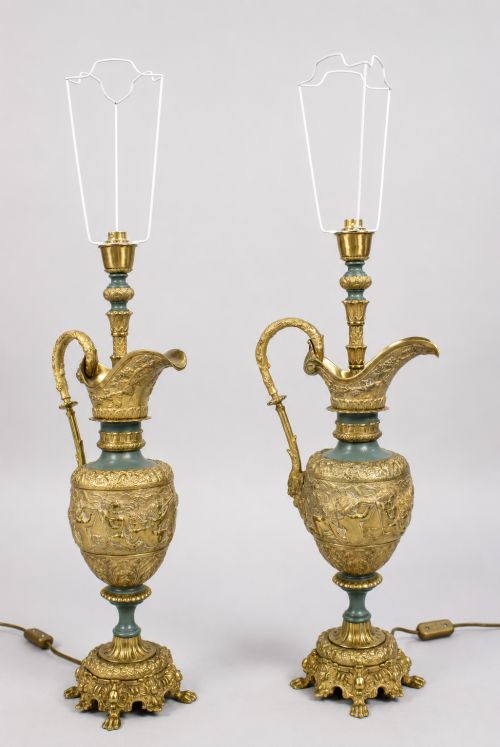
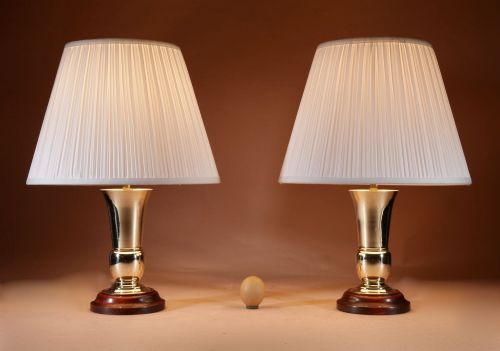
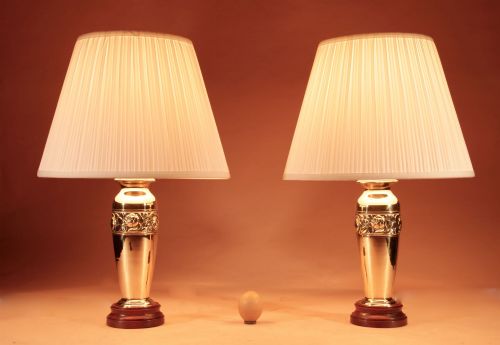
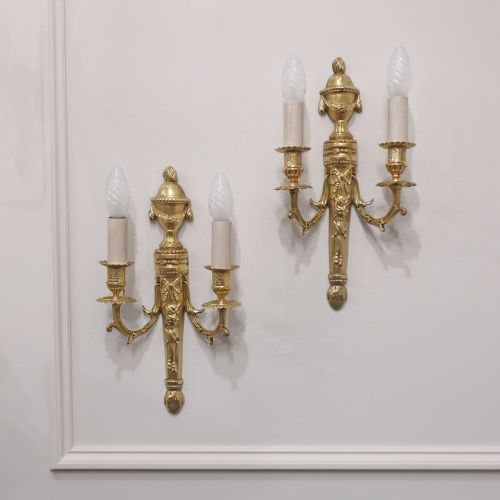
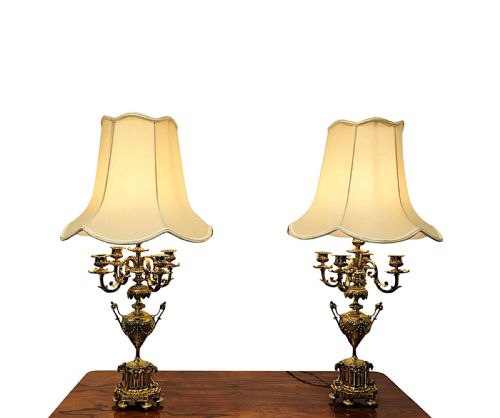
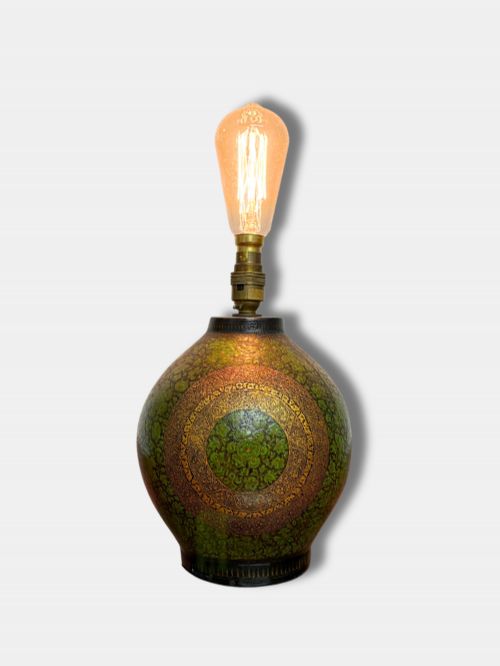
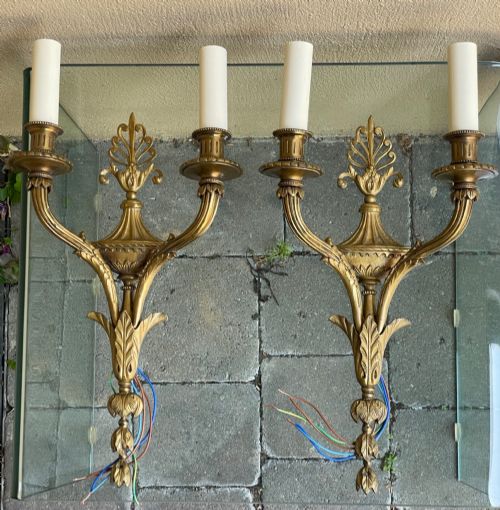
Brass urn lighting comprises vessels, ewers, vases, and amphorae adapted into functional lamps, wall lights, and candelabras. These pieces draw primarily from nineteenth-century production as well as early twentieth-century Edwardian and Art Deco periods, maintaining classical proportions regardless of their exact decade.
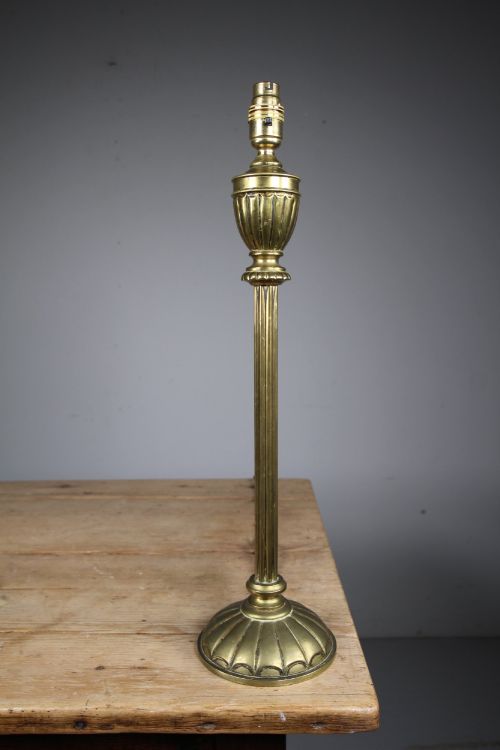
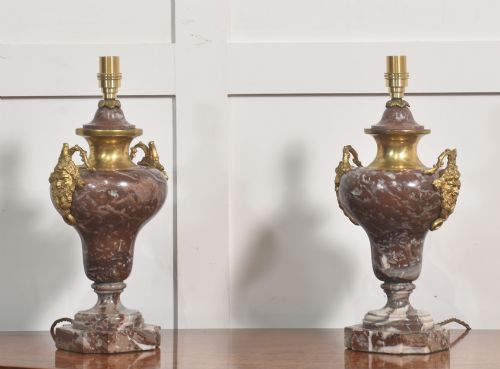
The most frequent examples encountered on this page pair cast metal bodies with marble or onyx bases, often originating from French workshops adhering to Neoclassical, Louis XVI, or Empire styles. Alongside these continental works, English brass standard lamps and table lamps appear regularly alongside converted oil lamps and candelabras.
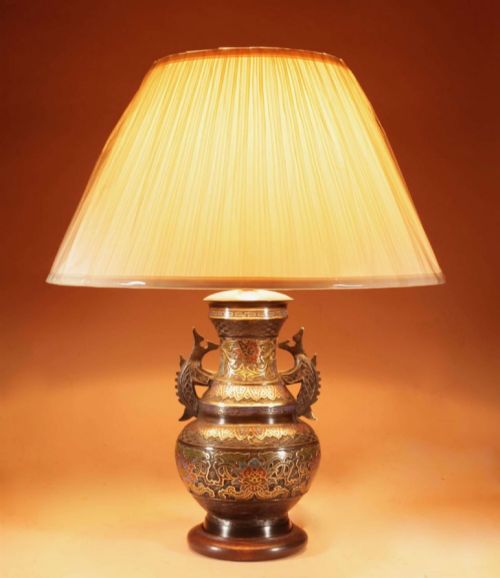
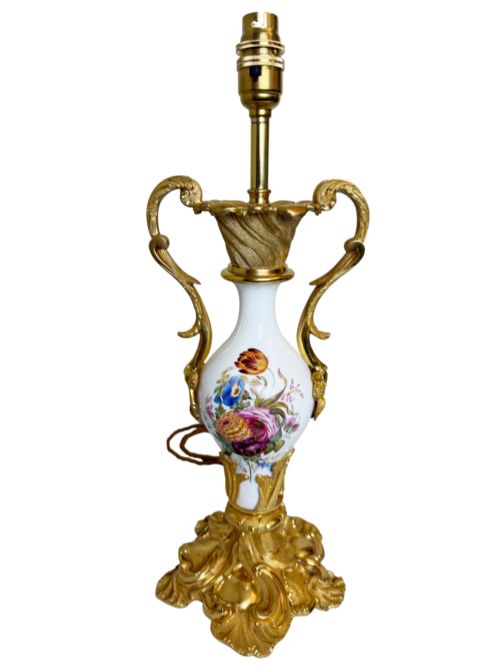
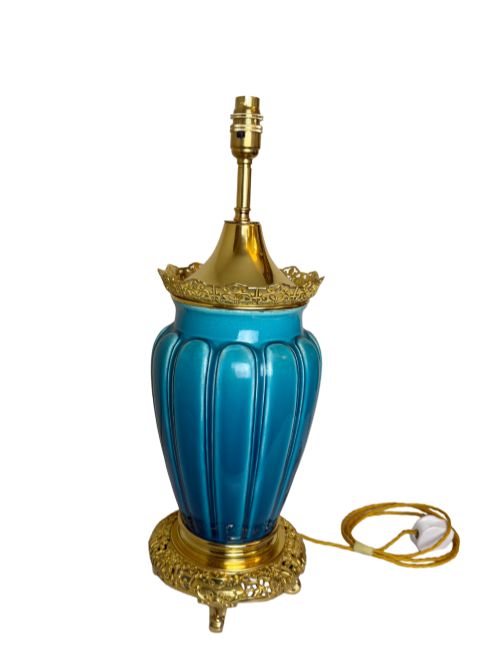
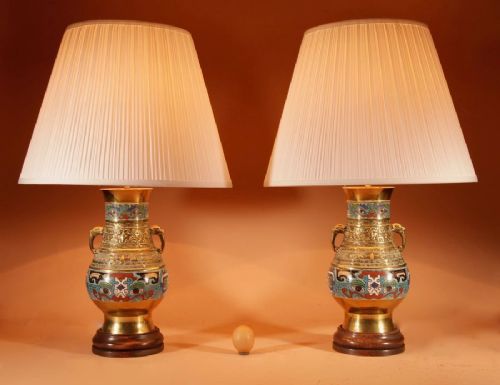
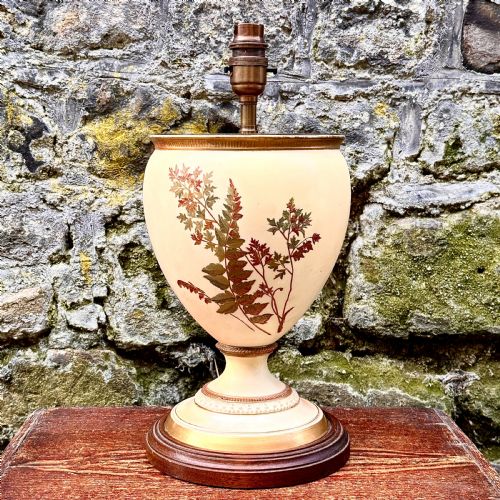
Vessels span porcelain, celadon, opaline glass, and champlevé enamel, each mounted with gilt bronze, ormolu, or gilded metal handles and trims. This diverse mix reflects a Victorian and Edwardian taste for repurposing decorative objects into functional domestic illumination.
How they were made
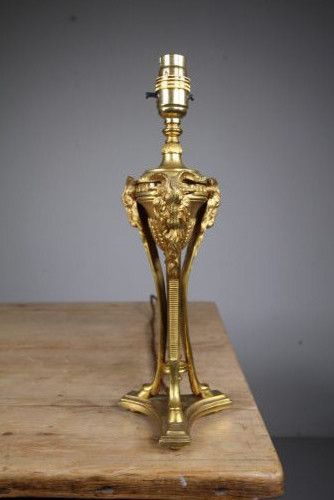
Maker workshops utilised lost-wax casting for bronze and brass mounts, producing crisp leaf, ram's head, and paw-foot details that were subsequently gilded or burnished. These metallic elements were combined with turned marble columns, carved onyx bases, or ceramic bodies using threaded iron rods and secure internal hardware.
Ceramic and glass bodies, including Rose Medallion porcelain and celadon vases, were drilled or fitted with brass collars to accommodate early electrical wiring or burner conversions. Artisans frequently integrated fabric shades or opaline glass diffusers to complete the assembly.
Several lamps feature brass ram's head masks peering out from beneath porcelain bodies, watching over the room with stoic metallic expressions.
What varies in quality
The standard of chasing and fire-gilding on the bronze or ormolu mounts determines the upper tier of these pieces, separating sharp, hand-finished ornament from softer, mass-produced casts. Weight and density in the marble or onyx bases also signal superior construction.
Integration defines the better examples, where converted oil lamps or candelabras retain their original proportion and structural integrity without awkward wiring adaptations. Material selection, such as heavy champlevé enamel or genuine porcelain rather than substituted substitutes, dictates commercial standing.
Casier·Royal Worcester
The Brass Urn Lighting Glossary
- Ormolu
- Gilt bronze produced by applying a mercury and gold amalgam to a bronze object and heating it to drive off the mercury. This technique creates a durable, golden surface seen on high-end nineteenth-century French mounts.
- Champlevé
- An enamelling technique where troughs are dug into a bronze surface, filled with vitreous enamel powder, and fired. Japanese and French pieces on this page utilise this method for colourful decorative patterns.
- Ewer
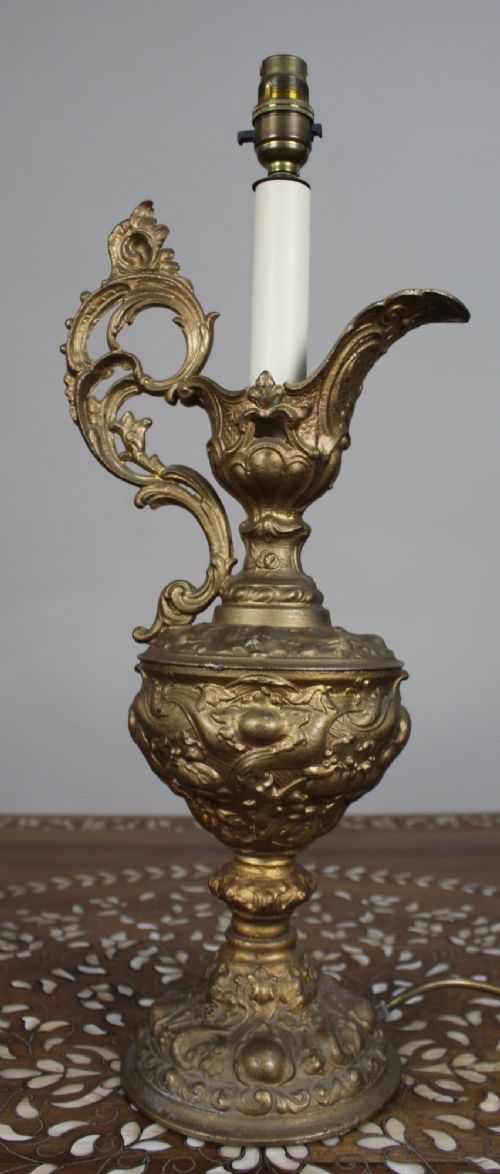
- A large jug with a wide spout, historically used for water but frequently replicated in metal or ceramic during the nineteenth century. These vessel shapes form the body of many tall table lamps.
- Candelabra
- A branched candlestick designed to hold multiple tapers, often converted into electric lamps during later periods. They typically feature matching arms and detailed drip pans.
- Amphora
- A classical two-handled jar with a narrow neck, often rendered in marble, onyx, or porcelain. These shapes provide the central silhouette for heavy table lamps.
Brass Urn Lighting: Frequently Asked Questions
What is brass urn lighting?
Brass urn lighting involves decorative vessels, vases, and ewers mounted as lamps or wall lights. These objects combine metalwork with materials like marble and porcelain.
Originating mostly from the nineteenth and early twentieth centuries, they adapt classical shapes for interior illumination.
How were these lamps used?
These pieces served as prominent decorative lamps on sideboards, tables, or mantelpieces in period interiors. Many started as oil lamps, candelabras, or decorative vases before conversion to electricity.
Their substantial weight and ornate mounts were designed to catch candlelight or gaslight in formal reception rooms.
How do I date these pieces?
Dating relies on stylistic clues, such as Louis XVI revival motifs, Art Deco geometric lines, or Edwardian proportions. Material choices, including specific porcelain bodies and casting techniques, also point to specific decades.
Wiring methods and hardware components provide additional clues regarding subsequent alterations or original assembly.
Are these lamps rewired?
Many antique lamps feature modern wiring to meet safety standards while preserving the antique body and mounts. Rewiring ensures functional operation for contemporary domestic use.
Original sockets are occasionally retained where historical integrity takes precedence over daily utility.