


Italian Classical Lamp
An italian classical lamp brings ancient forms and rich materials into a room, offering both sculptural presence and warm illumination.
Italian Classical Lamp
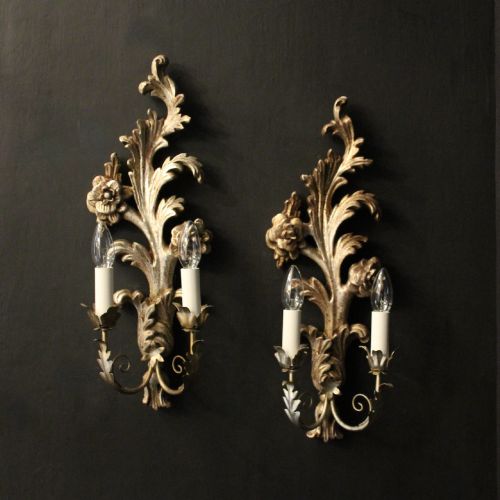
When buyers search for an italian classical lamp, they encounter lighting fixtures and related stands drawn from the nineteenth and early twentieth centuries. These pieces draw heavily on historical motifs, manifesting in forms such as table lamps, torcheres, standard floor lamps, and twin-arm wall lights.
The objects appearing here span varied aesthetic revivals, including Neoclassical, Grand Tour, Renaissance Revival, and Italianate Baroque styles. Alongside actual lighting fixtures, the selection includes occasional tables, side tables, and floor-standing marble columns adapted to hold light.
Materials and Techniques
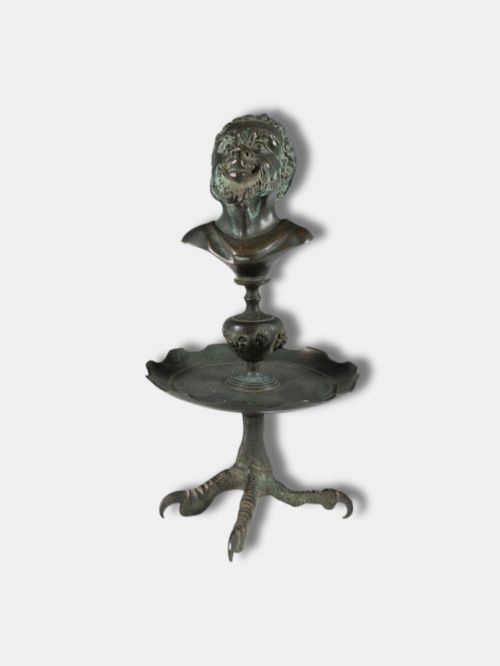
Metalworking and stone carving form the primary techniques behind these pieces, utilising bronze, brass, marble, alabaster, and onyx. Artisans cast bronze figures with detailed chasing and mounted them on stone bases, while others carved soft alabaster and dense marble into classical columns and urns.
Surface ornamentation relies on gilding, silver leaf, paint, and intricate woodworking techniques. Giltwood and parcel gilt finishes appear alongside marquetry inlay work characteristic of Sorrento workshops, while ceramic bodies feature traditional majolica glazing.
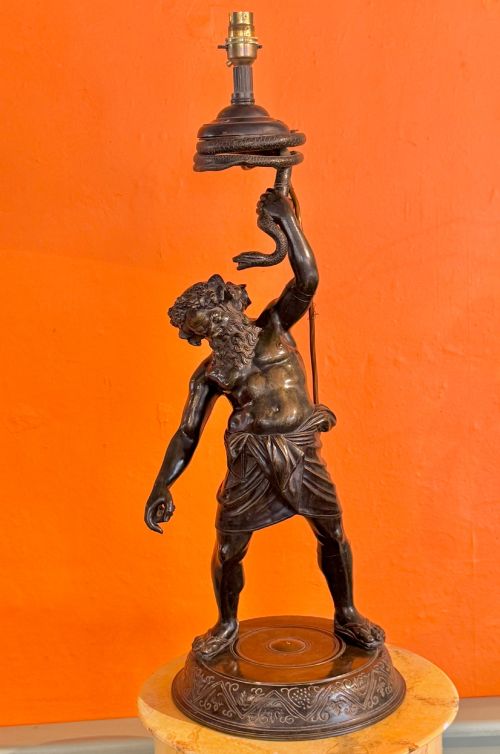
A bronze silenus keeps a permanent, slightly cynical watch over the room from the base of a nineteenth-century oil lamp.
What Varies in Quality
Quality also manifests in the integration of structural elements, such as the precision of marquetry inlay on wood surfaces and the translucency of selected alabaster and onyx. Pieces signed by known makers or originating from notable workshops command greater attention for their artistic execution.
G Amodio Naples
The Italian Classical Lamp Glossary
- Neoclassical
- A style drawing inspiration from the classical art and architecture of ancient Greece and Rome. It emphasises symmetry, straight lines, and classical motifs such as urns and acanthus leaves.
- Grand Tour
- A cultural journey undertaken by nineteenth-century Europeans, who collected classical antiquities, bronzes, and architectural models as souvenirs. These items often recreated ancient sculpture in miniature.
- Majolica
- Tin-glazed Italian earthenware decorated with colourful metallic oxide paints. It provides a vibrant, glossy surface often utilised for lamp bases.
- Giltwood
- Wood that has been coated with a thin layer of gold leaf or powder. This finish adds a reflective, luxurious quality to frames and decorative mounts.
- Torchere
- A tall stand or floor lamp designed to hold a light source high above the ground. They frequently take the form of classical columns or fluted pedestals.
- Marquetry
- The art of applying pieces of veneer to a structure to form decorative patterns and pictures. Sorrento furniture makers specialised in intricate geometric and floral marquetry.
Italian Classical Lamp: Frequently Asked Questions
What defines an Italian classical lamp?
These pieces incorporate classical architectural elements, mythological figures, and traditional materials from Italian decorative arts. They range from nineteenth-century bronze oil lamps to early twentieth-century alabaster and marble table lamps.
Craftsmen drew upon Neoclassical, Renaissance, and Baroque vocabularies to produce lighting that doubles as sculptural art. The category also includes occasional tables and pedestals designed to support lamps.
How were these lamps originally used?
Early examples functioned as oil lamps burning fuel through wicks, whilst later nineteenth and twentieth-century versions were produced or later adapted for electricity. They served as primary task and ambient lighting in studies, libraries, and grand salons.
Standard floor lamps and torcheres illuminated larger spaces, while smaller table lamps sat upon desks, side tables, and chests of drawers.
Where should I place a marble or alabaster lamp?
These heavy stone and mineral lamps suit sturdy surfaces such as wooden side tables, sideboards, and occasional tables. Their substantial weight and classical proportions anchor a room's decorative scheme.
Keep them away from damp areas and high-traffic edges where accidental knocks might chip the delicate edges of carved alabaster or onyx.
How do I identify a Grand Tour piece?
Grand Tour items often replicate famous ancient Roman or Greek sculptures in bronze, marble, or terracotta. They date primarily to the nineteenth century and reflect the aesthetic tastes of travellers exploring Italian ruins and museums.
Signatures from workshops in Naples or Rome sometimes appear on the bases of bronze figures and oil lamps.
What is the difference between majolica and ceramic lamp bases?
Majolica is a specific type of earthenware featuring an opaque tin glaze that accepts bright, painted colours before firing. Standard ceramic bases may use different glazing and firing techniques without the distinctive tin-glazed finish.
Majolica lamp bodies display a characteristic glossy sheen and rich palette typical of traditional Italian pottery.