


Brass Two Light Sconces
Brass two light sconces provide paired illumination on the wall, bringing warm metallic reflection and period character to a room.
Brass Two Light Sconces
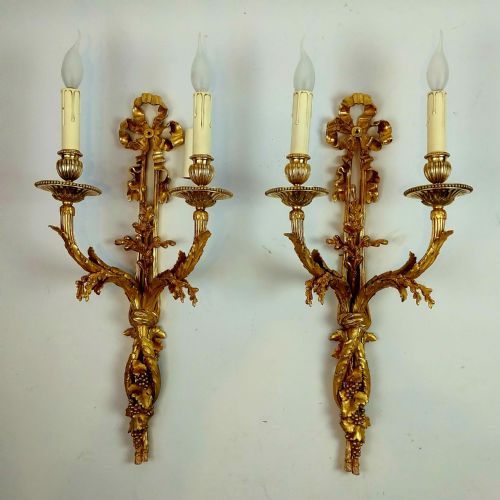
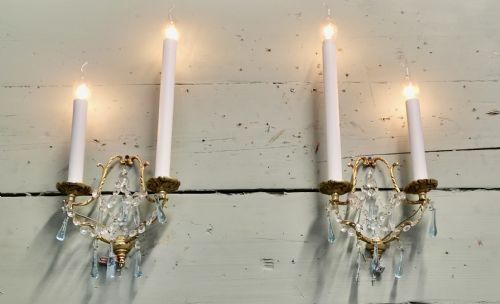
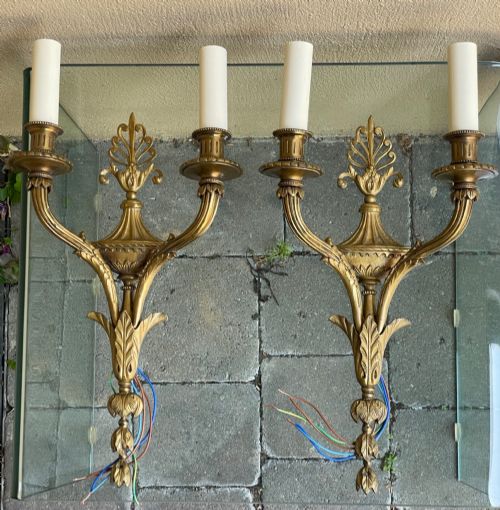
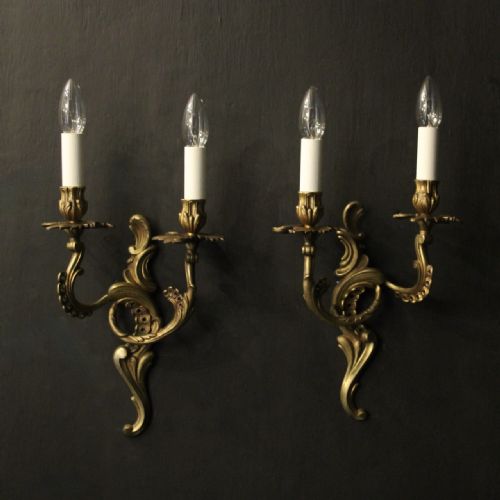
Brass two light sconces are dual arm wall fixtures designed to hold candles or electrical fittings, appearing across centuries of interior design. When exploring brass two light sconces on this page, the predominant forms originate from France and Italy, spanning the nineteenth and early twentieth centuries.
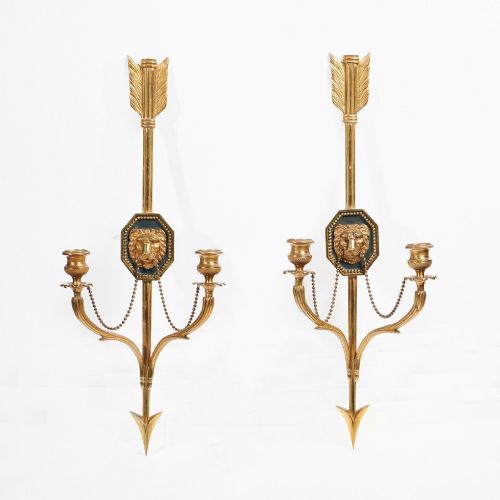
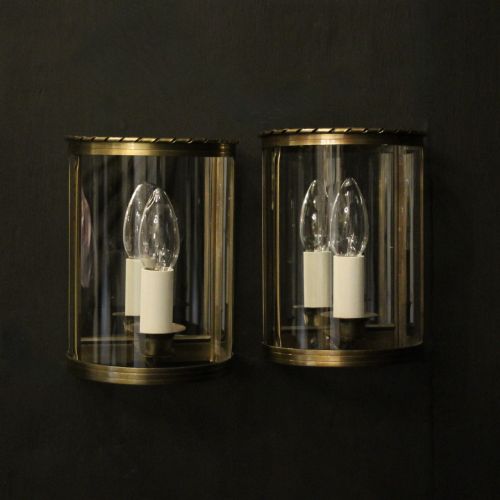
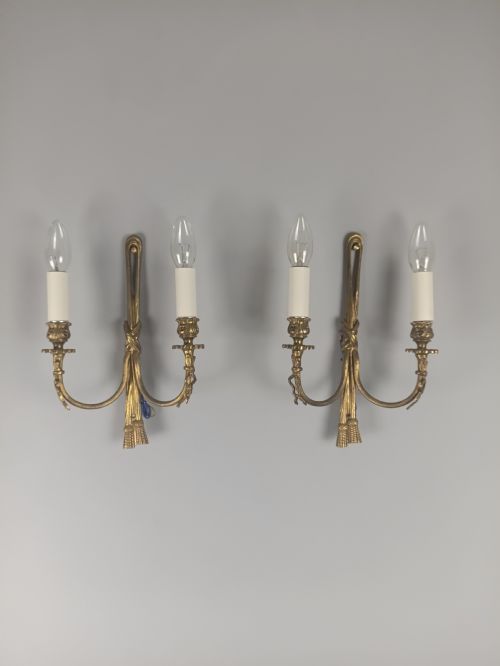
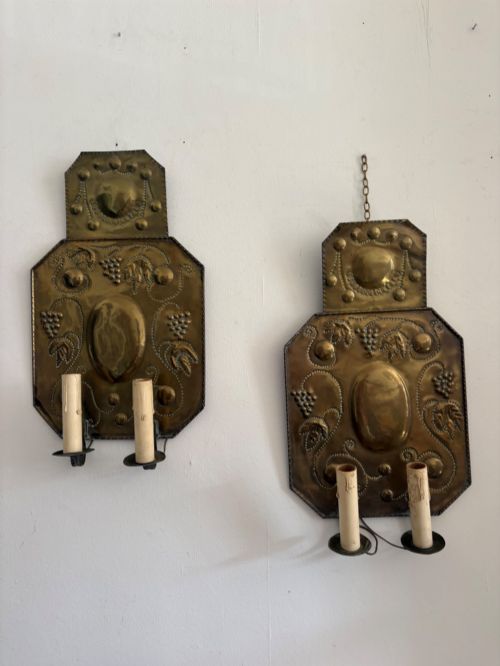
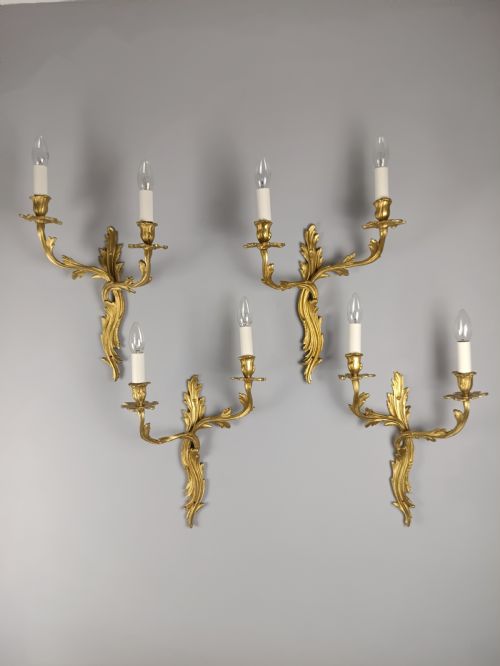
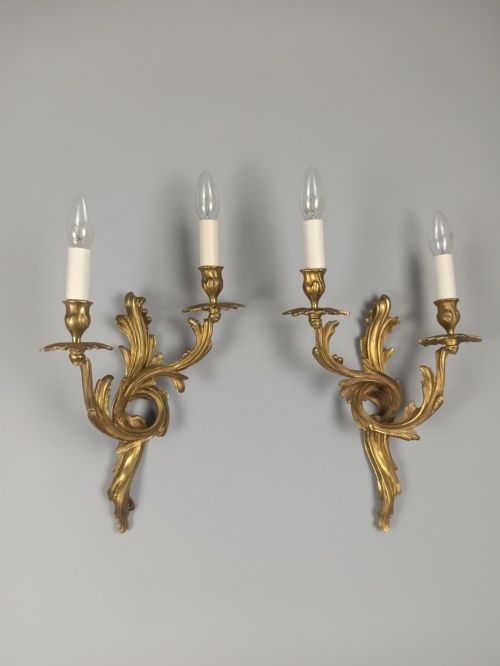
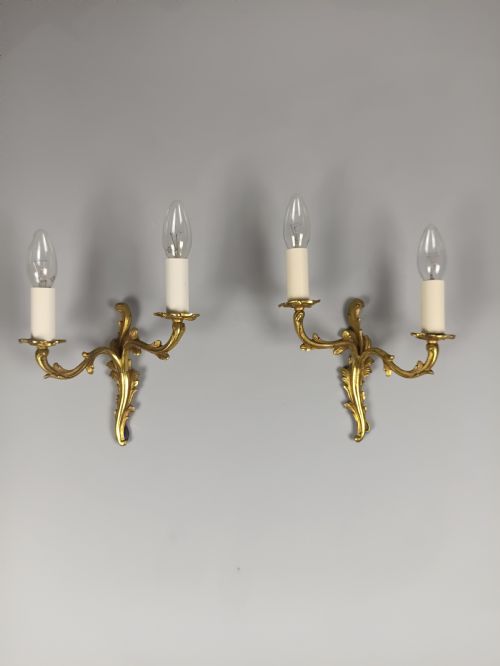
The inventory leans heavily towards matched pairs configured for two branches, reflecting historical preferences for symmetrical wall lighting. Examples incorporate revivalist aesthetics such as Louis XIV, Louis XV and French Empire, alongside regional variants like Dutch repousse work and English brassware.
Materials and construction
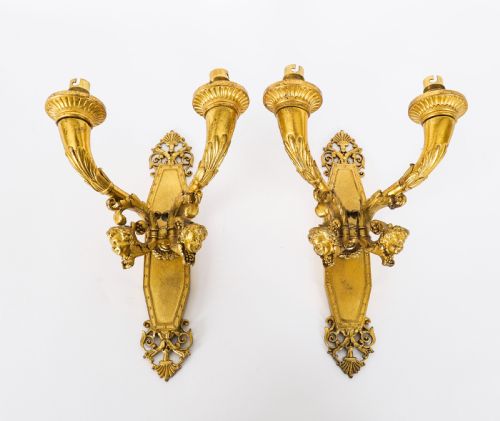
Makers utilised cast brass, bronze, and ormolu, applying fire gilding or surface finishing to create deep metallic lustres. Decorative components often include hand chased surface details, applied crystal drops, and repousse work beaten from sheet metal.
Arm assemblies and backplates were cast in sections before being joined mechanically or pinned, supporting the two branch configuration safely against the wall.
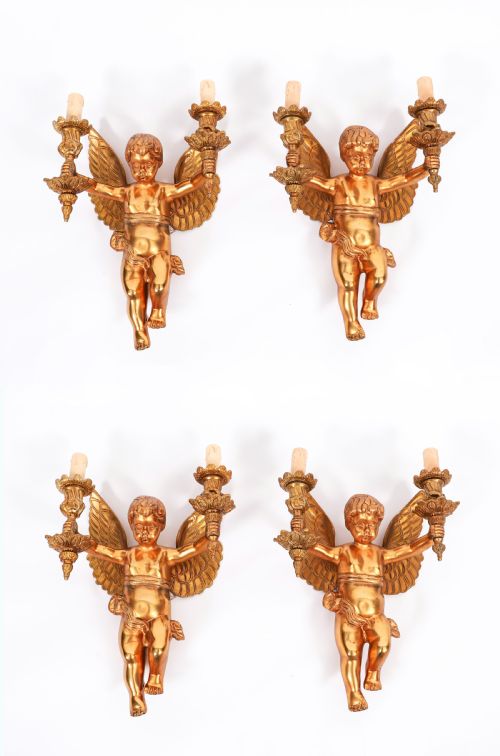
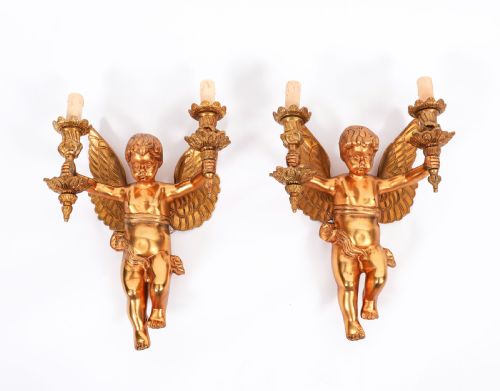
Several Italian pairs feature sculpted cherubs supporting the branches, cheerfully watching over the room from their permanent wall perches.
Distinctions in quality
Quality rests in the crispness of the casting and the depth of the chasing, where sharper chisel work defines foliage, ribbons, and cherub motifs. Heavy bronze or ormolu demonstrates superior foundational weight compared to thinner brass pressings.
The integrity of the gilding and the harmony of the components reveal the original maker's hand, distinguishing standard commercial production from bespoke decorative bronzes.
The Brass Two Light Sconces Glossary
- Ormolu
- Gilded bronze produced by applying a mercury and gold amalgam to a bronze base and firing it in a kiln. This historical technique yields a durable, matte golden finish.
- Repousse
- Metalworking technique where the metal is hammered from the reverse side to form a raised design in relief. It appears frequently on Dutch brass sconces.
- Applique
- A French term for a wall-mounted light fixture or sconce designed to reflect light from a vertical surface. These fixtures sit flush against wood panelling or plaster.
- Gilt bronze
- Bronze alloy treated with a gold leaf or chemical surface application to simulate solid gold. The finish catches ambient light effectively in dimly lit rooms.
- Louis XV Revival
- A nineteenth-century design movement copying the asymmetrical curves, naturalistic scrollwork, and rococo motifs of the mid-eighteenth French court.
Brass Two Light Sconces: Frequently Asked Questions
How do I install antique wall sconces?
Many period wall sconces require mounting to standard electrical junction boxes recessed into the wall. Modern wiring is typically threaded through the backplate during professional installation to meet current safety standards.
Positioning height depends on ceiling clearance and room proportions, though placement at eye level remains standard for hallway and living room lighting.
Were these sconces originally for candles?
Most nineteenth-century and earlier examples were manufactured exclusively for wax candles before being converted for electricity later. Drip pans and original nozzles often indicate this initial candlelight function.
Twentieth-century iterations frequently emerged during the transition to electric interior lighting while maintaining traditional multi-branch forms.
How do I clean antique brass and ormolu?
Dusting with a dry, soft microfibre cloth prevents the accumulation of grime without disturbing fragile patinas or historic gilding. Chemical metal polishes should be avoided on fire-gilt surfaces because abrasive compounds strip away the gold layer.
Professional conservation is recommended if deep cleaning or structural stabilisation becomes necessary over time.
How do I date an antique sconce?
Dating relies on examining casting techniques, fixing screws, and stylistic motifs corresponding to known decorative periods like Empire or Louis Revival. Hand-cut threads and uneven metal surfaces often point towards nineteenth-century production.
Comparing backplate construction and mounting brackets with dated examples helps narrow down the exact decade of manufacture.