

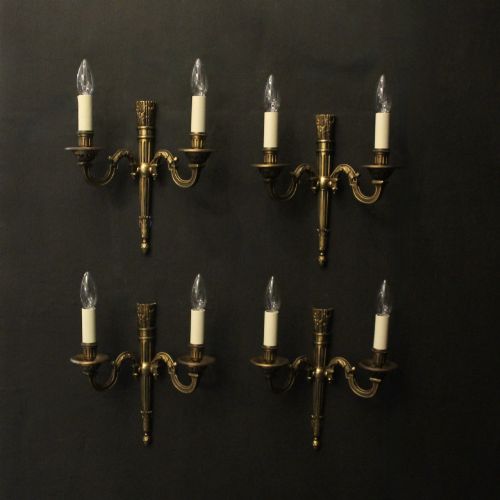
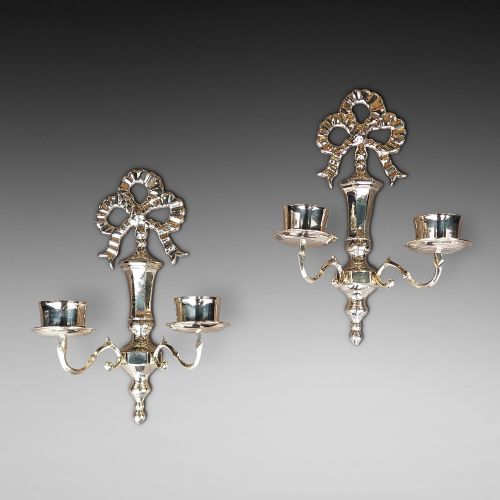
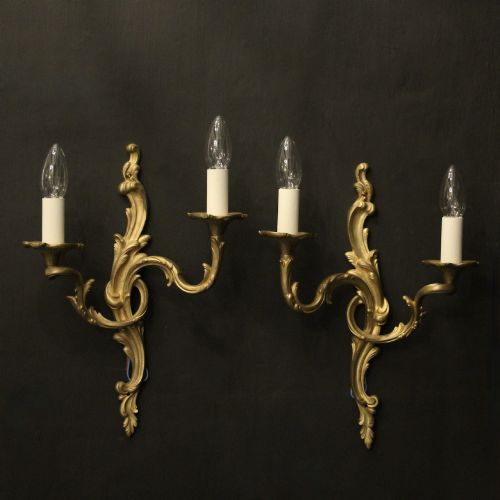
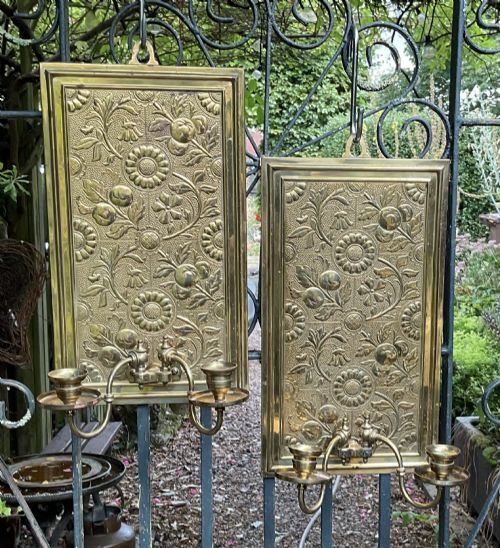
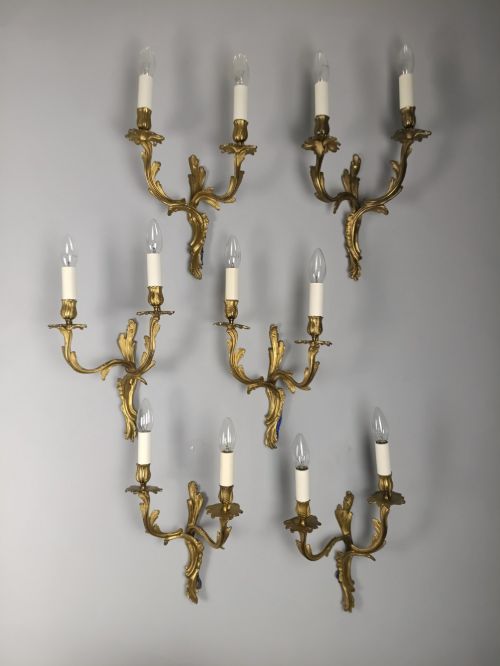
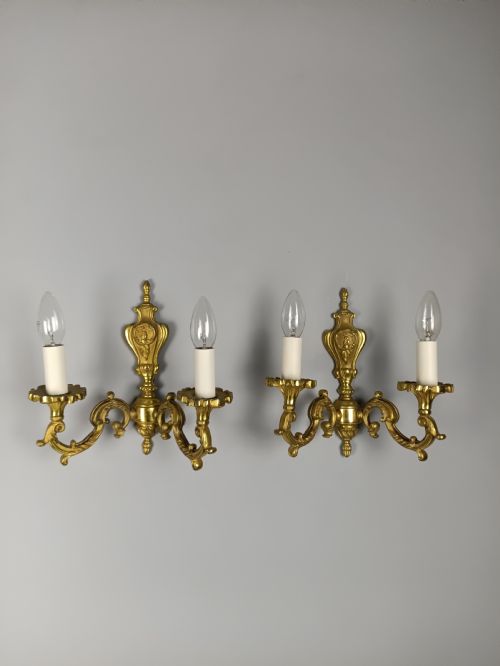
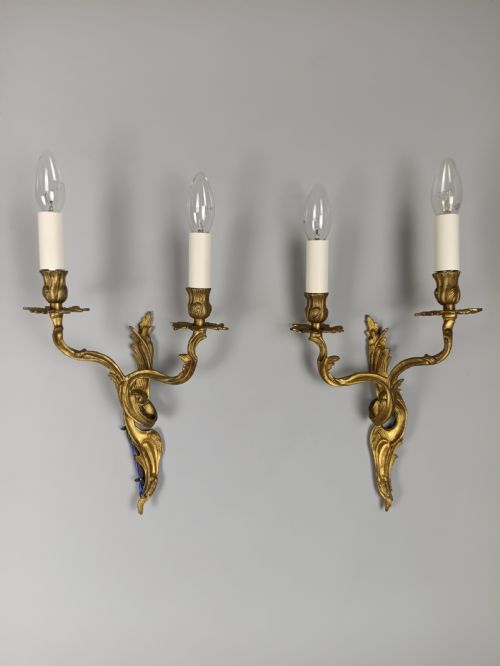
Brass Twin Wall Lights
Brass twin wall lights bring paired illumination to interior spaces, drawing upon centuries of decorative metalwork traditions.
Brass Twin Wall Lights
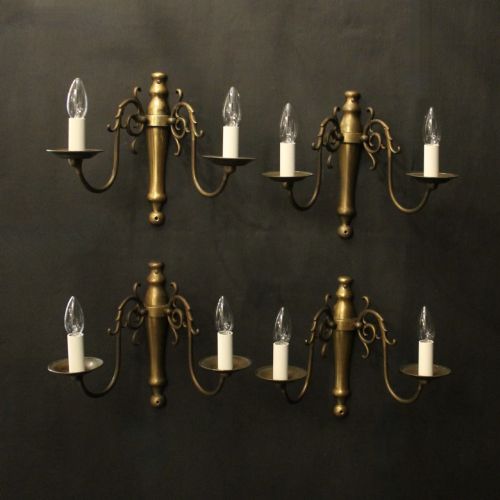
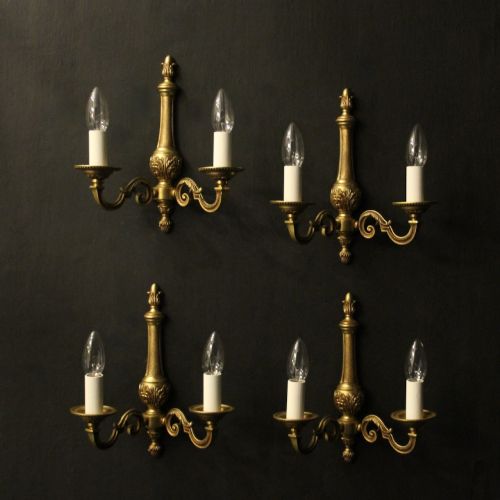
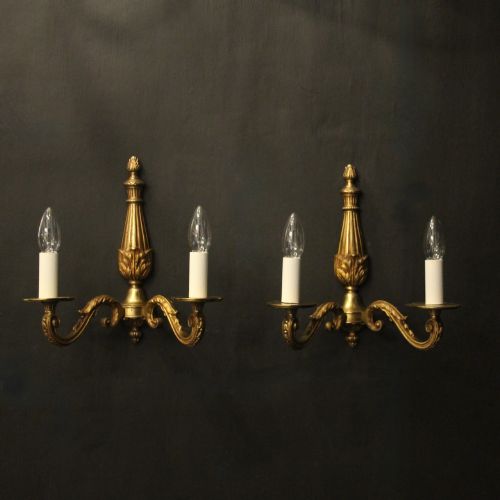
Brass twin wall lights are wall-mounted fixtures designed to project light from two distinct candle or lamp arms using brass and related metal alloys. When searching this phrase, a buyer encounters predominantly French fixtures from the early twentieth century alongside nineteenth-century examples and English production.
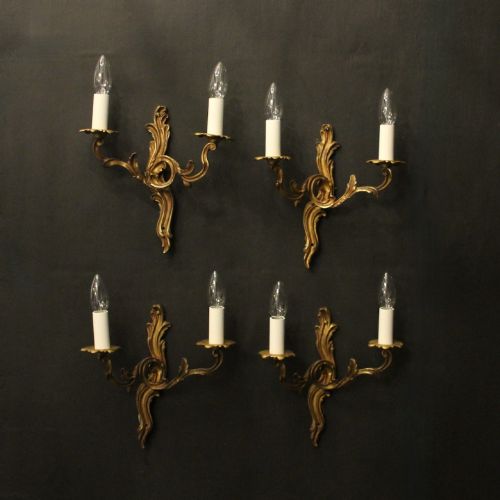
The inventory spans matched pairs, larger sets intended for uniform schemes, and single sconces derived from diverse historical revivals. These range from Rococo and Neoclassical interpretations to Empire and Aesthetic Movement designs incorporating elements like crystal, wood, or enamel.
Object types include standard wall lights, sconces, and convex half lanterns, reflecting both domestic and formal architectural applications. French gilded brass and bronze variants from the 1920s and 1930s dominate the current selection.
Materials and Construction
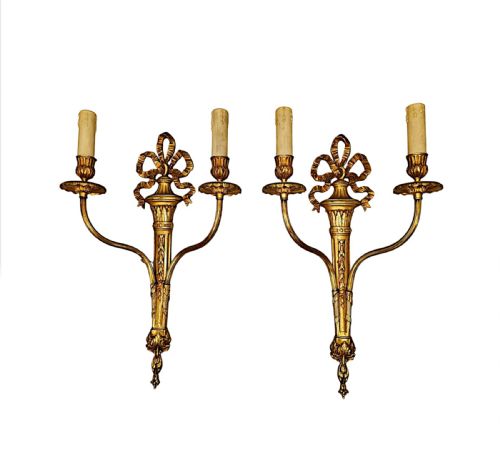
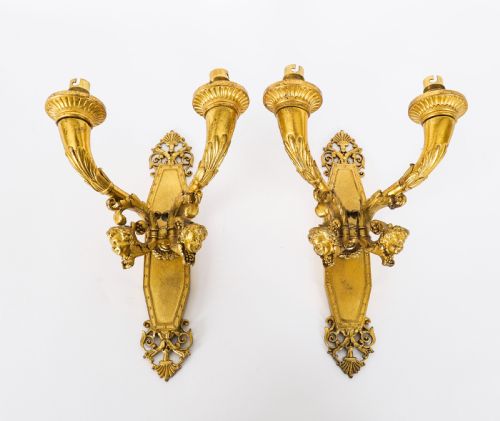
Makers utilised brass, gilt bronze, and ormolu, applying gilding or surface treatments to achieve varied reflective qualities across the metalwork. Cast brass and bronze components were assembled into multi-branch configurations, frequently incorporating decorative motifs such as ribbons, cherubs, or floral scrollwork.
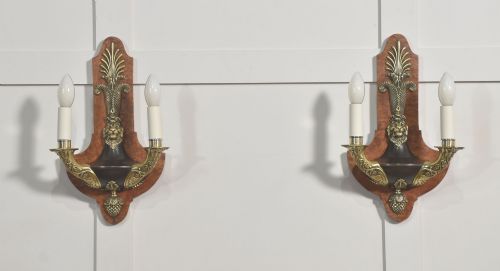
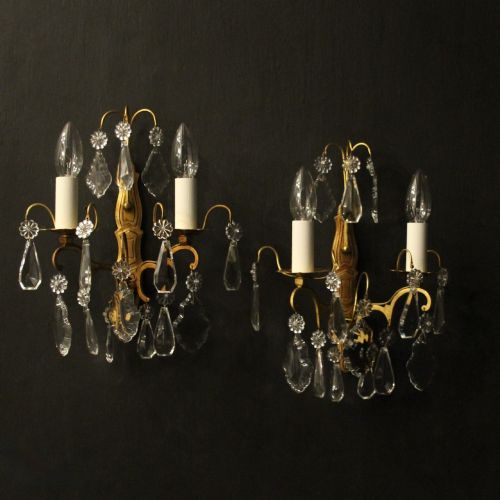
Construction techniques combined foundational metal casting with detailed chasing and hand-finishing, supporting complex twin-arm and multi-branch structures. Selected pieces integrate secondary materials such as crystal drops, burr walnut backing plates, or green enamel accents.
Listings feature French and English pieces spanning the nineteenth century through the 1950s, executed in brass, gilt bronze, and ormolu.
Factors of Distinction
The standard of a piece rests on the crispness of the casting and the depth of the chased or applied surface finish. Ornate Rococo scrollwork and figural elements like cherubs reveal the sculptor's hand more clearly in superior examples.
Proportion and structural integrity separate standard production from exceptional work, particularly in larger sets where uniform casting is essential. The integration of period-appropriate enhancements, such as crystal drops or finely woven brass rope motifs, elevates the decorative presence.
Bruce Talbert·Casier·F. & C. Osler
The Brass Twin Wall Lights Glossary
- Ormolu
- Gilded bronze produced by applying a mercury-gilding process to cast bronze objects, yielding a durable and warm metallic lustre. This technique was widely practiced by French metalworkers.
- Sconce
- A wall-mounted lighting fixture designed to carry candles or electric lamps, often featuring a decorative backplate. These fixtures project illumination directly onto wall surfaces.
- Rococo
- An ornate design style characterised by asymmetrical scrollwork, C-curves, and naturalistic plant motifs. It appears frequently in nineteenth- and early twentieth-century revival pieces.
- Neoclassical
- A style drawing inspiration from classical antiquity, emphasising symmetry, geometric restraint, and architectural motifs like urns and swags. It provides a formal contrast to fluid Rococo forms.
- Empire
- A decorative style originating in the nineteenth century, marked by militaristic, classical, and imperial symbols rendered in heavy metalwork. Pieces from this tradition often utilise burr wood or gilt bronze.
Brass Twin Wall Lights: Frequently Asked Questions
How do I install antique wall lights?
Many period wall lights arrive rewired and ready for installation by a qualified professional. They require standard electrical connections behind the backplate.
Ensure the mounting surface can support the weight of heavier cast bronze or brass assemblies, particularly for large sets or multi-branch fixtures.
Are these lights electrified?
Surviving examples range from historic candle sconces to mid-century electric wall sconces. Many antique fixtures are professionally converted for modern electrical use.
Listings often indicate whether a piece retains its original setup or has been updated for contemporary bulbs.
How do I date a brass wall light?
Dating relies on stylistic markers, manufacturing techniques, and material composition. Pieces reflecting specific revivals like Louis XIV or Empire often date to the nineteenth century or the interwar period.
French production from the 1920s and 1930s frequently employs gilded brass with distinctive cast configurations.
Can I mix different styles in one room?
Pairing fixtures from related design traditions, such as combining Neoclassical sconces with French Empire elements, creates a layered interior. Matching sets work best in formal spaces, while individual pairs suit smaller walls.
Pay attention to the metal finish, ensuring gilt bronze and polished brass coordinate within the lighting scheme.